
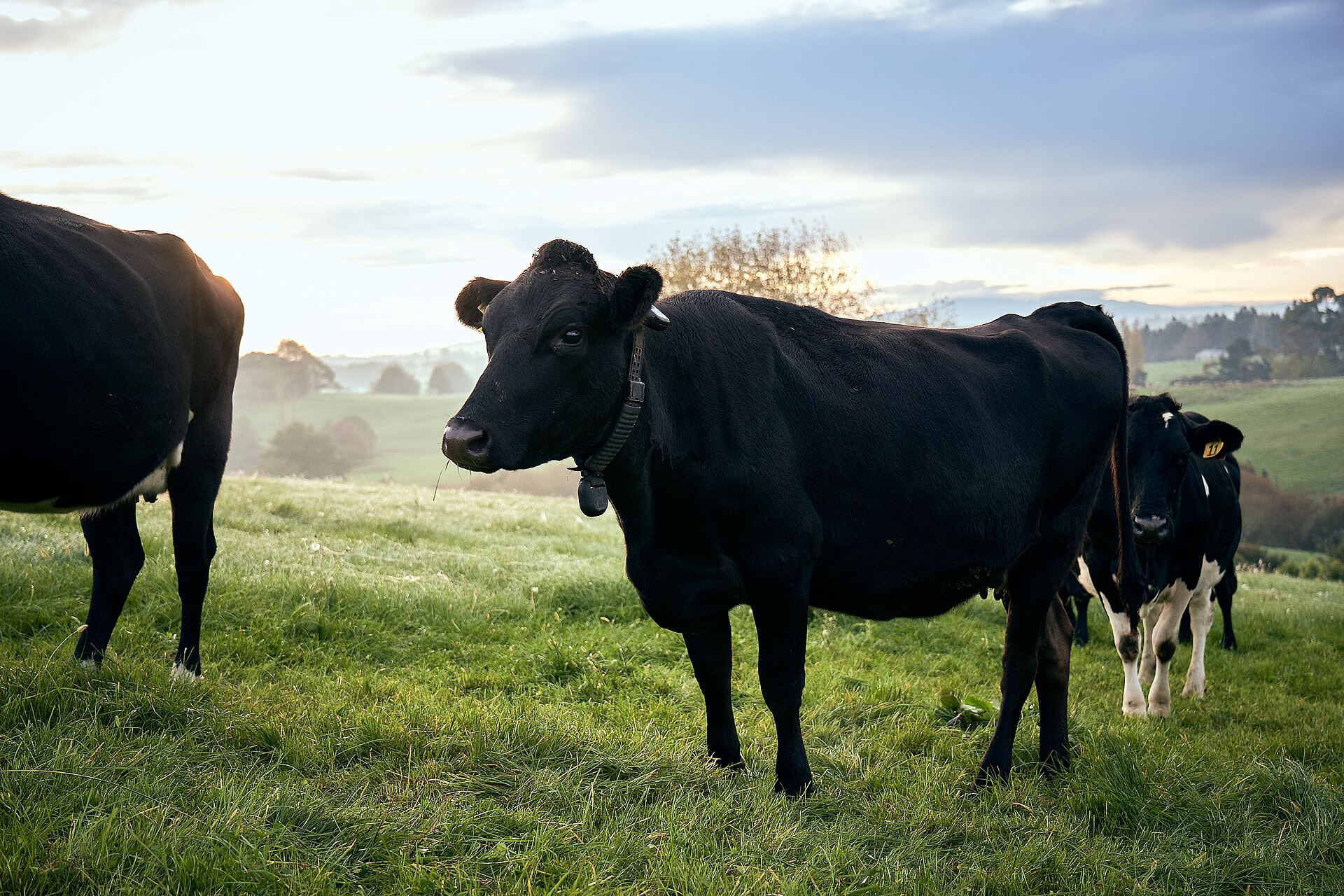
Halter, the New Zealand company whose solar-powered GPS collars let farmers fence and move cattle from a smartphone, has launched Mav, an AI assistant that answers dairy farmers' questions using the data its collars already collect. A farmer can ask Mav how the herd looks that morning, which cows need attention, or how pasture growth compares with earlier seasons, and can ask it to move cows between groups or change a grazing plan, with the farmer's approval.
Halter announced Mav on 19 November 2026 and on the same day opened what it calls the Agricultural Intelligence Archive, a temperature-controlled library built into a former cattle underpass on a hillside at its research farm in Morrinsville, in New Zealand's Waikato region. For now Mav is open only to the company's 1,200 New Zealand dairy customers on its Pro and Unlimited plans, and it is free while in beta. Halter says beef farmers and its customers in Australia and the United States will follow.
The launch is one of the clearest examples yet of a shift across farm technology: companies that sold farmers sensors are now building AI assistants to turn the data into decisions. John Deere began testing its own assistant with American farmers in September. Here is what Mav does, what the evidence shows and does not show, and what the trend means for farmers far from New Zealand, including smallholders in Africa and South Asia.
What Halter's Mav AI assistant does for dairy farmers
Mav sits inside the Halter app, which farmers already use to draw virtual fences, schedule cow movements and see alerts from the collars. Farmers type a question and get an answer built from their own herd's records: grazing, mating, calving, groups of cows (called mobs in New Zealand), feed budgets and treatments.
Halter's product page lists five things Mav can do. It answers questions about the farm. It can take actions inside the app, such as moving cattle from one mob to another, updating a feed budget or changing a grazing target, but Halter says it changes nothing without the farmer's approval. It can turn a question into a recurring update, such as a herd summary every morning. It can read material the farmer uploads, such as reports, milk dockets or photos. And it can share a read-only link to a conversation with a farm worker, a vet or a consultant.
Halter gives an example from the mating season, when around 50 cows may come into heat on a single day on a large farm. The collars already detect them, but the farmer must weigh each cow's heat history, timing and intensity; Mav, the company says, can work through those factors at once and say which cows to check and when.
"AI for us is really about Agricultural Intelligence," Craig Piggott, Halter's founder and chief executive, said in the company's announcement, as reported by Rural News and RNZ. "We've spent years building technology that gives farmers layers of information about what is happening on their farms. Mav takes all of that information and helps them work out what to do with it."
"Farming is made up of hundreds of decisions made every day," he added. "If we can help farmers make more of those decisions well, and make them earlier, that compounds into more grass, more cows in calf, and more milk."
Halter does not name the AI model underneath; its product page says only that Mav runs on "a leading AI model", shaped by the company's farmers, vets and farm operators. The same page is direct about limits: Mav can make mistakes, it shows its working, and for animal health and complex decisions it points the farmer to a vet or consultant.
The data behind Mav: 1.2 trillion collar records
What sets Mav apart from a general chatbot is the data behind it. According to Halter, Mav draws on an anonymised, aggregated collection of its records that the company believes is one of the largest combined pasture and cattle datasets in the world. It covers 10,000 cumulative breeding seasons, seven million heat detections, 1.2 million health cases and more than 500 million collar days on cows. Halter says its collars have produced more than 1.2 trillion data records so far, and that farmers asked more than 100,000 questions during Mav's beta. These are the company's own figures; no outside body has audited them.
On data ownership, Halter's product page says farm data stays with Halter, is not sold, and is not shared with outside AI companies to train their models, and that conversations stay private unless the farmer shares them. Piggott put it plainly to RNZ: "We're in the business of selling products and collars, not selling data. We use it to make the products better. We use that data, especially in aggregate, to train something like Mav."
One early user quoted by RNZ, Andrew Macky of Coshquin Farm, has used Halter for 18 months on his 300-cow dairy farm in the Waikato and said the system had "revolutionised" the way the farm runs. "Some jobs that might take you sort of 10, 15 minutes to go and dive around and do, you can just ask Mav now," he said, describing how he asks it to sort cows into their own mobs. "Makes life a lot easier. Time is money."
A hillside archive for "agricultural intelligence"
Halter has also turned a cattle underpass on its research farm into a temperature-controlled room set into the hillside, which it describes as the world's first physical archive dedicated to recording pasture farming insights. The idea, the company says, came from seed banks. Halter says insights from Mav will be checked and added in printed form over time.
"Farming knowledge has always been built season by season and passed from one generation to the next," Piggott said. "We're now able to learn from farms at an incredible scale, and we think there's value in preserving some of that."
The first book, Agricultural Intelligence Volume 1, covers the 2026 calving and pre-mating period. According to Halter, it uses aggregated data from New Zealand dairy farms and about 800,000 collared cows, out of the two million cows that wear its collars worldwide. It looks at how pasture growth sped up from winter into spring this year and at what the behaviour of nearly 590,000 cows shows about their recovery after calving. Five New Zealand farmers donated their own farm data for case studies. The archive also holds historic logbooks donated by dairy farms, and will open to visitors on set open days.
Halter's announcement said the volume is freely accessible online. On 20 November, however, the archive's web page showed a 20-spread preview with a note that the full book "will be available soon", so its findings could not yet be checked in full.
From virtual fences to AI: how Halter got here
Halter was founded in 2016 by Piggott, and its first business was virtual fencing. Each cow wears a solar-powered, GPS-enabled collar. The farmer draws a boundary on a phone, and the collar uses sound cues and vibrations to keep the animal inside it and to guide herds from one paddock to the next. As RNZ has reported, the collars also give an electric pulse when an animal ignores the sound cues at the boundary.
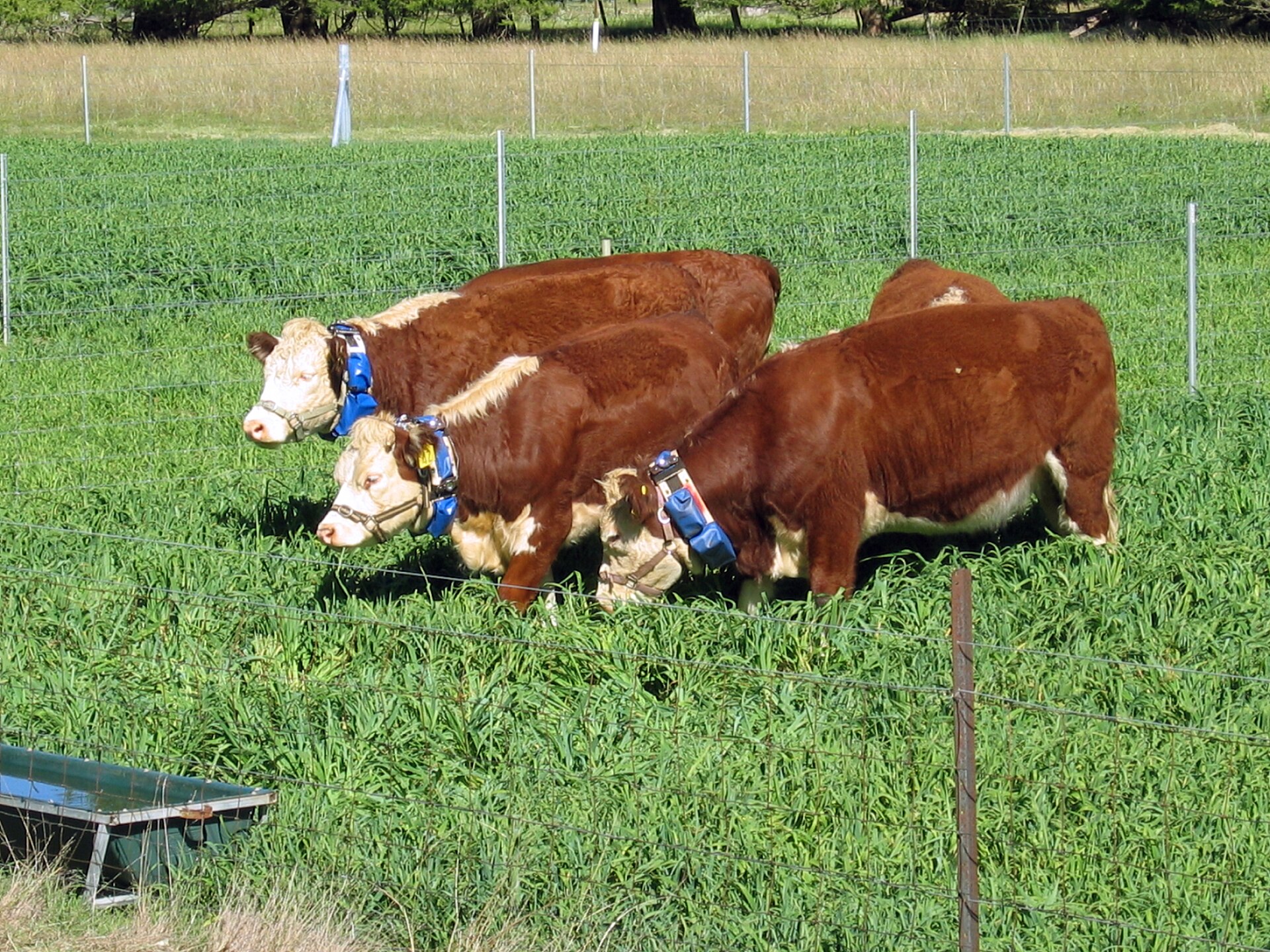
The idea is not new. Australia's national science agency, CSIRO, tested a prototype virtual fencing system for cattle around 2009 and 2010, with collars that used satellite positioning to mark an invisible boundary. Commercial systems, from Halter, Gallagher's eShepherd and others, are now sold in several countries.
Halter has grown fast. In March 2026 it raised NZ$377 million (US$220 million) in a Series E round led by Founders Fund at a valuation of NZ$3.43 billion (US$2 billion), which it called one of the largest rounds ever in agritech. It then said it served more than 2,000 farmers and ranchers in New Zealand, Australia and the United States and had sold one million collars. In April it launched collars that connect directly to satellites through One NZ's service powered by Starlink, removing the need for radio towers on farms, and said this would open remote markets such as South America and parts of Africa. This week it spoke of two million collared cows worldwide.
John Deere's JD and the race to build AI farm assistants
Mav arrives as the biggest names in farm technology build similar tools. On 31 August 2026 John Deere introduced JD, an AI assistant inside its Operations Center software, and began a staged release to some American farmers on 1 September, DTN reported. Like Mav, JD answers questions from a farm's own records, in its case planting data, yield monitors, sprayer weed maps and machine data. Deere said it would cost nothing extra and that a farmer's data would not be used to train JD or any other AI system, and declined to say which large language model it uses. Unlike Mav, the first version of JD is limited mostly to analysis and does not take actions, so every step stays with the farmer.
What the evidence shows, and what it does not
There is no independent evaluation of Mav. The only figures are Halter's own, and whether its recommendations beat those of a farmer, consultant or vet has not been tested in public.
There is some evidence on the collars themselves. In October 2025 Halter published a study by the farm consultants AgFirst and Transform Agri of ten high-performing dairy farms on New Zealand's North and South Islands. On average, it reported, the farms' profit before tax rose 13.2 per cent, they harvested 8.9 per cent more pasture and produced 9.5 per cent more milk solids per hectare after adopting Halter, and their six-week in-calf rates improved by 4.7 per cent. The limits are clear: ten farms, chosen by Halter because they were already high-performing, studied before Mav existed, and not published in a peer-reviewed journal.
The science on virtual fencing and animal welfare is still developing. A systematic review by Wilms and colleagues in the Journal of Animal Science in 2024 found 13 peer-reviewed pasture trials that met its criteria. For most welfare measures, including weight gain and lying time, it found no significant difference between virtually and physically fenced cattle, and the ratio of electric signals to sound cues fell over time, which suggests the animals learned the system. But the authors concluded that the research was promising rather than sufficient to rule out effects on some types of cattle, and called for more work on long-term effects. None of the studies tested an AI assistant.
Animal welfare and the rules on virtual fencing collars
In New Zealand, virtual fencing collars come under the general Animal Welfare Act rather than specific rules. In June 2026 Veterinarians for Animal Welfare Aotearoa published what it called the first code of ethical conduct for virtual fencing, urging manufacturers to form an industry association and set minimum standards. "Our key concern is that there's no specific animal welfare regulation that relates to the use of virtual fencing technology, and given that the technology is rapidly expanding, we think that there should be better controls around that," its managing director, Helen Beattie, told Country-Wide. She also warned that if a farm loses its network connection, collars keep their last setting and cannot be changed remotely.
Later that month, at the Fieldays farm show, Prime Minister Christopher Luxon ruled out adding regulations, saying he was very comfortable with the technology, RNZ reported. The government is also funding a NZ$3.55 million programme, with Halter among the partners, to show virtual fencing on hill country farms.
An AI layer adds a new question: if Mav suggests which cows to check and a sick cow is missed, who is responsible? Halter's answer is that Mav points farmers to their vet or consultant for animal health and complex decisions, and that the farmer approves every change. Regulators have not yet said anything specific about AI advice on livestock farms.
What AI farm advice means for smallholders and developing countries
Most of the world's cattle are not on New Zealand-style pasture farms with hundreds of cows, fast internet and money for a collar on every animal. In much of South Asia and Africa, dairy farmers keep a few animals, often in sheds or on shared grazing land, and advice is more likely to arrive by voice call or text message than through an app linked to sensors. Halter says it currently serves farms in New Zealand, Australia and the United States, and nothing in its announcements so far addresses smallholders.
The underlying idea still travels: advice in plain language, at the moment a decision is made. In India, the agriculture minister was due to launch Bharat-VISTAAR, an AI-based advisory service, in Jaipur on 17 February 2026, offering weather, market prices and pest and disease advice by phone call and chatbot, starting in Hindi and English, All India Radio reported that day. In Ghana, Farmerline's Darli AI reached 110,000 farmers in more than 27 languages within eight months, by WhatsApp, text message or phone call, according to a 19 November explainer by the Kenyan agri-advice platform Eagmark. The explainer notes that Kenya has roughly one government extension officer for every 1,093 farm households, against the one per 400 that FAO recommends. It also cites World Bank data from 19 African countries showing that only 12 per cent of the poorest households have both a mobile phone and grid electricity, compared with 54 per cent of the richest, and a World Bank report from October 2026 that argues the continent's near-term AI opportunity lies in practical, low-cost tools it calls "small AI".
It adds a lesson that applies to Mav too: reaching many farmers does not by itself make them richer, and the services that work best are tied to trusted local people such as cooperatives, lead farmers and extension officers.
Data ownership, cost and trust: the open questions for AI farm assistants
Three questions will decide how far AI farm assistants like Mav and JD go. The first is data: both Halter and Deere promise that a farm's own data will not be sold or used to train outside AI models, but both improve their products with pooled data from many farms, so who profits from that pool is a fair question.
The second is cost: Mav is free during beta, and Halter says it will give "plenty of notice" if that changes, but the collars that feed it are not free.
The third is trust. Halter's satellite collars help with connectivity on remote farms, but whether farmers trust advice from a machine on which cow to breed or treat can only be answered over seasons, by results.
Why Mav's next seasons will matter more than its beta numbers
Mav is Halter's attempt to turn one of the largest records of how cows graze, breed and recover into daily advice, and the 100,000 beta questions show that farmers are curious. Whether Mav brings more grass, more cows in calf and more milk, as Piggott hopes, will only be known after full seasons on many farms, ideally measured by someone other than Halter.
For the rest of the world, the launch shows where farm technology is heading: from devices that collect data to assistants that act on it. The farmers who gain most may not be those with the most sensors, but those with advisers, human or machine, they can trust.
Photo: Halter / Wikimedia Commons (CC BY 4.0). The top picture shows a dairy cow wearing a Halter virtual fencing collar on pasture in New Zealand, published by the company in November 2025, as background.
Comments
(0)