
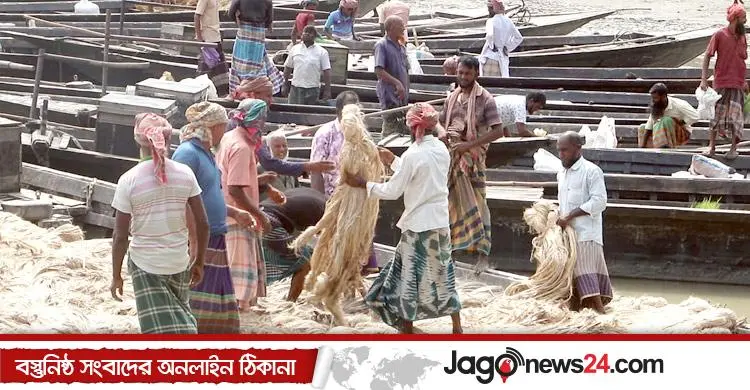
Jute was once the lifeblood of the country's economy, but the crop known as the golden fibre now seems to be fading. While the prices of daily necessities keep rising, the price of jute does not, and because they do not get a fair price for this back-breaking crop, farmers have lost interest in growing it.
Farmers in the northern region still depend on jute, but after years without fair prices they are left only with despair. Jute prices have risen somewhat this season, but farmers have not felt the benefit, because they were forced to sell cheaply at the start. Now that prices have risen, most farmers have no jute left at home, only sighs.
Acreage keeps falling
According to the Department of Agricultural Extension (DAE) in Gaibandha, jute cultivation in the district has been falling for six years. From 15,000 hectares in 2021, it fell to 14,313 hectares in 2022. The following year brought no change, and in 2024 it fell further to 13,790 hectares. In the current 2025-26 fiscal year the area rose slightly, by 32 hectares, but the agriculture department has still not met its target.
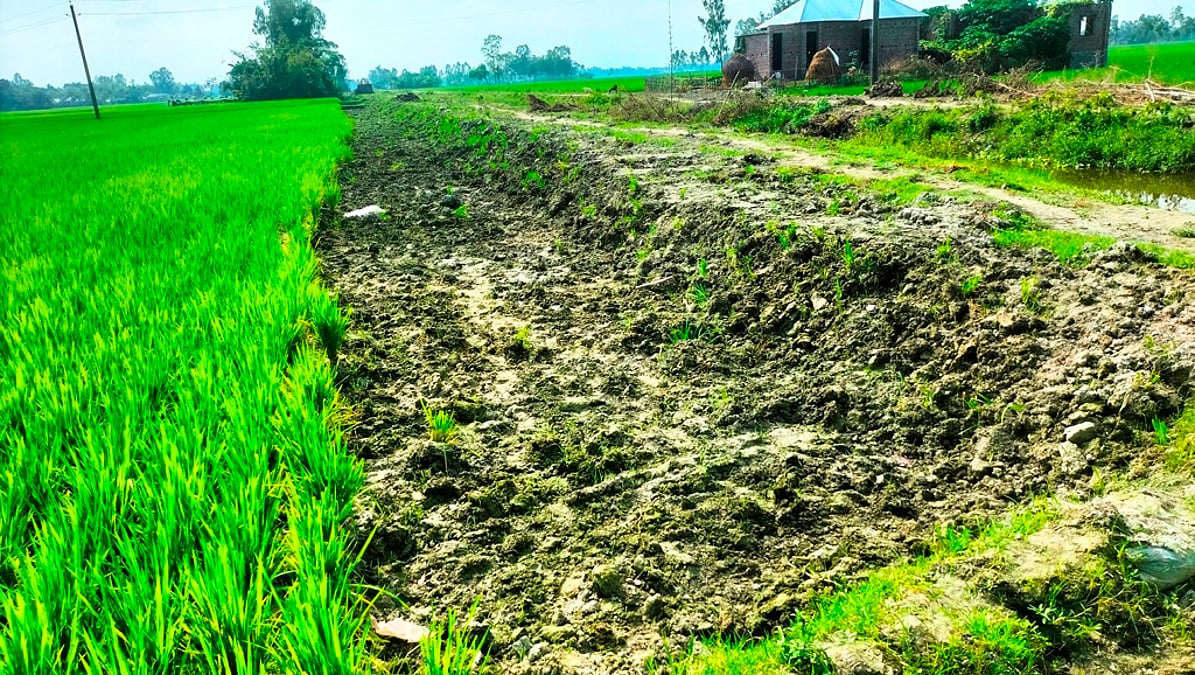
A few years ago farmers' fields in this northern district were lush with green jute plants; now other crops can be seen there. Because jute costs more to grow and farmers do not get a fair price, they are turning away from it. Production costs are rising while the price of jute is not rising but falling. Every year farmers grow jute hoping for a good price but end up with losses. After growing it, retting it, stripping the fibre and drying it in the sun, they bring it to market only to be disappointed by the price.
Prices rise too late
In the district's markets recently, jute was selling at Tk 3,900-4,200 a maund, compared with Tk 2,500-2,700 a month earlier. That means the price rose by about Tk 1,200 a maund in a month and a half. Yet farmers are not benefiting, because most had already sold their jute cheaply to repay loans. Those who stored it are the ones now taking the profit.
Moti Mia, a farmer from the char area of Fulchhari in Gaibandha, said: "The price is good now, but we have no jute at home. I sold at Tk 2,800 at harvest. If I had not sold then, I could not have repaid my loan. Those who stored it are the ones making a profit now."
Local farmers allege that jute prices in the markets are set by jute mill owners and a syndicate of middlemen (foria). They buy jute cheaply at the start of the season and store it, then raise prices when demand grows, so farmers are denied the chance to sell at a fair price.
Sobhan Mia, a farmer in Kanchipara union, said: "Fertiliser, seed, labour, everything costs more now. And we have to take the risk of floods and drought. After so much hard work there is no profit. Still, in the char areas nothing but jute can be grown at this time of year."
Nazmul Hossain of the same village lamented: "If the government bought jute from farmers from the start of the season, we would survive. Now we are just dying at the hands of the syndicate."
Wholesalers, on the other hand, say they do not set jute prices and that big mill owners dominate the market. Shah Alam, a wholesaler at Fulchhari market, said: "We buy jute locally, but the price is set on the instructions of mill owners in Dhaka. We only buy and sell at the price they give."
Because of natural disasters, rising production costs and market instability, farmers are losing interest in jute. But many still see a ray of hope: with effective government action, the golden days of the golden fibre could return.
Atikul Islam, deputy director of the DAE in Gaibandha, said the jute market is good at present. To encourage jute cultivation, 2,000 farmers in the district were given seed and fertiliser this year. But only if a fair price for jute can be ensured will farmers' interest in growing it return, he said.
Source: Jagonews24. First published in Bengali on The Agro News.


Comments
(0)