
By Faisal Habib
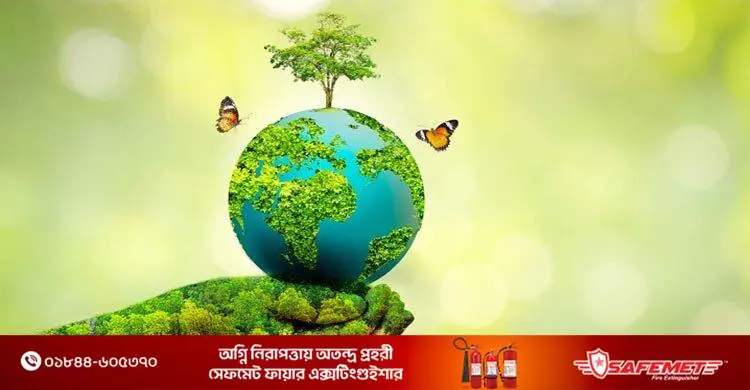
Protecting the environment is not just an idea; it is a debt we owe to future generations. In the words of James Audubon, "A true conservationist is a man who knows that the world is not given by his fathers, but borrowed from his children."
Education and awareness lie at the heart of environmental protection. The 1977 Tbilisi Declaration set out five key aims of environmental education: raising awareness, gaining knowledge, forming positive attitudes, developing skills and ensuring active participation. Environmental education is part of Bangladesh's national curriculum, but how effective it is remains a question.
Dhaka's poisoned air
Walk the streets of Dhaka and the level of air pollution is plain. According to the World Health Organization, lakhs of people in Bangladesh suffer breathing problems, asthma and lung disease every year because of air pollution. Unplanned urbanisation, poor dust control at construction sites, indiscriminate tree felling and toxic fumes from old vehicles make the city's air deadlier every day. Poor waste management is speeding up soil and water pollution. Our indifference to nature recalls an American saying: "Only when the last tree has been cut down... will we realise that we cannot eat money."
Students as a force for change
Bangladesh is a young country, with about 4 crore students in its educational institutions. If this huge workforce becomes active on environmental awareness, it could transform the fight to protect the environment. Experts at a webinar of the Poribesh Bachao Andolon put forward some very significant recommendations:
- Environment clubs: every educational institution should form an environment club, involving young people through identifying local problems, tree planting, waste management and awareness campaigns.
- Eco-entrepreneurship: young entrepreneurs should be encouraged to become "ecopreneurs", contributing to a sustainable economy through green technology and eco-friendly business models. Bangladesh's garment industry already has the largest number of green factories in the world, an example to follow.
- Online learning: easy-to-follow online courses should be launched for young people with the Department of Environment and other bodies, to help them understand and solve local and global environmental problems.
- Nature-based solutions: urban planning should prioritise nature-based solutions, effective steps are urgently needed to protect biodiversity-rich hills and haor areas, and the National Environment Policy 2018 must be properly implemented.
The story of young Salehin Chowdhury of Sunamganj gives us hope. On his own initiative he has turned his hillock into a sanctuary for birds and wildlife, proving that nature can be protected through individual and collective effort alongside the state's. A forest raised through private initiative in Mirsharai is equally inspiring.
In the fight to protect the environment we cannot turn back time, but we can build the future. Economic development and environmental protection are not opposites; sustainable development must bring the two together. Environmental education, active participation by the young, commitment at policy level and eco-friendly habits in each of our daily lives can secure clean air for our lungs, clear water in our rivers and a liveable future.
Let us take James Audubon's philosophy to heart. The duty to protect the world we have borrowed from our children is ours.
The writer is a lecturer in the Department of Management, Bancharampur Government Degree College.
Source: Jagonews24. First published in Bengali on The Agro News.

Comments
(0)