
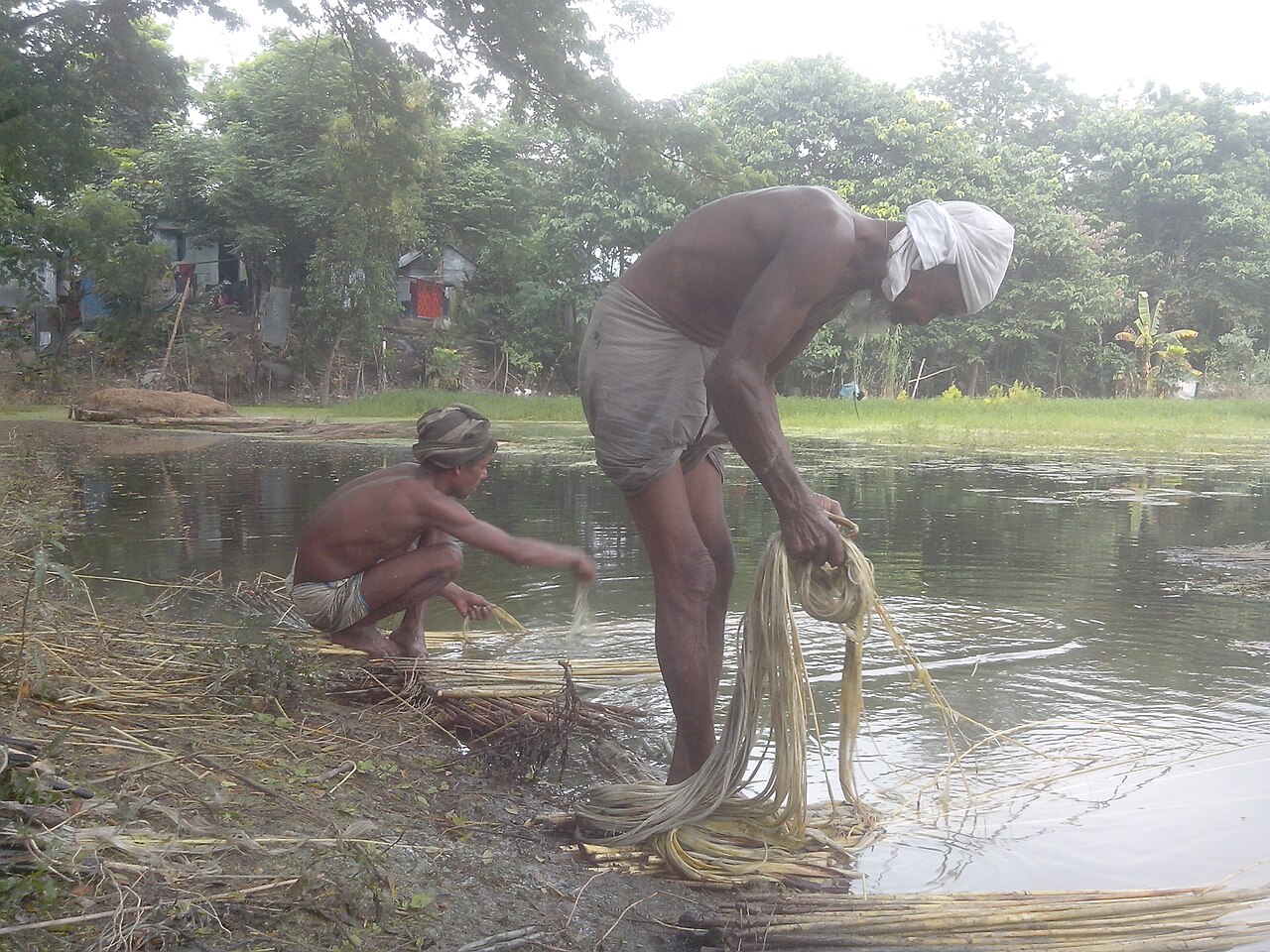
Five of the 11 jute mills in Cumilla have stopped production and the six still running are struggling. Talking to the Department of Jute, mill owners and managers, Ajker Patrika found the main causes to be a shortage of raw jute, rising production costs, financial trouble, a lack of skilled workers and modern machinery, and pressure to supply international markets at competitive prices.
The closed units include Fulhar Jute Mills in Burichang (founded 2010, capacity 260 tonnes a month) and NS Footwear (40,000 pairs of shoes a month), Usha Jute Industries (1983, 2,100 tonnes a month) and Asha Jute Industries (2013, 1,050 tonnes a month) in Debidwar, and Asiatic Jute Mills in Daudkandi (70 tonnes a month).
The mills still open are not running at capacity either. Sonali Aansh Industries in Daudkandi, with a monthly capacity of 2,100 tonnes of yarn and 540 tonnes of jute cloth, now makes 1,050 tonnes of yarn and 360 tonnes of cloth. Sadat Jute Industries in Debidwar makes 3,500 tonnes against a capacity of 3,600. Jute footwear makers are also below capacity: Lalmai Footwear in Adarsha Sadar makes 20,000 pairs a month instead of 50,000.
Md Shahzada Tipu, owner of Jihan Footwear, said there is demand for jute goods, but dearer raw material has pushed up production costs and prices, buyers are losing interest and staying competitive abroad has become hard. Krishna, manager of the closed Asha Jute Industries, said the mill stopped because of financial trouble and a lack of raw jute.
Mohammad Sirajul Islam, assistant director of the Department of Jute in Cumilla, said his office covers 11 mills in Cumilla and three in Chandpur, all three of which are closed. Most mills shut because of financial crisis, and the ministry has been told of the situation, he said.
Azam Khan Noman, president of the Cumilla Chamber of Commerce and Industry, said reopening the closed mills is urgent if the industry’s potential is to be used. People in the sector are asking for financial support, easy-term loans and policy help. The report is by Ajker Patrika’s Cumilla correspondent Delwar Hossain Akaid.
Photo: Rupon Das / Wikimedia Commons (CC BY-SA 4.0)
Source: Ajker Patrika


Comments
(0)