
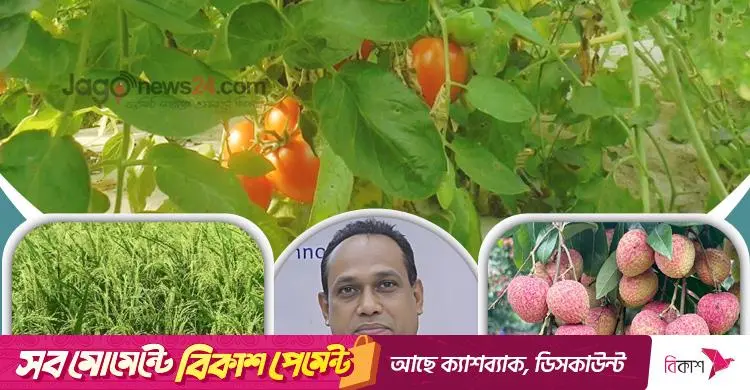
The dominance of foreign words in the naming of crop varieties has grown mainly out of scientific, commercial and institutional structures. But it creates a kind of detachment from local farming culture, language and identity. The farming is local, so why are the names foreign? If future varieties are named with weight given to local names, language and heritage, farmers will accept them more readily and they will reflect the country's own culture.
The naming and legal validity of crop varieties in Bangladesh are governed by the country's agricultural laws and selected international rules. When a new variety is developed in Bangladesh, naming and registering it is usually the responsibility of certain bodies.
Who names a variety
When an institute or researcher develops a new variety, the name is proposed by the breeder, researcher or institution concerned, such as BARI, BRRI or BINA. When the Bangladesh Rice Research Institute (BRRI) develops a new rice variety, for example, it proposes a name such as BRRI dhan89.
The Variety Registration Committee, under the Ministry of Agriculture, examines the variety and approves the name and registration. It checks the variety's scientific validity, its usefulness in farming and its novelty before approving the final name.
The legal framework
Several legal frameworks govern the naming and registration of crop varieties in Bangladesh. One is the Seed Act 2018, under which variety registration, quality control, marketing and management are carried out. The Act says variety registration is mandatory before any variety can be sold or distributed on the market.
A Plant Variety Protection Act (at draft stage) is being prepared to protect the intellectual property rights (IPR) of newly developed varieties. If it takes effect, breeders' rights will be secured, and nobody will be able to use a variety's name and traits without permission.
The UPOV Convention (International Union for the Protection of New Varieties of Plants) is followed internationally for variety protection. Bangladesh is not yet a member, but a variety protection law is being drafted.
Why foreign words dominate
There are some practical reasons and context behind the dominance of foreign words or culture in the names of crop varieties (grains, crops, vegetables and so on):
- The influence of international research: many varieties are developed with help from foreign research organisations (such as IRRI, CIMMYT and ICRISAT) or development partners. Because the parent material, hybrids or technology used are foreign, the names carry that stamp, as in IR64 or BRRI dhan29, where "IR" or "BRRI" is the name of an international or national research institute.
- Maintaining scientific and technical standards: foreign words or names are often kept as recognition of scientific classification or origin. This secures a variety's identity to international standards and helps research and exports.
- Raising acceptance of improved varieties: a foreign name often gives a variety an "improved" or "high-yielding" image in the market. Farmers tend to believe a foreign name means an improved variety, for example "hybrid tomato – Ratan F1" or "Lal Teer 4".
- The influence of commercial and multinational companies: many varieties are developed or exported by multinational seed companies, which use English or foreign words to keep their global brands, for example BARI Hybrid Tomato-9 (Arka Rakshak) and Super Sweet Corn.
- Legal and policy limits on naming: variety names still often rely on institutional abbreviations (BRRI, BARI, BU, BAU and so on) and numbers rather than the local language, so the names are lifeless or dependence on foreign names grows.
- Undervaluing local names and linguistic marginality: many research and innovation institutions have an attitude or habit of not giving weight to Bengali words or culture in naming varieties, so naming based on the local language is ignored.
Nurseries naming at will
Today, plant nurseries, local and foreign seed companies and horticulture centres in the country are using names of their own choosing for varieties and saplings, outside any legal framework. As a result farmers are confused, and well-known varieties developed through local research are at risk of being lost. Often several different names are used for the same variety, which fails to protect its purity and quality.
To stop this irregularity, a clear and mandatory crop variety naming policy is needed. The involvement of agricultural universities, agricultural research institutes and the Department of Agricultural Extension (DAE) in naming varieties and marketing saplings must be fully ensured. A transparent, centrally controlled authority is needed for naming and approval, which will verify a variety's scientific data before approving it. If a policy and controls on naming crop varieties and saplings cannot be put in place, the country's native and well-known varieties and saplings will soon be lost for ever.
A lasting solution is not possible without direct oversight by Bangladesh's Ministry of Agriculture and an effective policy. Environmentalists and agriculturists are urging the government to take swift action on the issue.
Source: Jagonews24. First published in Bengali on The Agro News.

Comments
(0)