
Many people who start a cattle farm without training or basic knowledge of animal health give up within a year or two after losses, says the owner of an integrated farm at Abdullahpur in Keraniganj. Speaking to Dinajpur TV, he said six months to a year of government training before starting works best.
Relying on a vet for every illness drives up costs, in his reckoning: a cow with a cold means a three-day course at Tk 400 to 500 a visit. Knowing basic care saves much of that.
He argues against spending crores on buildings at the start, advising a low-cost shed for around a lakh of taka and adding good cattle and calves gradually. In his 120-by-26-foot shed, cut drums serve as feed troughs instead of brick ones. He mixes most of his own concentrate from locally collected maize and rice bran, buys only two or three ingredients such as wheat and chickpea bran, and keeps a buffalo on the cattle's leftover feed.
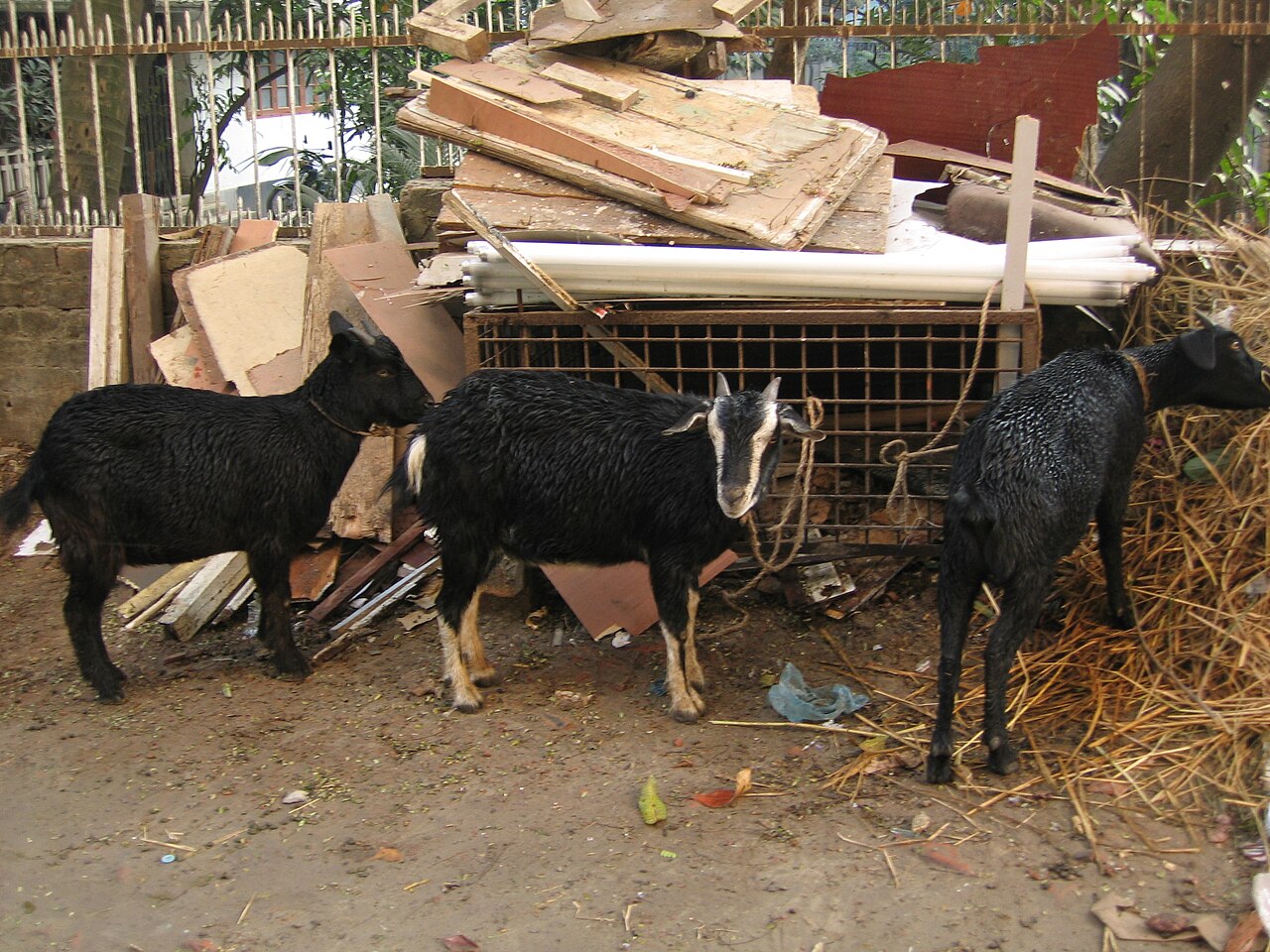
The farm now has more than 30 cattle, goats and garol sheep. He began with four garol on the roof of a seven-storey building, and they grew to 17 in two years. In his experience a pure Black Bengal goat can have up to eight kids a year.
He favours combining milk with fattening. In 2011 his family's farm produced 220 litres a day but lost heavily when cows did not come into heat on time; he now aims for 17 to 18 litres a day so that, after the calves are fed, milk sales cover about 80 per cent of the herder's wages and daily costs. For fattening he keeps calves of the local Hasa, Red Chittagong Cattle and Rathi Sahiwal breeds.
Photo: Ragib Hasan / Wikimedia Commons (CC BY-SA 4.0)
Source: Dinajpur TV
Comments
(0)