
On 25 December 2008, on a roadside slope in Rangamati town, agriculturist and nature writer Mrityunjoy Roy stopped in front of a large tree whose crown was covered in flowers, the drooping branches hung with small ball-shaped blossoms like garlands. His companion Pabon Chakma told him it was called fulsumari. In a piece published in Prothom Alo, Roy sets out what he has since learned about it.
According to Pabon Chakma, the wood is so hard that saws break when mills try to cut it and old trees are very difficult to fell; hill people value the timber more than teak.
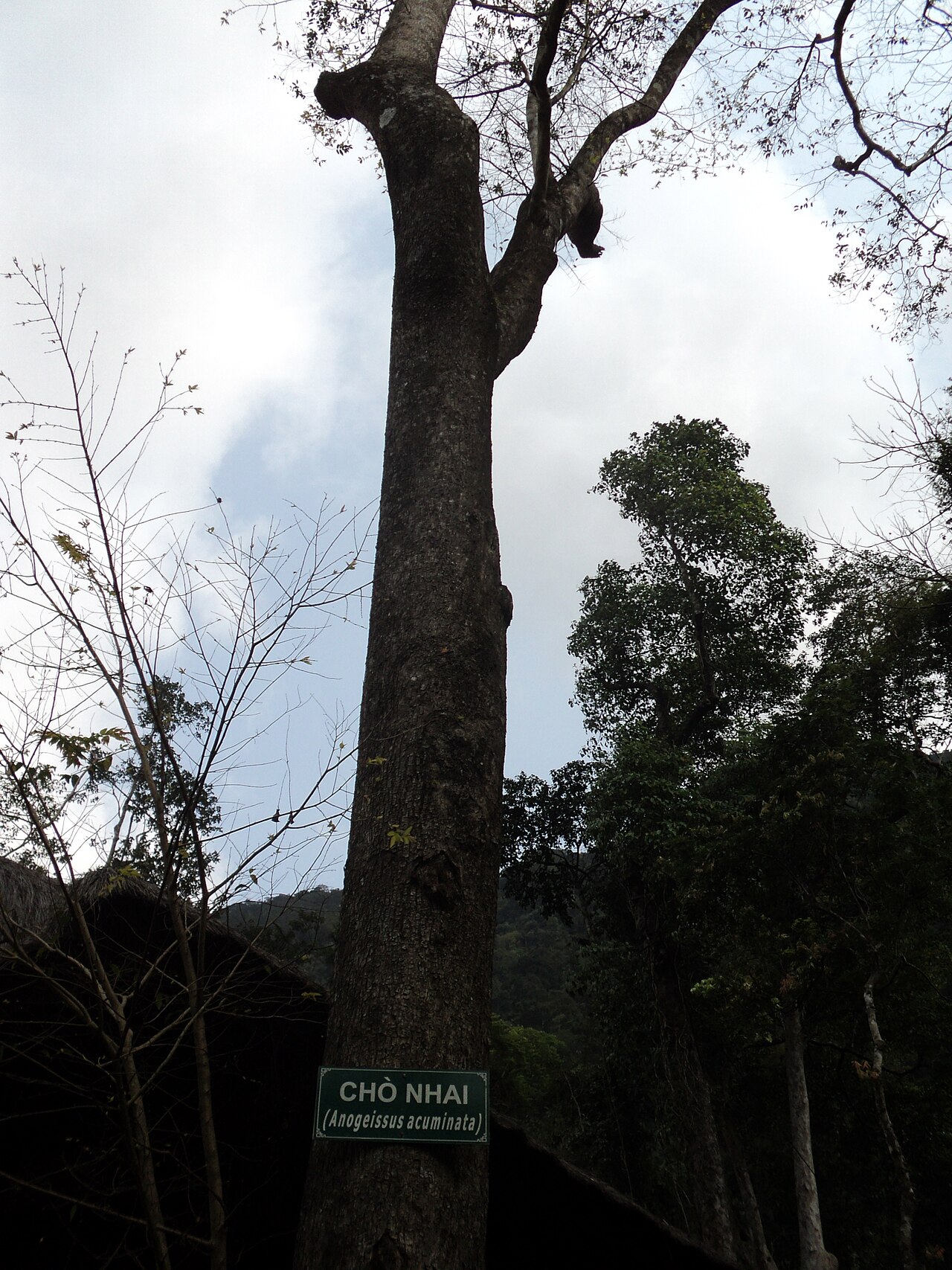
The architect Mushtaq Qadri, who lives in Canada, gave Roy its botanical name: Terminalia pendula var. pendula, formerly Anogeissus acuminata, of the family Combretaceae, which makes it a relative of tropical almond, bahera and arjun. The Encyclopedia of Flora and Fauna of Bangladesh lists its local name as chakoya. In Bengali it is also called sakua, heuri and koshoi; in Mro, krong; in Khasi, tengthri; and in Chakma, fulsumari. Its English name is button tree, and it also grows in India, China and Vietnam.
Fulsumari is a medium-sized tree, 9 to 35 metres tall, with grey-silver bark that cracks with age and thorny young shoots. Its small leaves, 3 to 4 centimetres long, turn yellow-red before falling in winter and return in spring. Tiny yellow-green flowers open in round clusters about a centimetre across, with stamens sticking out like fuzz. It flowers and fruits mainly from June to October, though Roy saw it in bloom in Rangamati in December. It grows from seed.
The tree is valued for timber, fodder and fuel. Roy writes that researchers rank its wood as the third hardest in the world, comparable to teak in strength. Its leaves yield a dark green dye, and in summer the green foliage is fed to livestock.
The tree also has a place in hill folklore. A Mro tale tells of a young woman, Sairu, who leapt from a hill after a failed love; where she fell, a fulsumari and a dharmara tree grew so close together that they seemed to embrace. Mushtaq Qadri asks why such a handsome tree has never been considered as a street tree for Dhaka.
Photo: AlleinStein / Wikimedia Commons (CC BY-SA 3.0) (a button tree in Vietnam)
Source: Prothom Alo


Comments
(0)