
Although the global market for agro-processed products is growing fast, Bangladesh has not been able to build a matching position in it. Instead, the sector's export earnings have fallen steadily over the past few years. A lack of product and market diversity, the absence of internationally accredited laboratories, a shortage of trade agreements and high production costs have left Bangladesh well behind competing countries.
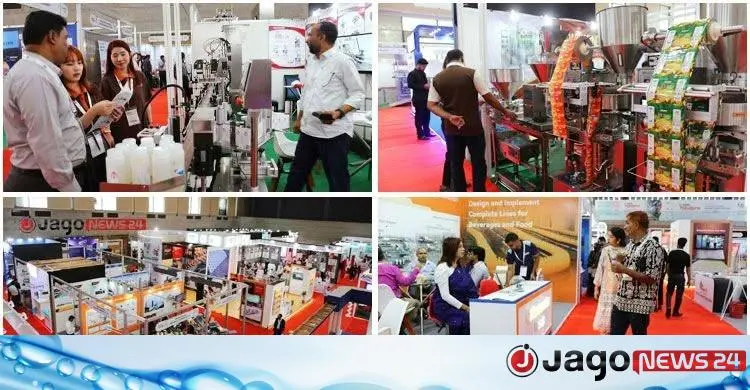
These issues were raised on the afternoon of Saturday, 12 September, at a technical session titled "Export of Agro-Processing: Challenges and Way Forward" at the 11th Foodpro International Expo of the Bangladesh Agro-Processors' Association (BAPA), held at the International Convention City Bashundhara (ICCB) in the capital.
The keynote paper was presented by Abu Saleh Md Shamim Alam Shibly, research fellow at the Centre for Policy Dialogue (CPD). BAPA president Mahbub Anam and senior vice-president Uzma Chowdhury were present.
Moderated by BAPA general secretary Syed Muhammad Shoaib Hasan, the panel included Sajjadur Rahman, deputy editor of The Business Standard; Mizanur Rahman, executive director (export) of PRAN-RFL Group; and Parvez Saiful Islam, chief executive officer (CEO) of Square Food and Beverage.
A tiny share of a growing market
The keynote said the global agro-processed products market is worth about $200 billion and will reach $236 billion by 2028, growing at 6.6 per cent. Bangladesh has about 1,000 processing factories, large and small, of which about 700 are involved in exports. Yet Bangladesh's share of this huge market is negligible: if world trade is taken as Tk 100, Vietnam's share is Tk 3.89, while Bangladesh's is only 5 paisa.
Worryingly, the sector's export earnings have hit bottom in recent years. Agro-processing earned $1.28 billion in 2020-21, but this fell below $1 billion in 2024-25.
The paper said Bangladesh's exports are confined mainly to a few products and markets. About 45 per cent of total exports come from biscuits and snacks. Shrimp, once a major strength, is declining. Meanwhile competitors such as the Philippines and Vietnam are capturing world markets with diverse products. Bangladesh's exports are stuck mainly in the Middle East and Gulf, while competitors dominate big markets such as the United States and the United Kingdom.
Experts said Bangladesh is among the world's top 10 producers of 22 crops. But high domestic demand and heavy waste for lack of effective storage mean no particular farm product can build a lasting base in international markets. Fragmented landholdings, port-related complications, high irrigation costs and high interest rates on loans also raise production costs, and small entrepreneurs in particular suffer from a lack of finance.
The session put forward a set of recommendations to revive the sector, including ensuring Good Agricultural Practices (GAP), setting up internationally accredited laboratories and producing to global standards. Experts also stressed signing trade agreements, raising export incentives, reducing irrigation costs and widening duty-free facilities for importing capital machinery.
Industry voices
Panellist Parvez Saiful Islam, CEO of Square Food and Beverage, said: "We touched $1 billion in agro-processed exports and then fell back. The main reason is repeated policy changes. We were doing quite well in aromatic rice exports, but they were suddenly stopped, and we lost established buyers in the international market."
He said that similarly, although there is great scope to export spices, the necessary irradiation facility (for sterilising products) does not exist, and the little there is is often shut, so exports cannot be made properly.
He added that there is a huge trillion-dollar halal products market worldwide. No one can make more precise and reliable halal products than Bangladesh, yet policy weaknesses mean the country cannot take advantage of this great potential. Everyone needs to work together to remove specific sector-level barriers, he said. The solutions are very simple, but year after year there is only discussion and no real progress.
Uzma Chowdhury, director of corporate finance at PRAN-RFL Group and BAPA senior vice-president, said: "We want to take many initiatives to advance the agro-processing sector, but when it comes to implementation we get no policy or coordinated support. And instead of being encouraged to try new things, farmers are losing interest. We once exported a lot of betel leaf and fish; why we can't now needs deep research."
She said that despite world-class potential, many products cannot hold their markets. "Even after pleading for permission to export rice when there was international demand, we could not export, which is very frustrating."
She added that the country is rich in fertility, with not an inch of land left uncultivated, yet it is falling behind for lack of planning. To use this potential, the negative mindset must quickly be left behind and effective steps taken.
Licences and testing
Sajjadur Rahman, deputy editor of The Business Standard, said people's eating habits around the world are changing fast, and products must be diversified to keep pace. Although there is much potential, small companies cannot survive because of bureaucratic complications. Starting an agro-processing business requires two to three dozen licences, which mainly creates opportunities for harassment and bribery.
He said it takes entrepreneurs one to two years to get a single approval, a very serious obstacle for the sector.
Mizanur Rahman, executive director (export) of PRAN-RFL Group, said: "Although we export to 138 countries, about 90 per cent of our earnings come from expatriate Bangladeshi and South Asian (ethnic) markets. We cannot tap the huge mainstream global market. And 90 per cent of our exports go to ordinary variety or grocery shops, because we cannot meet the compliance and product standards needed to enter international modern trade or supermarkets."
He also noted that the country has no internationally standard testing facilities. By the time lab tests are done abroad, international buyers' deadlines have passed, making it hard to stay in global value chains while keeping high standards. Compared with competitors, the lack of free trade agreements (FTAs) and duty-free access is also clear.
Source: Jagonews24. First published in Bengali on The Agro News.


Comments
(0)