
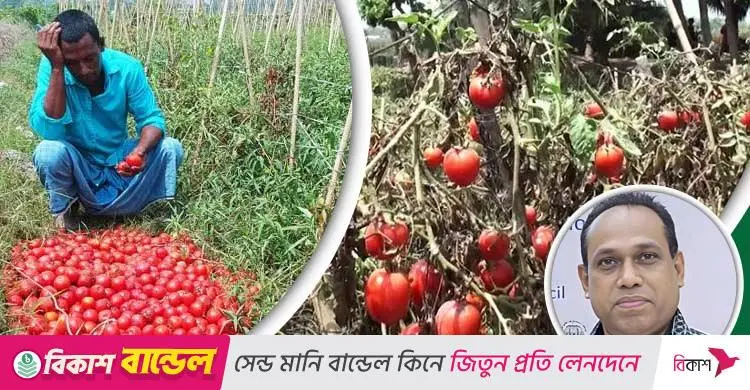
Bangladesh is an agriculture-dependent country. A large part of its economy, employment and food security rests on farming. Yet 53 years after independence, the country still lacks enough agro-based industries, modern rice mills, cold storage and processing plants. As a result, farmers are deprived of fair prices for their produce, and the potential of the farm sector is not being fully used.
Huge output
Bangladesh produces vast quantities of farm goods every year:
- Paddy and rice: annual demand is about 350-380 lakh tonnes.
- Vegetables: according to various sources, 6.5 to 19 million tonnes are produced a year. Bangladesh is currently the world's third-largest vegetable producer.
- Fruit: about 14.8 million tonnes a year, including banana, mango, jackfruit, guava and pineapple.
- Fish: total output in the 2023-24 fiscal year was 50.18 lakh tonnes, of which hilsa was 5.29 lakh tonnes. Bangladesh ranks first in the world in hilsa production.
What is missing
Against this output, the country still lacks enough modern rice mills and grain processing centres, cold storage and cold chain infrastructure, fruit and vegetable processing industries, and fisheries and livestock-based industries. Farmers are forced to sell at seasonal prices, which makes their incomes uncertain. Even a surplus often causes prices to crash, because there is no way to store or process it.
The economic and social effects are clear: farmers' incomes fall and they lose interest in farming; unemployment rises because agro-based industry is not creating jobs; and export potential is lost because processed products of international standard are not made.
The way forward
Taking Bangladesh's farm sector forward through industrialisation requires encouraging public and private investment in agro-based industry, setting up technology-driven processing centres, training farmers and improving market links, and building export-oriented agro-industries. Bangladesh's farm output may be world-class, but agro-based industrialisation is essential to realise its full potential. Since independence, past governments have taken hardly any visible farmer-friendly steps to set up agro-based factories, cold storage for vegetables and fruit, or agro-industry.
Traders say agro-based industry has not grown because of inadequate gas supply and the lack of cold storage and transport facilities. Local farmers believe their interests will not be protected unless inter-district road and rail links are made farmer-friendly. Without coordinated action by public and private bodies and the use of modern technology and machinery, sustainable farming will not be possible and fair prices for farmers will remain uncertain.
Without agro-based industry, fair prices for our farmers are not assured, and opportunities to process and store crops properly remain limited. Farmers become dependent on middlemen, they do not get the true value of their labour, and the rural economy misses its chance to grow. Building agro-based industry would not only improve farmers' lives but make the country's food security and economic growth sustainable.
Source: Jagonews24. First published in Bengali on The Agro News.

Comments
(0)