
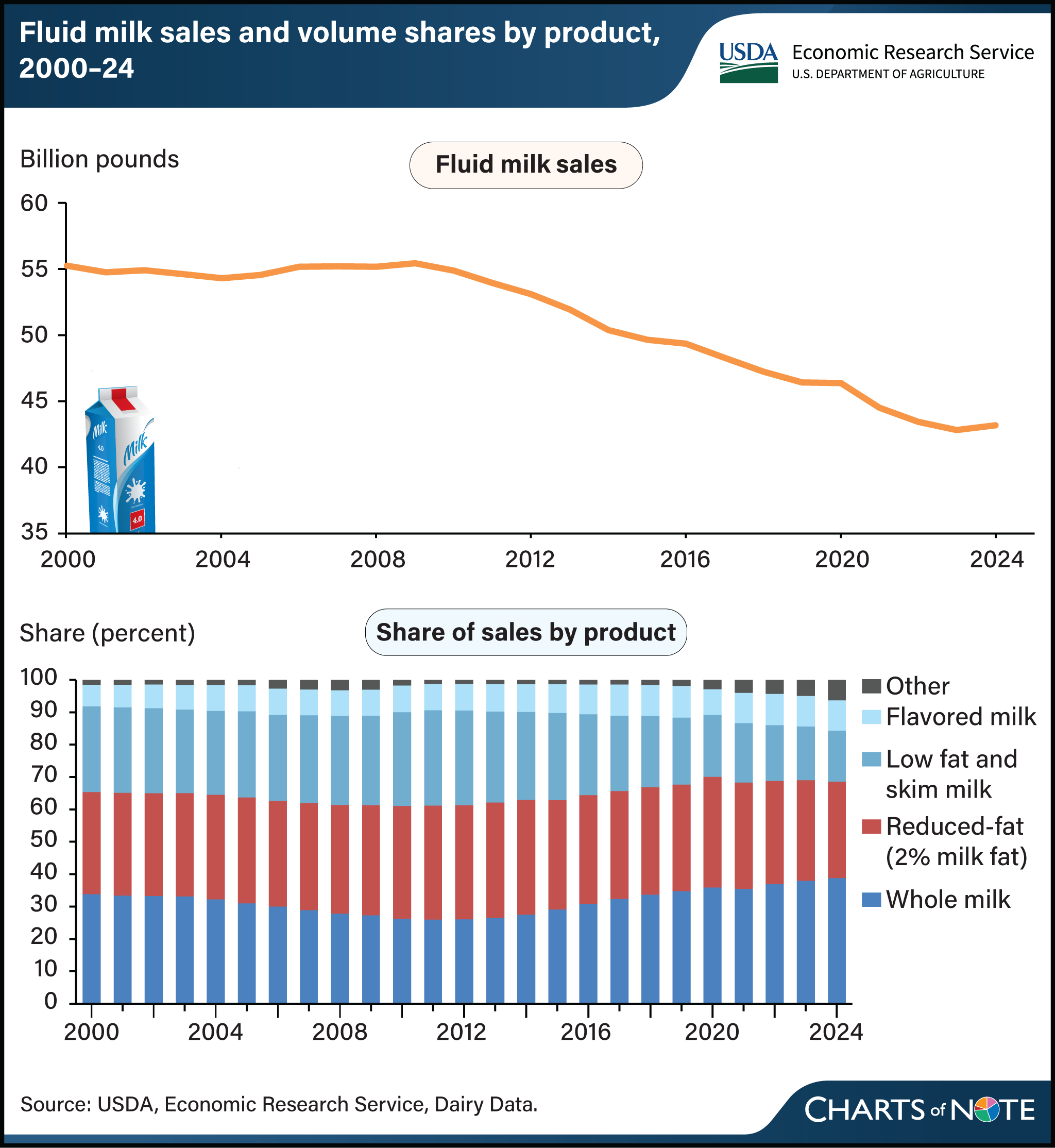
Americans are drinking less milk than they did 15 years ago, but a growing share of what they do drink is whole milk, according to a Chart of Note from USDA's Economic Research Service (ERS).
Total fluid milk sales have fallen from a peak of about 55,433 million pounds in 2009 to 43,179 million pounds in 2024, ERS data show, a 22 percent decrease despite a modest increase from 2023 to 2024. The agency attributes the decline to a falling proportion of young children in the U.S. population, the increasing availability of alternatives and changing consumer preferences.
Within that shrinking total, whole milk has been the winner. Having been the leading category in the early 2000s, its share of sales dropped to a low of 26 percent in 2012 but has since risen to 39 percent in 2024. ERS says the rebound suggests that consumer concerns over dairy fat, which took hold in the early to mid-2000s, have diminished.
Other categories have moved the other way. Reduced-fat milk was the dominant category from 2005 to 2017, with about 34 percent of sales, but its share has declined since 2017 to about 30 percent in 2024. The combined low-fat and skim category has declined since 2015 and stood at 16 percent in 2024, down more than 13 percent from its recent highs in 2010 and 2011.
Flavoured milk and the other fluid milk products, including eggnog and buttermilk, are smaller categories, together averaging about 13 percent of sales over the past five years.
Recent data from USDA's Agricultural Marketing Service indicate the long-term decline in total fluid milk sales likely continued in 2025, while whole milk held its share. For dairy farmers and processors, the shift back toward whole milk changes what the fluid market pays for: butterfat, which was once skimmed out and sold elsewhere, is increasingly staying in the carton. The chart, prepared by ERS economist Adriana Valcu-Lisman, draws on the ERS Dairy Data, which report fluid beverage milk sales quantities by product.
Source: USDA Economic Research Service


Comments
(0)