
In Islam some duties fall on each person individually, while others must be carried out collectively to meet the needs of society. The second kind is called fard kifaya, a communal obligation. Writing on Prothom Alo's Islam page, Iftekharul Haque Hasnain explains what the rule means and where it applies.
The core of fard kifaya, he writes, is that when enough people come forward to carry out a task society needs, the others are released from it. If no one comes forward, everyone who was able to do it and neglected it is held to account.
He gives three reasons for the rule. No one can do everything alone: some must learn medicine, some religious knowledge, some must serve in the courts and some in farming. The washing, shrouding, funeral prayer and burial of a deceased Muslim are fard kifaya, a reminder that the living remain responsible for a person's dignity after death. And a society that fails to produce people with the knowledge and skills it needs becomes dependent on others.
The first field of application is gaining and spreading religious knowledge, supported by verse 122 of Surah At-Tawbah, which asks that a part of every group devote itself to understanding the faith and then warn its people. On medical care he cites verse 32 of Surah Al-Ma'idah, that whoever saves one life is as if he saved all of humanity, and on justice verse 58 of Surah An-Nisa.
The writer counts modern education among these duties too: medicine, engineering, agriculture, economics, information technology and cyber security are essential to society today. He quotes Sahih Muslim (hadith 2699), that God eases the path to Paradise for anyone who travels a path in search of knowledge.
Farming, industry and lawful trade are also presented as part of meeting society's needs, with a narration from Sahih al-Bukhari (hadith 2072): no one has ever eaten better food than what he earned with his own hands. Protecting people's lives and property, and rescuing those caught in fires or natural disasters, are listed as communal duties as well.
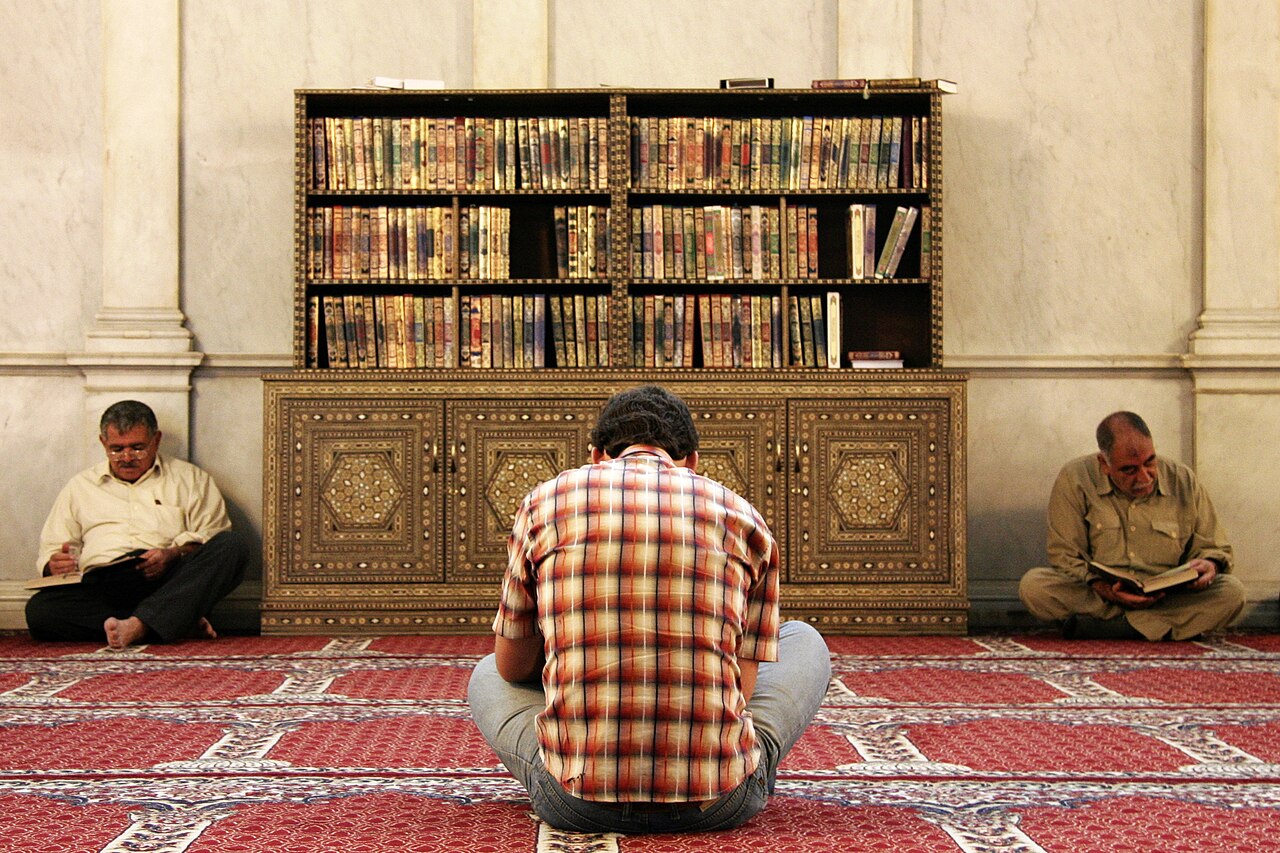
Photo: Erik Albers / Wikimedia Commons (CC0)
Source: Prothom Alo


Comments
(0)