
By Nusrat Jahan Boishakhi
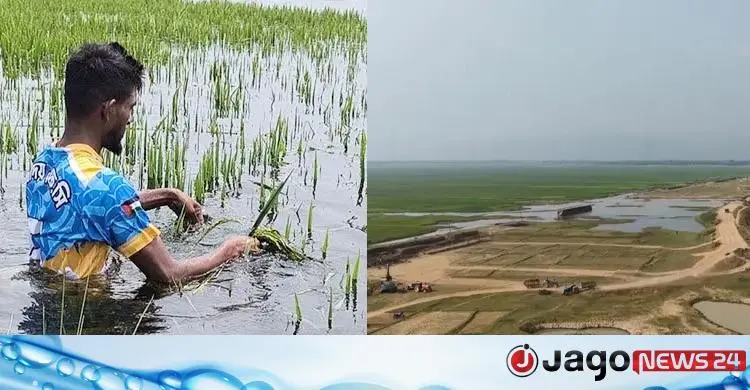
Sunamganj, known as the "daughter of the haors", is one of the country's most neglected and underdeveloped districts. It has more than about 137 haors, large and small. Most people live by farming, boro paddy is grown on about 63 per cent of the district's land, and Sunamganj is among the top 10 boro-producing districts in the country.
The sad thing is that while the rest of the country is carried along on a tide of development, life here is still beset by problems. Tears are nothing new in the lives of the people on the edge of the haors; with every change of season their sighs descend like thick fog. Year after year the people of this district live by depending on nature, and they must also live with nature's cruelty.
A man-made curse
A curse bigger than nature has settled on their shoulders: man-made mismanagement, unplanned embankments, waterlogging and neglect in the name of development. The tears of the haor people today are not only floodwater; they are a long lament for failed policy. In the haors, unplanned embankments have become a curse rather than development.
There have been many plans for the haor region over the years. Every project aimed to protect farmers' crops, stop early floods and strengthen the rural economy. But the reality seems to be the opposite. Irregularities in embankment building, work outside the design and failure to finish on time have become the norm. Every year the same complaints come: the embankments are weak, not properly compacted, built with substandard materials, and contractors do not wait for the haor to dry out.
When an embankment finally breaks, all the blame is put on natural disaster, yet without human short-sightedness many breaches could be prevented. Unplanned embankments block drainage paths. In some places they are built so high that water trapped in the haor cannot get out, causing long waterlogging that makes farmers' lives unbearable and drowns their dreams.
One crop, one year
Sunamganj's farmers get through the year on a single crop, boro paddy. That one crop sustains their families. When it goes under water before harvest, they suffer not only financial loss but also break down mentally. Waterlogging has become so bad that even when the crop is ripe, they cannot go into the fields or take in machines. Farmers stand and watch their green fields turn yellow and then wash away in the current.
Every family is a story, a history. When the paddy is lost, it is not only a loss: debts go unpaid, new seed cannot be bought, a daughter's wedding cannot be held, the costs of children in school and college cannot be met. Above all, the farmer's future is ruined. Neglected Sunamganj seems a district left outside development.
The haor region is always promoted as a "district of natural beauty", a "land of water" and a "store of fish". But the reality of people's lives lies buried behind this beauty. Big projects are announced for Sunamganj, but implementation is weak, oversight is thin and there is no lasting solution. There is talk of modernising haor water management, but no proper drainage or river dredging. Transparency in embankment building is still a challenge.
Satellite monitoring for early warning of early floods has improved, but the information does not reach Sunamganj's farmers. Risk-based insurance or safety nets for farmers are still not effective. Above all, the district's voters vote but do not get services, and pay taxes but do not get security. Policymakers in the capital make speeches about the haors, but no one goes into the field to hear the haor people's cries.
What farmers ask for
Helpless people ask when there will be a permanent solution. Everyone knows nature cannot be controlled. But why do man-made disasters keep coming back, why are repairs not done in advance, why are modern systems not built to end waterlogging? Farmers have never asked much of the state. They only want their one crop to be saved, so that a whole year's work is not in vain. They do not want charity or grants; they want durable embankments, work done on time and proper drainage.
The cries of the haor people are hardly news any more; everyone seems used to them. Every year we see that the embankment of one haor has broken, the crop of another district has gone under. Year after year the same thing happens. The biggest problems behind it are lack of planning, irregularities and corruption, weak oversight, disruption of the natural flow of rivers and haors, and farmers' voices going unheard in policymaking.
If proper planning, modern technology and transparency can be ensured today, Sunamganj can stand up again. The region could change not only in rice production but in tourism, fisheries and agro-forestry. But that needs political will and promises carried out. The cries of the haor people are not theirs alone; they reflect the shortcomings of the country's farm system.
We must remember: if the farmer survives, the country survives. If we do not stand by them today and do not give lasting solutions, the same wave of tears will come again next year. If the authorities paid special attention to farming in this district, the people and agriculture of the country would develop, which would indirectly strengthen the national economy.
The writer is a student in the English department at Eden Mohila College.
Source: Jagonews24. First published in Bengali on The Agro News.
Comments
(0)