
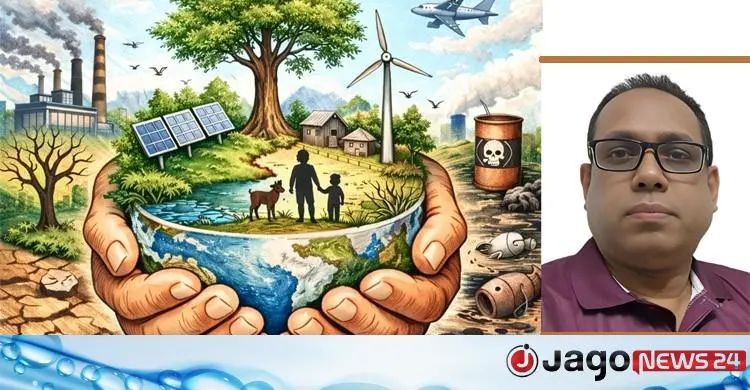
Protecting the environment is becoming a deeper and more urgent question by the day. Industrialisation, urbanisation and consumerist lifestyles are seriously damaging nature's balance. Global temperatures are rising while natural disasters grow stronger and more frequent. Rivers, canals and wetlands are being encroached on and polluted, forests are being cleared unchecked and toxic gases in the air are rising alarmingly, threatening not only nature but human life. For a densely populated, climate-vulnerable country like Bangladesh the crisis is even more severe: a small rise in sea level, abnormal rain or drought directly hits livelihoods and food security. Protecting the environment is therefore no longer a luxury but a condition for survival, and the idea of "Save the environment, build a healthy future" must become part of our thinking, policy and daily life. Only through awareness, proper planning and collective effort can we build a safe, liveable world.
Plant trees
Trees are the lungs of nature. They absorb carbon dioxide and supply the oxygen essential to human life. Sadly, forests are being destroyed continually by urbanisation and industrialisation, raising greenhouse gases in the atmosphere and global temperatures. Planting trees is tied to economic and social development as well as the environment. Fruit, timber and medicinal trees can provide food and income while helping to prevent soil erosion, control floods and conserve biodiversity. If every family planted at least one tree a year and cared for it properly, a vast green revolution would be possible across the country.
Give up plastic
Plastic has made daily life easier, but its harm has become severe. Single-use plastic is the biggest threat to the environment: it stays intact in the soil for hundreds of years and pollutes rivers, seas and farmland. We must become aware and use alternatives such as cloth bags, paper packets and biodegradable products. Taking our own bag to market and using glass or steel bottles instead of plastic ones are small habits that can make a big difference. Alongside government policy, public awareness is vital, and if we take responsibility ourselves, a plastic-free society can gradually be built.
Protect rivers
Bangladesh is a land of rivers, bound up with its culture, economy and life. But rivers are under serious threat from encroachment, pollution and unplanned use. Factory waste, polythene and rubbish are dumped straight into them, degrading water quality and endangering aquatic life. When a river's natural flow is blocked, floods, drought and problems for water transport follow. Protecting rivers needs strict enforcement of the law and greater public awareness: keeping riverbanks free of encroachment, better waste management and river restoration projects, with ordinary people also acting responsibly towards rivers.
Save energy
Demand for energy is rising while natural resources are limited. Overuse of fossil fuels harms the environment and is a major cause of climate change, so saving energy and using renewable energy are now essential. Simple steps such as switching off appliances when not needed, using LED lights and making more use of solar power save electricity and protect the environment. Renewable energy must be expanded through government and private-sector cooperation, using sources such as solar, wind and biogas to build a sustainable energy system.
Protecting the environment is not the responsibility of one person or institution but a collective effort by the government, NGOs, educational institutions and the public. Children should be made aware from an early age through environmental education, and the media and social media can play an important part. Highlighting positive initiatives and success stories will inspire people further. The decisions we make today will affect the next generation, so now is the time to become aware, take responsibility and act.
In conclusion, protecting the environment is an essential condition for our survival. Simple steps such as planting trees, giving up plastic, protecting rivers and saving energy can start a great change. Social change is born from personal awareness and can grow to national and global scale. If each of us is a little more responsible, pollution can be reduced and natural resources and biodiversity protected. Let the call "Save the environment, build a healthy future" become part of our daily lives, so that we can leave the next generation a beautiful, safe and sustainable world.
Source: Jagonews24. First published in Bengali on The Agro News.
Comments
(0)