
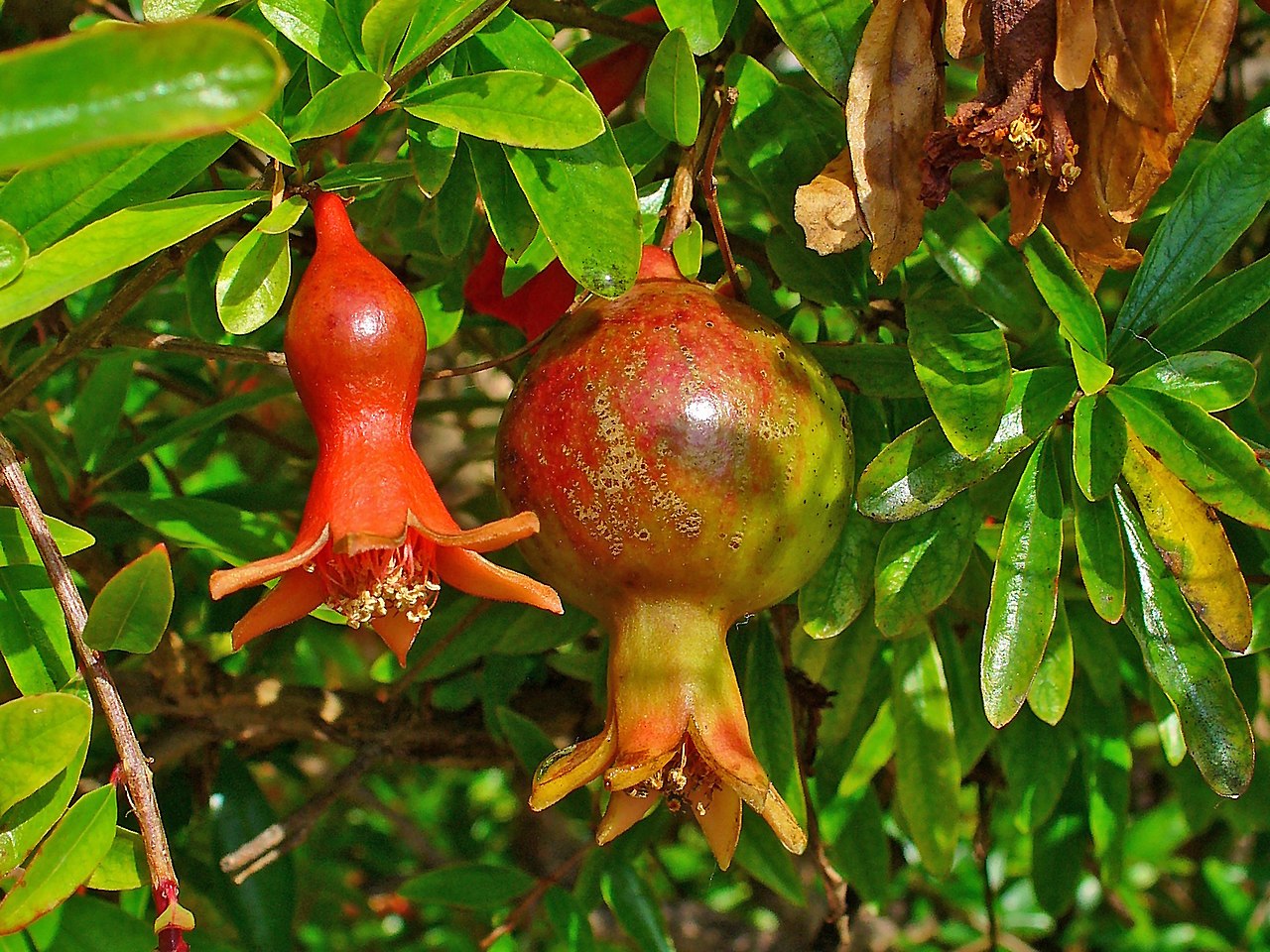
Nihal Singh, a farmer from Bawatara village in Sayla tehsil of Rajasthan's Jalore district, took up pomegranate growing in earnest after retiring as a chief manager at the State Bank of India. His family has grown pomegranates for about six years, and he now manages an orchard of around 20 acres with roughly 5,000 plants aged three to six years, raised from tissue-culture plants bought in Nagpur. The current crop is his sixth.
He told Krishi Jagran that he did not switch overnight. At first his inputs were about 80% chemical and 20% biological; the ratio later moved to 50:50, and he is now close to a fully biological system, though he says limited chemical sprays are still used when a problem demands it. His advice to other farmers is to test biological inputs on a few plants or a small area before changing the whole farm.
Soil was the first problem. He says the carbon content of his fields was only about 0.25-0.30%, which limited water holding and nutrient uptake, so he turned to organic matter and biological inputs to keep moisture and nutrients available. Water is the second: his tube well goes down about 900 feet, with water found at around 700 feet, and he waters by drip according to the plants' needs, noting that too much water can also raise disease risk.
In Jalore's climate he follows a crop cycle that starts in June, with harvests from December spread over about three months, and he keeps feeding and watching the plants during the rest period after March. He walks the orchard regularly for caterpillars, thrips, fruit fly, blight and fungal diseases, using biological control first.
By his own figures, his orchard spending fell from about Rs 20 lakh last year to about Rs 8-9 lakh so far this year, partly because he now uses fewer separate nutrient products. He estimates a possible harvest of at least 100 tonnes and an annual turnover of Rs 60-70 lakh from pomegranate and other crops, and says traders who come to inspect the fruit on his farm have never paid him below Rs 50 a kg. Krishi Jagran notes that these are his farm's own estimates and that results vary with soil, variety, weather and management, and that premium prices for biologically grown fruit are not guaranteed in every market.
Photo: H. Zell / Wikimedia Commons (CC BY-SA 3.0)
Source: Krishi Jagran

Comments
(0)