
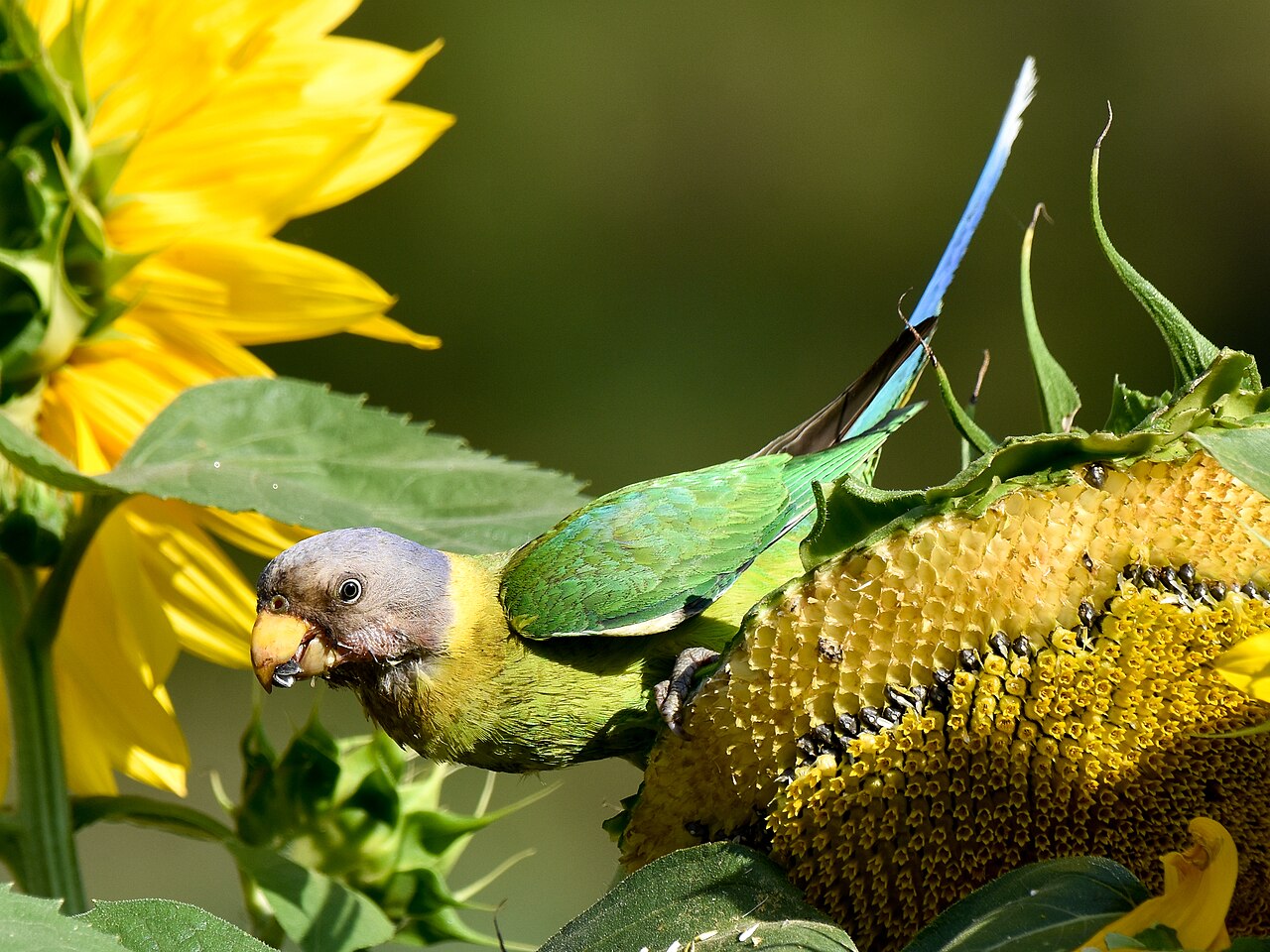
Plum-headed parakeets, known locally as hiramon tiya, are being seen in the crop fields of Donoil village in Badalgachhi upazila, Naogaon. The flocks come down to the fields at first light to look for food, eat grass seed and grain, fly off when they sense people and return a little later.
Bird lovers and photographers are travelling to see them from Naogaon and from other districts including Dhaka, Rajshahi and Joypurhat. Sanjoy Kumar, a bird photographer from Badalgachhi, told Samakal that about 150 to 200 of the parakeets have been seen in the area this year. They come mainly in search of food, he said, stay a few months and then move elsewhere.
Arif Afran, a young man of the village, has grown Johnson grass, a foreign species, on his land at his own cost to keep the parakeets coming. The birds arrive each dawn to eat its seed. He said an average of 10 to 15 photographers come to his land every day and more than a hundred have come so far.
The male has a head of pink mixed with pale blue, a black ring on the neck and a mostly green body. The female has a greyer blue head and no black ring. The bird is about 30 centimetres long.
It is one of seven parakeet species in Bangladesh and is found in forest areas in different parts of the country.
Photo: Timothy A. Gonsalves / Wikimedia Commons (CC BY-SA 4.0)
Source: samakal


Comments
(0)