
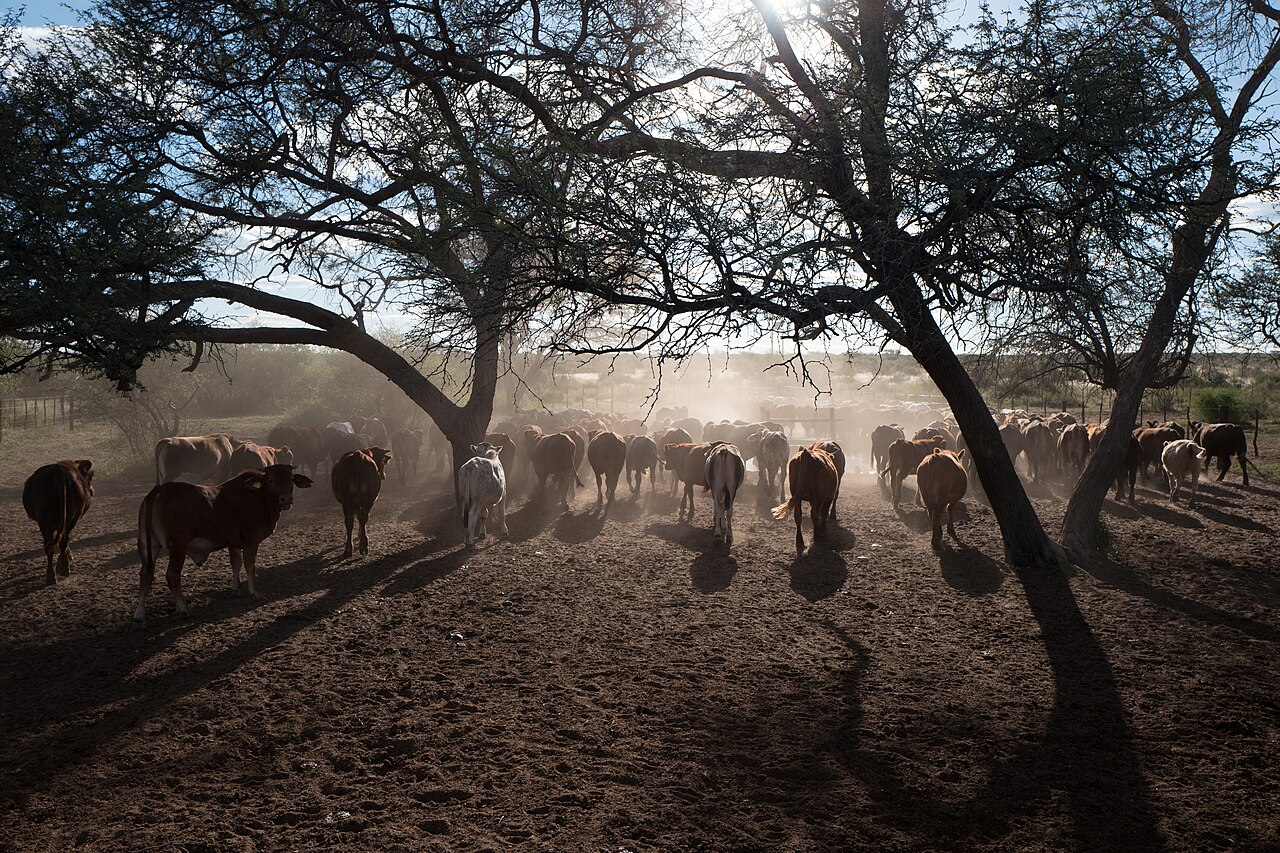
Namibia has stepped up measures against its foot-and-mouth disease (FMD) outbreak near the South African border after confirmed cases rose to 127 on 15 farms. President Netumbo Nandi-Ndaitwah announced the figures on 6 October, up from 79 positive samples on 11 farms reported by Agriculture Minister Inge Zaamwani three days earlier.
Twenty surveillance teams and 10 roadblocks are working in the Kharas Region. By 5 October the teams had inspected 29,313 animals on 68 farms. The SAT1 outbreak was first found during routine surveillance in the Graswater area of the Karasburg State Veterinary District in late September, close to the border with South Africa.
The cabinet has approved a containment plan: a buffer zone in the Karasburg district, repairs to sections of the Namibia-Botswana border fence and new veterinary cordon fencing in high-risk areas along the South African border. The government earlier put the cost of its critical response at about R190 million, including about R47 million for some 290 km of new fencing from Ariamsvlei through Karasburg to Ai-Ais. Vaccination of eligible livestock in the containment zone, from the perimeter towards the epicentre, will go with targeted culling, more surveillance and strict movement controls. Farmers have been warned not to vaccinate or move animals without the Directorate of Veterinary Services.
Namibia's FMD-free-without-vaccination status, the basis of its access to international markets, has been suspended for the affected zone. The EU has temporarily suspended imports of fresh cattle, sheep and goat meat from the former FMD-free zone and some processed products, though fresh meat certified before 23 September may still enter during a 90-day transition.
The president acknowledged the financial strain on farmers, farmworkers and businesses, saying the priority is to contain the disease so trade can resume quickly and safely, and urged owners, traders, transporters and auctioneers to obey movement rules. She said the national traceability system is central to tracing exposed animals.
South Africa imports weaner calves and slaughter sheep from Namibia, so prolonged restrictions on cross-border movement could affect its supplies and red meat markets.
Photo: Jean Bucher & Hp.Baumeler / Wikimedia Commons (CC BY-SA 4.0)
Source: Farmers Weekly South Africa


Comments
(0)