
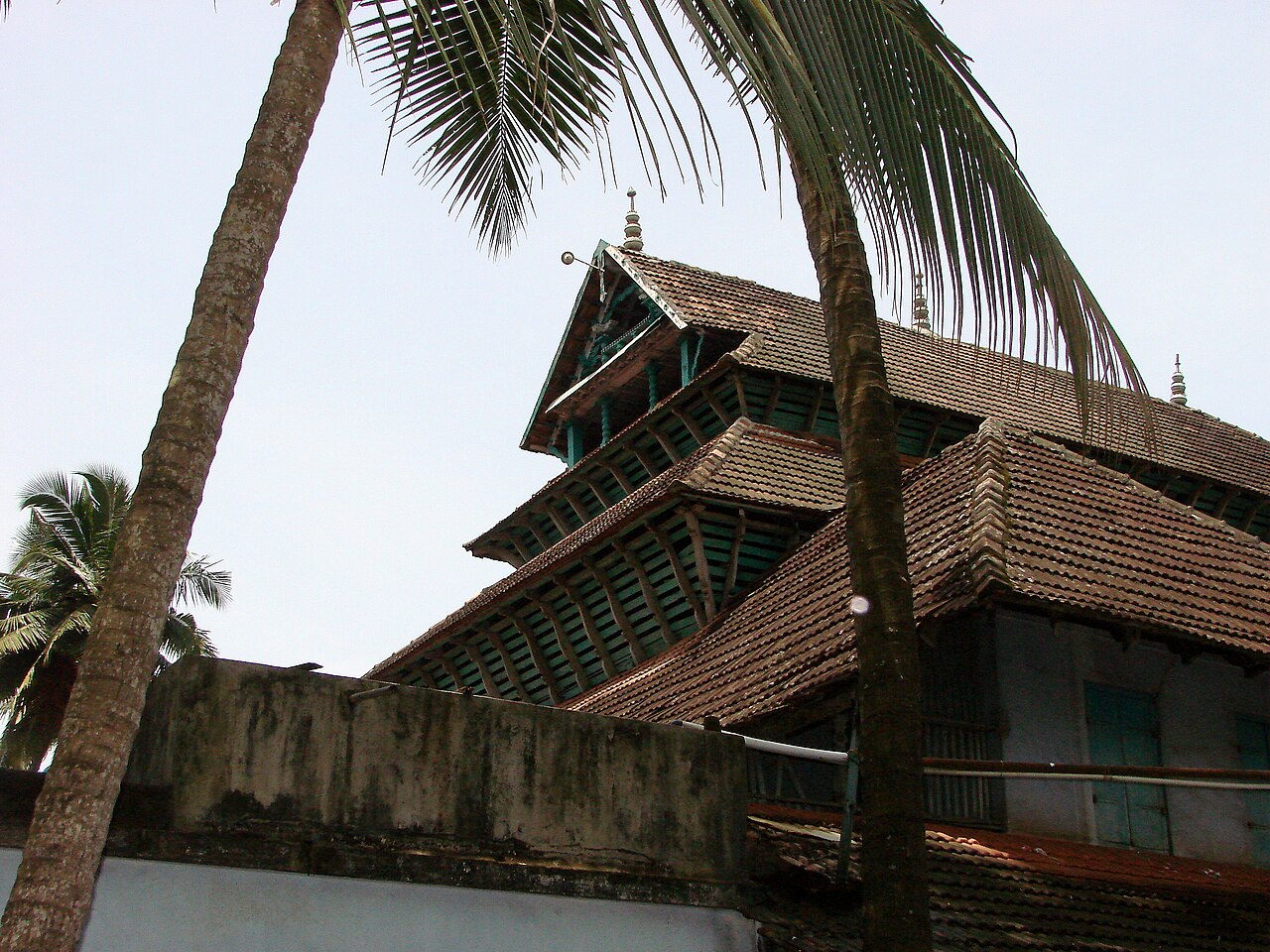
The Mishkal Mosque, more than 650 years old, stands at Kuttichira in Calicut (Kozhikode), Kerala, India. A witness to the history, Islamic heritage and architecture of Muslims on the Malabar coast, it was once a centre of learning, interfaith harmony and trade, Barta24's Islam desk writes.
The Yemeni shipowner Nakhuda Mishkal built the mosque in the early 14th century, and it bears his name. Set near rivers and the Arabian Sea, Calicut has been an international port since ancient times. Islam spread in Malabar through trade, cultural exchange and marriage with Arabs, and the piece notes that local people were drawn to Islam by the honesty of Arab merchants.
Timber is used more than stone, showing Kerala's own architectural style: wooden plank floors and a roof built of timber beams. When built it had seven storeys and was the tallest building of its day; four remain. Every floor except the ground floor is made of teak.
The mosque stands on 24 large pillars, 16 inside and eight outside, set on granite columns sunk about 10 feet into the ground, a technique the piece likens to modern piling.
Most of Kerala's Muslims follow the Shafi'i school, and the Mishkal Mosque played a large part in rooting it in the region. Quranic exegesis, hadith, jurisprudence and Arabic grammar were taught there, and it was a centre for the thought of Sheikh Zainuddin Makhdum II, author of Tuhfat al-Mujahidin.
In 1510 Portuguese forces under Albuquerque attacked the mosque and tried to burn it. The Zamorin, Calicut's ruler, stood by his Muslim subjects and fought back, then helped rebuild the mosque with timber and other support, an episode still remembered as an example of religious harmony.
Photo: Adam Jones / Wikimedia Commons (CC BY-SA 3.0)
Source: Barta24
Comments
(0)