
Does planting a tree in soil alone guarantee a good harvest? Many people wonder. The reality is that soil alone does not make plants grow healthily. Plants often fail to grow properly, their leaves turn yellow, and they bear few flowers and fruit or none at all. The main reason is a shortage of the nutrients they need.
Plants are living things just like people, and they too need a balanced diet. Soil gives a plant a foundation, but without the right nutrition it cannot reach its full potential. That is why using the right micronutrients alongside the soil is so important.
Types of plant nutrients
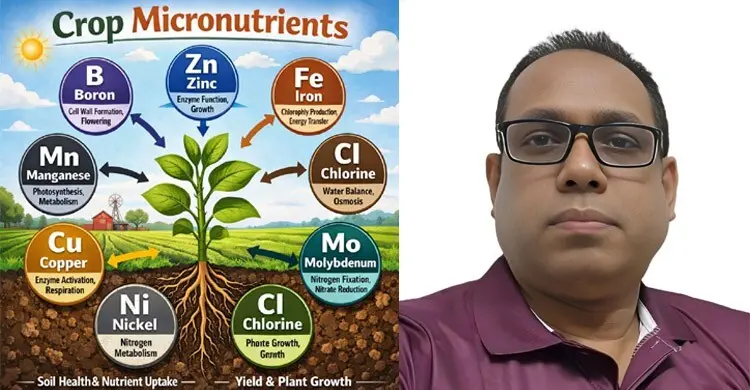
Plant nutrients are usually divided into two groups. Major nutrients are needed in large amounts; examples are nitrogen, phosphorus and potassium. Micronutrients are needed only in small amounts but are extremely important; examples are iron, zinc, boron, manganese, copper and molybdenum.
What the major nutrients do
- Nitrogen plays the most important role in building the green parts of the plant. It helps make chlorophyll, through which the plant makes its food. Signs of deficiency: leaves turn yellow and growth slows. Benefits: keeps leaves green and fresh and ensures quick growth.
- Phosphorus helps root growth and the setting of flowers and fruit. Signs of deficiency: growth slows and leaves take on a purple tinge. Benefits: builds strong roots and increases the number of flowers and fruit.
- Potassium is vital for the plant's overall health. Signs of deficiency: leaf edges dry out and the plant falls prey to disease. Benefits: increases disease resistance and improves fruit quality.
The role of micronutrients
- Iron helps make chlorophyll. Sign of deficiency: new leaves turn yellow while the veins stay green.
- Zinc helps regulate growth and hormones. Signs of deficiency: leaves become small and the plant stays short.
- Boron plays an important part in forming flowers and fruit. Signs of deficiency: flowers drop and fruit is deformed.
- Manganese assists photosynthesis.
- Copper plays an important role in enzyme activity.
- Molybdenum helps the plant use nitrogen.
Why plants run short of nutrients
The main causes of nutrient deficiency are a natural shortage of nutrients in the soil, growing crops repeatedly in the same soil, too much water or waterlogging, wrong fertiliser use and imbalanced soil pH. The problem is especially common with plants in tubs or rooftop gardens, because the limited soil runs out of nutrients quickly.
Used correctly, micronutrients bring visible changes. Plants grow quickly and healthily and become strong. Leaves stay green and fresh, as chlorophyll production rises and gives them a bright green colour. Flowers and fruit increase, fewer flowers drop and the yield rises. Disease resistance improves, so plants are not easily infected.
Nutrient management in tubs, rooftops and home gardens
Many people now garden in tubs, on rooftops or in small spaces at home, and a few points need particular care.
- Regular feeding: a liquid fertiliser can be used once every 10–15 days, and organic fertilisers (compost, vermicompost) are best.
- Refreshing the soil: replace the top layer of soil every 2–3 months.
- Balanced fertiliser: use not only urea but fertilisers rich in NPK and micronutrients.
- Water management: do not overwater, and do not let water stand.
- Organic versus chemical fertiliser: organic fertiliser is environmentally friendly, improves soil quality and pays off over the long term. Chemical fertiliser works quickly but can do harm if the right dose is not followed. The two can be combined for the best results.
Practical advice
With Internet of Things (IoT) technology in agriculture, location-based, real-time soil sensors can measure the soil's NPK and pH so that fertiliser is applied at the right dose. Identify problems by looking at the leaves, use a specific nutrient for a specific problem, do not overuse fertiliser, and apply fertiliser in the morning or afternoon.
Soil alone is not enough for healthy growth and a good harvest; proper nutrient management is needed. Major nutrients such as nitrogen, phosphorus and potassium are essential, and micronutrients such as iron, zinc and boron are equally important. Using the right micronutrients is an easy way to keep plants healthy, strong and productive, and in tubs, rooftop gardens and small home gardens a regular supply of nutrients can raise productivity many times over. As the saying goes, "Right nutrition means a healthy plant, and a healthy plant means a good harvest."
Micronutrients and yield
Micronutrients are vital for a good yield. They make a special contribution to normal growth, nutrient balance and disease resistance. Often plants fail to give the expected yield even when enough of the main fertilisers (nitrogen, phosphorus, potash) has been applied. One of the main reasons is micronutrient deficiency, which disrupts the plant's internal biochemical processes.
Zinc, boron, iron, manganese and other micronutrients play an active part in the plant's physiological functions. Boron helps flowers and fruit set, zinc helps regulate growth and hormones, and iron is important in forming chlorophyll. Even a slight shortage of these elements can cause yellow leaves, flower drop or lower yields.
It is therefore essential to test the soil and apply micronutrients at the right dose. In modern agriculture, soil testing and balanced fertiliser management can correct micronutrient deficiencies, raising both the quantity and the quality of the harvest. Balanced nutrition also helps plants survive in adverse conditions.
In short, the correct use of micronutrients is essential for higher yields and sustainable agriculture. With farmers' awareness and the right advice, effective use of micronutrients can be one of the keys to success in farming.
Source: Jagonews24. First published in Bengali on The Agro News.



Comments
(0)