
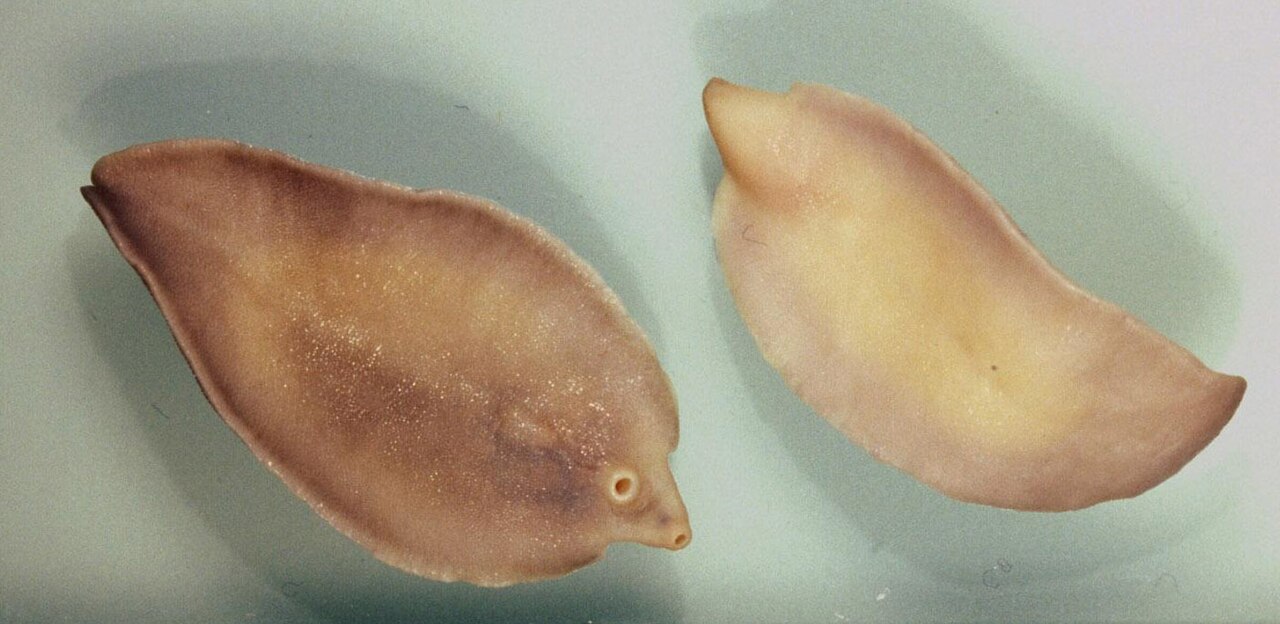
With wet weather arriving, Irish sheep farmers are being reminded to think about liver fluke and to put prevention first. Abattoirs found less fluke than usual after the dry summer, but Teagasc drystock adviser Joanne Masterson says the parasite still needs managing on every farm.
The Department of Agriculture, Food and the Marine published its liver fluke forecast last week, which lets farmers gauge the likely level of disease in their own area and plan accordingly.
Fluke shows itself in three ways. Acute fluke is caused by immature fluke burrowing through the liver and usually kills about three weeks after the sheep swallows them; sudden death, from heavy bleeding in the liver or a secondary clostridial infection, is often the only sign. Subacute fluke, most common in winter, causes anaemia and rapid loss of weight and condition. Chronic fluke, the most common form, brings long-term weight loss and anaemia, with pale eyes and gums and a swelling under the jaw known as 'bottle jaw'.
Prevention starts with the land. Masterson says better drainage and fencing off wet areas reduce the amount of fluke sheep pick up, and quarantining bought-in sheep for four weeks stops the disease arriving with them. Faecal egg counts and a planned dosing programme help too, with doses recommended in early to mid-summer and at housing.
The choice of drug matters. Triclabendazole is the only active ingredient on the market that targets immature fluke, but resistance to it has been found. Closantel, nitroxynil and rafoxanide act against immature fluke over six weeks of age.
Correct dosing is the main defence against resistance. Masterson's advice is to estimate each animal's weight accurately so that none is over- or under-dosed, to keep dosing equipment calibrated and in good working order, and to take faecal egg samples before treating to know how bad the problem is.
She also reminds farmers to respect the withdrawal period of every product before sheep go for slaughter.
Reporting by Michael Wall for Agriland.
Photo: Alan R Walker / Wikimedia Commons (CC BY-SA 3.0)
Source: Agriland

Comments
(0)