
Green fields, crops swaying in the breeze and the calm smile of the farmer: this familiar scene is the symbol of Bangladesh's agriculture and food security. For generations farmers have made this land fertile with their sweat and labour and fed the country's people without a break. But behind this visible beauty a silent yet terrible crisis is gathering. The soil in which farmers trustingly sow their seed is slowly becoming a store of invisible poison.
Lead pollution of Bangladesh's farmland is no longer an isolated matter; it is a growing environmental and public health crisis. Battery recycling, industrial waste, unregulated brick kilns, contaminated irrigation water and the mismanagement of chemical fertilisers and pesticides are together causing lead to build up in the soil. This heavy metal damages soil fertility and enters the human body through crops, with terrible long-term effects.
Crops grown in lead-contaminated soil may look fresh and healthy but carry a silent poison. Impaired intellectual development in children, damage to the nervous system and risks of kidney and heart disease are well-known results of lead pollution. The crisis is therefore not limited to agriculture; it is deeply tied to the environment, public health and the very existence of future generations. The question is no longer just raising yields but ensuring safe food and a healthy future.
If this silent poison in the soil is ignored, the smile of the green fields may one day disappear. It is time to protect the soil through awareness, research and effective policy, because if the soil survives, the farmer, the country and the next generation survive. The level of lead pollution in Bangladesh's soil has reached a point that deserves to be treated not only as an environmental crisis but as a crisis of national public health and of the next generation's existence.
Lead in the soil: alarming figures
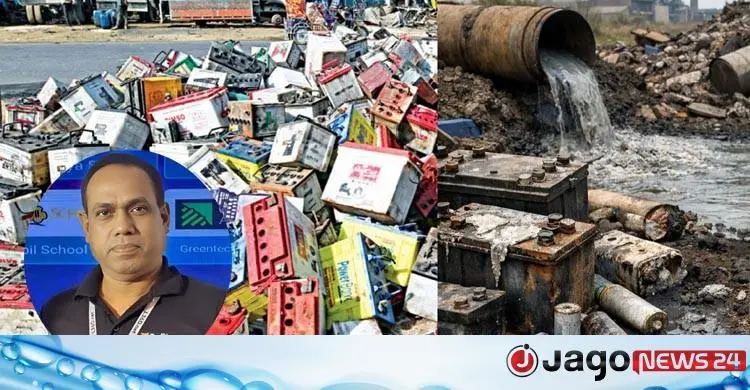
Recent research by the international environmental organisation named in the source as Earth has brought alarming facts to light. According to the research, lead levels of up to 70,000 ppm (parts per million) have been found in the soil of some parts of Bangladesh. The US Environmental Protection Agency, by contrast, has set the maximum safe limit for lead in soil at just 200 ppm. In other words, the lead found in Bangladesh's soil is about 350 times the internationally set standard. This figure is not just a number; it is a clear sign of impending disaster.
Lead is entering people's bodies
Environmental pollution is most frightening when it enters the human body. Research has found lead levels of up to 47 micrograms per decilitre in the blood of children in Bangladesh. The US Centers for Disease Control and Prevention has set the acceptable limit for lead in children's blood at just 3.5 micrograms per decilitre, so some children have more than about 13 times the safe limit in their blood. This level poses a serious risk to children.
Why lead is so dangerous
Lead is no ordinary pollutant. It is a neurotoxin that slowly damages vital organs of the body, and its effects are worst in children. Lead pollution hampers the normal development of a child's nervous system and can permanently reduce intellectual ability. It causes attention deficits, behavioural problems and learning disabilities, and in the long term leads to kidney, heart and hormonal complications. Most frightening of all, the damage caused by lead is in many cases irreversible: once done, it cannot be undone.
Lead in the farm and food chain
Bangladesh's agriculture depends mainly on the soil. When excessive lead accumulates in that soil, it passes directly into crops. Through leafy greens, vegetables, rice, wheat and other food grains this heavy metal enters the human body, creating a toxic food cycle: soil, crop, food, people. If this continues, the country's food security will be threatened not only in quantity but in safety and quality.
The main source
According to experts, one of the main sources of lead pollution in Bangladesh is the illegal and unregulated battery recycling industry. Countless unauthorised factories have sprung up across the country to extract lead from used lead-acid batteries. These factories follow no environmental safety standards; waste is dumped directly on land and into water, and workers and people nearby come into direct contact with the poison. In this way lead gradually builds up in the soil, spreads to farmland and finally enters people's bodies.
A grim warning for the next 10 years
Experts fear that if illegal and unregulated battery management is not brought under control within the next 10 years, lead pollution could take on epidemic proportions in Bangladesh. It would then no longer be just an environmental problem but would put extreme pressure on the national health system. A large proportion of children would be permanently harmed, and the country's human resources and economic development would be severely hampered.
What needs to be done
If action is not taken now, it will be too late. Several urgent steps are needed to tackle this situation:
- Completely stop and control illegal battery recycling.
- Enforce strict environmental standards at legal recycling factories.
- Regularly test the soil and crops in lead-contaminated areas.
- Run a national lead screening programme for children.
- Spread awareness and safe farming practices among farmers.
- Enforce strong laws and build accountable institutions.
Bangladesh's soil is not only the farmer's livelihood; it is the foundation of the nation's future. If that soil fills with poison, the smile of the harvest will one day turn to tears. Lead pollution is not a distant threat; it is here now, around us, in our soil and in our children's blood. If we do not become aware today, the next generation will not forgive us. Now is the time to save the soil, save people and make Bangladesh's future safe.
Source: Jagonews24. First published in Bengali on The Agro News.


Comments
(0)