
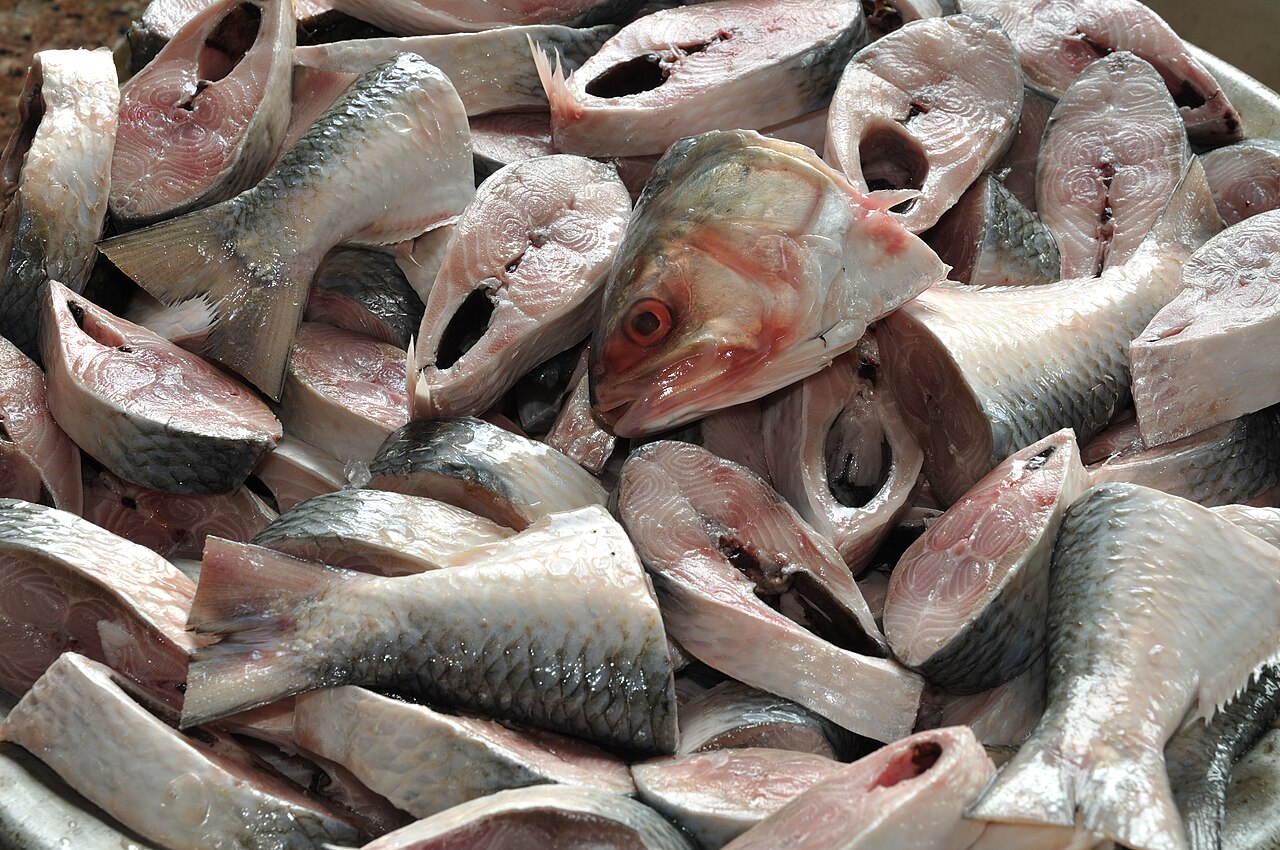
A hilsa weighing 2 kg was caught before dawn on Tuesday, 6 October, in fisher Sohel Khan's stake net in the Bay of Bengal near Banglar Ghat, Kuakata, in Patuakhali. At auction at the Kuakata fish depot that morning it sold at Tk 1.45 lakh a maund, or Tk 3,625 a kilo, for Tk 7,250 in all, Desh Rupantor reports. The buyer, Joylan Gharami, director of Kuakata Gharami Fish, plans to send it to Dhaka.
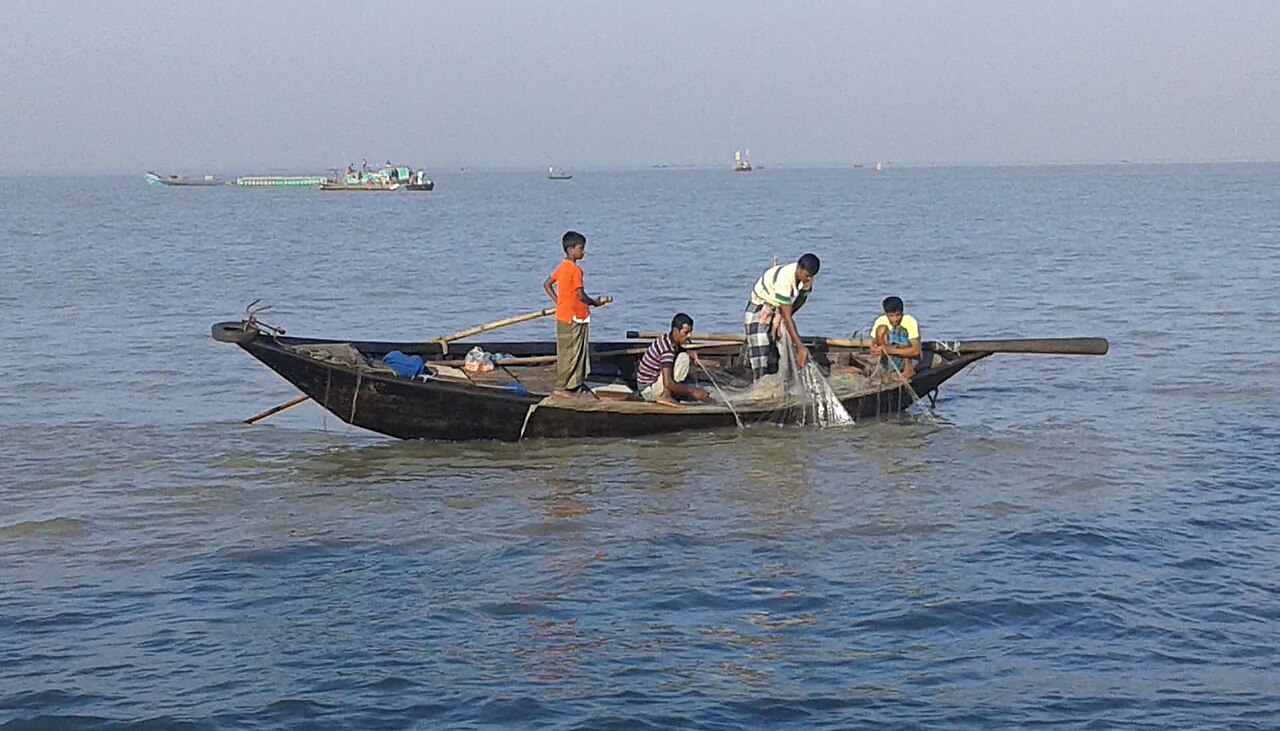
Sohel Khan, who has fished for hilsa with stake nets near the coast for nine or ten years, said it was his first fish that size in about three years. He blames trawl nets in the deep sea, which take fish of every size, especially small fry, for the shrinking catch near the shore. With the 22-day ban starting in two days, he will have to take his nets home and get by as best he can.
According to local restaurateur Babu, small hilsa now sell for about Tk 750 a kilo, slightly larger ones Tk 1,000, medium fish Tk 1,600 to Tk 2,500 and large "king" hilsa Tk 3,500 to Tk 4,000. Restaurants find it hard to serve big hilsa to tourists at those prices and buy fish of 500-600 grams to 1 kg. Tourism businessman Nesar Uddin Howlader said hilsa at Tk 3,000-4,000 a kilo has become a dream for people on low incomes.
Prof Dr Rajib Sarker of the fisheries faculty at Patuakhali Science and Technology University said big hilsa are declining because of unchecked catches of young fish, falling river water, dams and sluice gates that block migration, illegal nets and the lack of co-management committees. Water pollution, plankton shortages, and changes in climate and salinity also affect hilsa breeding and food, he said.
Kalapara upazila fisheries officer Md Zahirunnabi said a big catch is good news and may reflect the benefit of the bans; wider net mesh would let more such fish be caught. The 22-day ban for the main hilsa breeding season begins on 8 October.
The report is by Md Bachchu Khalifa, Desh Rupantor's Kuakata (Patuakhali) correspondent.
Photo: Biswarup Ganguly / Wikimedia Commons (CC BY-SA 3.0)
Source: Desh Rupantor

Comments
(0)