
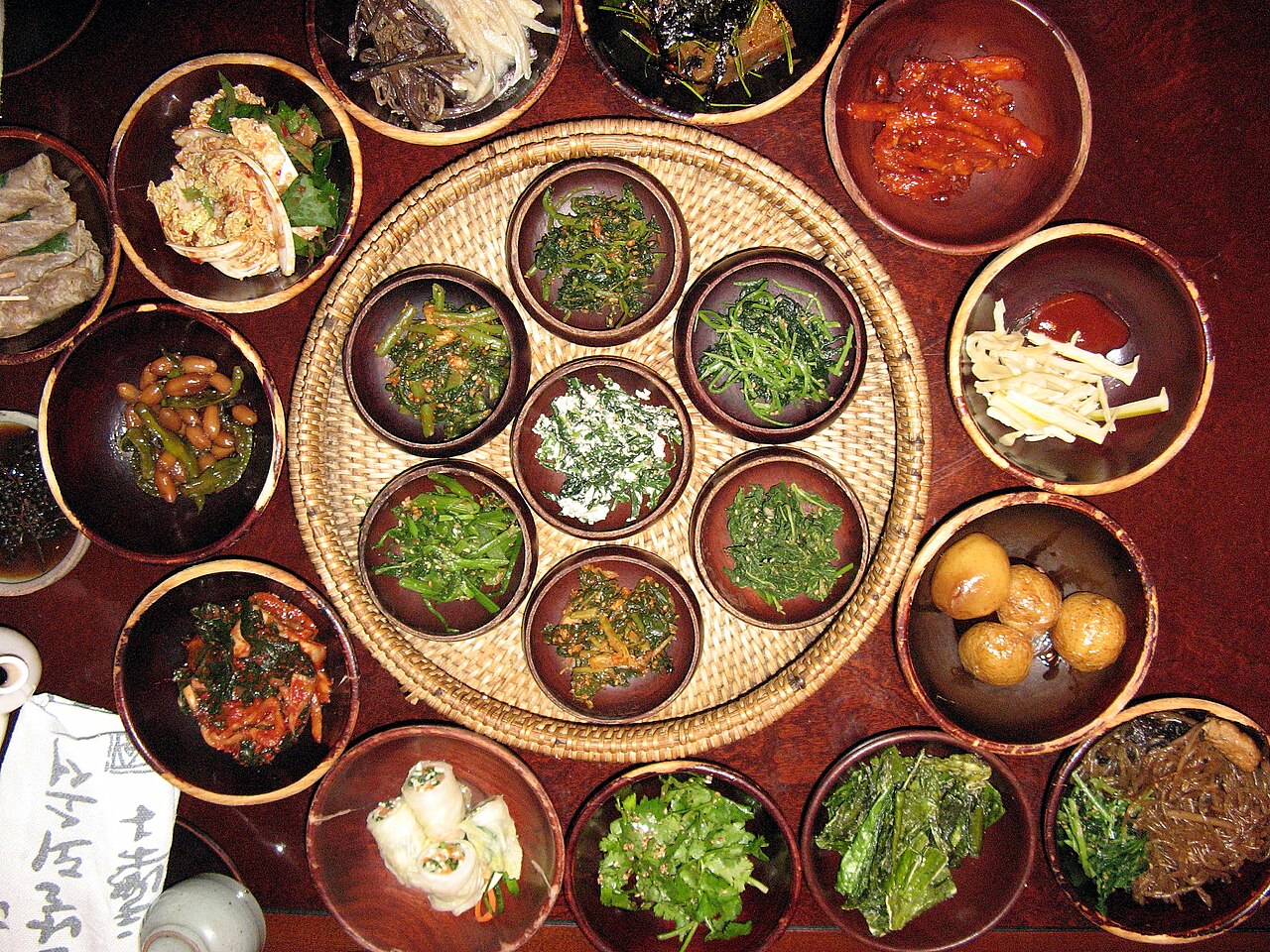
Korean food usually brings to mind spicy stews and kimchi, but the country has a quieter tradition too: temple food, the vegetarian cooking of its Buddhist monasteries. Long practised in South Korea's mountain temples, it treats every step, from washing and soaking to boiling and slow cooking, as an act of attention.
Seasonal ingredients come first: mountain greens, young shoots of wild plants, roots, mushrooms, soybeans, seaweed and sesame. A defining rule is the exclusion of five pungent vegetables, garlic, onion, chives, leeks and spring onion. The food is not bland for it; flavour comes from fermentation and natural ingredients.
Tofu is used not as a meat substitute but as an ingredient in its own right: simmered in clear broth, lightly fried and served with aged soy sauce, or dressed with sesame oil and mountain greens. Paired with greens, mushrooms or lotus root, soft tofu gives the dishes a range of textures.
Fermented sauces are the base. Doenjang, ganjang and gochujang made to each temple's own method mature over long periods into a deep umami that makes extra spice unnecessary. Vegetables are also dried, steamed, boiled or fried in a little oil. Mandu filled with tofu, mushroom and perilla leaf, and bibimbap of mixed vegetables, are typical dishes.
Garden to table is part of the tradition. Nuns at Baekyangsa temple in South Jeolla province grow perilla, radish and other crops in the temple garden. The nun Jeong Kwan brought the cuisine to a world audience after her cooking and food philosophy were featured on Chef's Table.
The piece is from Ajker Patrika's feature desk.
Photo: Richy! / Wikimedia Commons (CC BY-SA 2.0)
Source: Ajker Patrika


Comments
(0)