
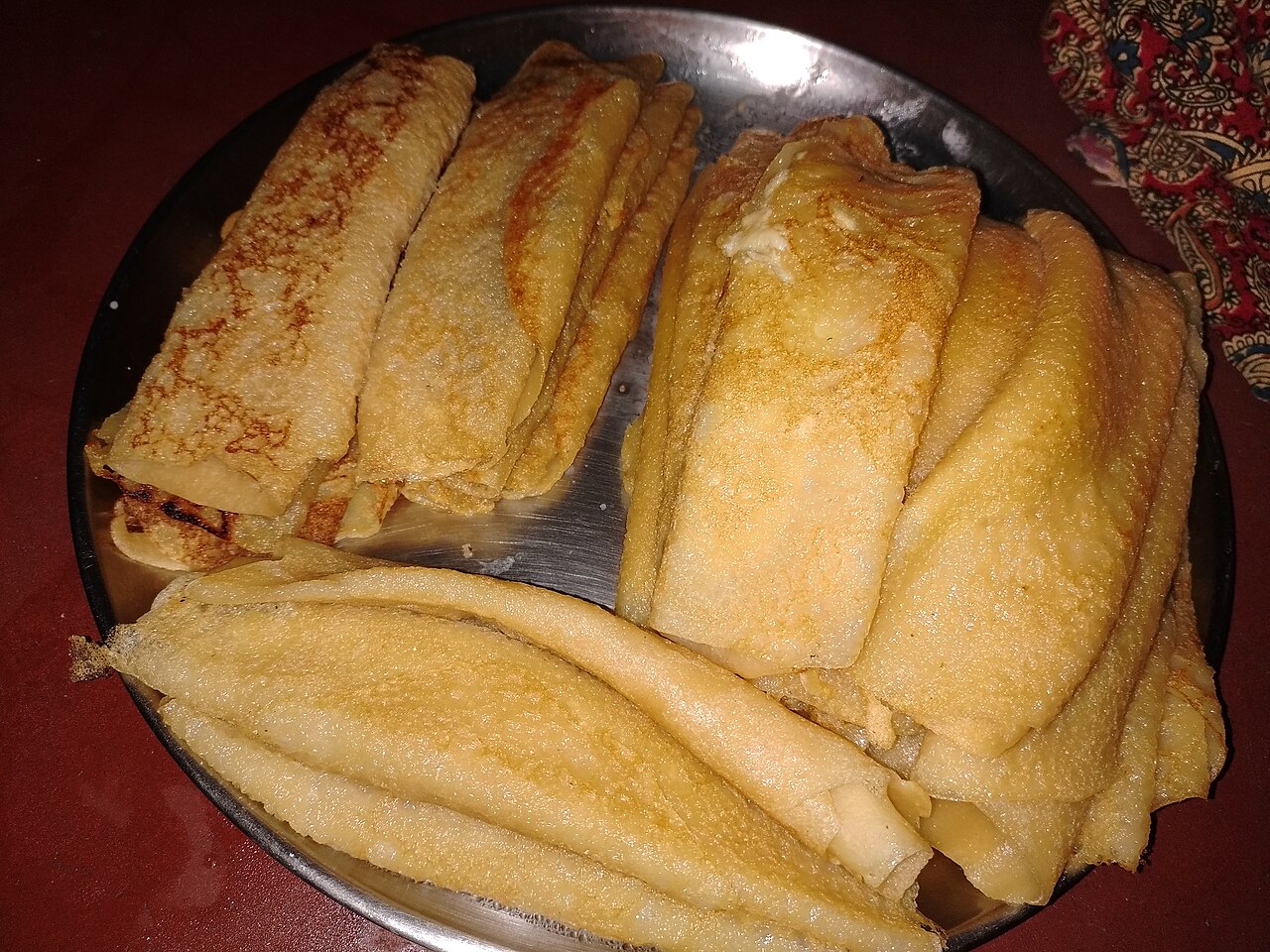
Winter brings pitha-making to Bengali homes, and kheer patishapta, a rolled rice-flour crepe with a thickened-milk filling, is one of the favourites. It often cracks in the pan or comes out pocked with small holes and spots. Right measures and a few rules give smooth, soft crepes at home.
For the batter: 1 cup (about 140 g) of rice flour, half a cup (about 60 g) of plain flour, 2 tablespoons of semolina, 2 tablespoons of sugar, a quarter teaspoon of salt, 1 to 1.25 cups of milk, at most a quarter cup of water if needed, and 1 teaspoon of oil or ghee. For the filling: 1 litre of full-fat milk, half a cup (about 100 g) of date palm jaggery, 2 tablespoons of rice flour, half a cup of grated coconut and a quarter teaspoon of ground cardamom.
Make the filling first. Boil the litre of milk in a heavy-bottomed pan until it reduces to about 600 ml. Mix 2 tablespoons of rice flour into 3 tablespoons of cold milk, pour it into the thickened milk and stir constantly so it does not form lumps. When it thickens further, add the jaggery, coconut and cardamom, cook 3 to 5 minutes until it is thick, then take it off the heat to cool.
Mix the dry batter ingredients and beat in 1 cup of milk slowly, adding another quarter cup of milk or a little water if needed. The batter should fall easily from a spoon and spread quickly in the pan. Cover it and leave it for 20 to 30 minutes: the rice flour and semolina soften and the crepes are less likely to spot.
Heat a non-stick pan over medium heat, then turn the flame down and wipe on a little oil or ghee with tissue or a brush. Pour in about 2 tablespoons of batter and swirl the pan to spread it thin. When the top is dry, put 1 to 1.5 tablespoons of filling along one side and roll it up with a spatula.
The three secrets of a smooth patishapta: batter neither too thick nor too thin, a pan that is not too hot (high heat makes the holes), and only a very light coat of oil. These amounts make 10 to 12 medium crepes. The recipe is from the Agricare24 lifestyle desk.
Photo: Motherssecondchild / Wikimedia Commons (CC BY-SA 4.0)
Source: Agricare24
Comments
(0)