
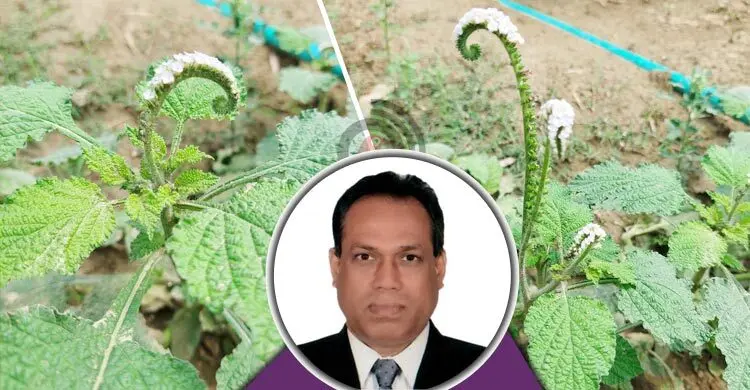
The name sounds unusual: the plant is called hatishur, "elephant's trunk". It is seen growing against old buildings or among other weeds by the roadside. White flowers bloom on its curved flower stalks, as white as ivory.
Because the plant grows here and there among weeds, it escapes most people's notice. It grows roughly one to one and a half feet tall. The stem is hollow and soft, and the whole plant is covered in tiny hairs. The upper stem is square, the lower part relatively round.
Its Sanskrit name is Shrihastini. Its scientific name is Heliotropium indicum, and in English it is called Indian heliotrope. It is also known by local names such as hatishuri, hatishundi, hastishundi, shrihastini and mahashundi. Hatishur belongs to the Boraginaceae family.
It flowers all year round, though more blooms are seen in the rainy season. The ovary is four-lobed, and the fruit and seeds are small. The plant contains various organic compounds called indicine, pyrrolizidine alkaloids and heliotrine. The leaves are rough and grow opposite each other. The leaves on the lower part of the branches are large, with long stalks, and look like spearheads. They give off a smell when rubbed between the fingers.
Benefits of the hatishur plant
- If part of the body swells and burns after a poisonous insect bite, applying juice from the ground leaves brings relief.
- For swelling from injury, applying the ground leaves slightly warmed reduces the swelling and pain.
- If the joints of the hands and feet swell from a chill, or there is a swelling in the groin on either side between the thigh and lower abdomen, applying the ground leaves lightly warmed to the affected area reduces swelling and pain.
- Juice from its leaves is used to treat red, ring-like patches from fungal infection of the skin.
- If the eyes turn bright red and feel gritty, as if sand has got in, the leaf juice of hatishur is described as an unfailing remedy.
- For a cold, drinking two spoonfuls of juice from the crushed leaves will cure it.
- To get rid of eczema, crushed hatishur leaves applied to the affected area will clear it within a few days of use.
- The leaves can be an effective remedy for typhoid: drinking the leaf juice lightly warmed and mixed with water cures typhoid, the article says.
- A person with swollen gums who chews hatishur root will find the swelling goes down.
- For acne or acne marks, crushing hatishur leaves and tender twigs and applying the paste to the acne an hour before the midday bath clears the acne and stops new spots appearing.
- The root of the plant is boiled in water and used for fever and cough.
- The plant is used to soothe cuts, tears and injuries.
Source: Jagonews24. First published in Bengali on The Agro News.


Comments
(0)