
Researchers at the University of Georgia (UGA) are developing sensors that pick up a plant's chemical and physical stress signals before a farmer can see anything wrong, to give growers more time to act against drought, disease, insects or nutrient shortages, Farms.com reported.
The work is led by Liang Dong, a Georgia Research Alliance Eminent Scholar in Precision Agriculture, who holds a joint appointment in UGA's College of Agricultural and Environmental Sciences and its College of Engineering and is associate director for research at the Institute for Integrative Precision Agriculture.
Dong compares the devices with wearable health trackers. Where a smartwatch follows a person's heart rate, his team's sensors follow the plant: reactive oxygen species, plant hormones, volatile compounds, transpiration and photosynthetic activity. Read together, these signals show what is happening inside the plant before visible symptoms appear, and also track soil conditions and the environment in real time.
Better water management is one aim. Georgia's droughts often come with heat and humidity, and an earlier warning could help farmers time irrigation more precisely. The state's coastal areas, where salinity affects crops, give the team another stress to test against. The researchers have worked with farmers, crop scientists and Extension specialists to find where the sensors would be most useful.
"An engineer can build a very sensitive sensor, but we need plant or animal scientists to tell us what signals really matter," Dong said, adding that AI and data science are needed to turn the readings into decisions. The longer-term goal is continuous sensing that turns large amounts of data into simple recommendations, with possible uses in poultry, livestock and forestry as well as crops.
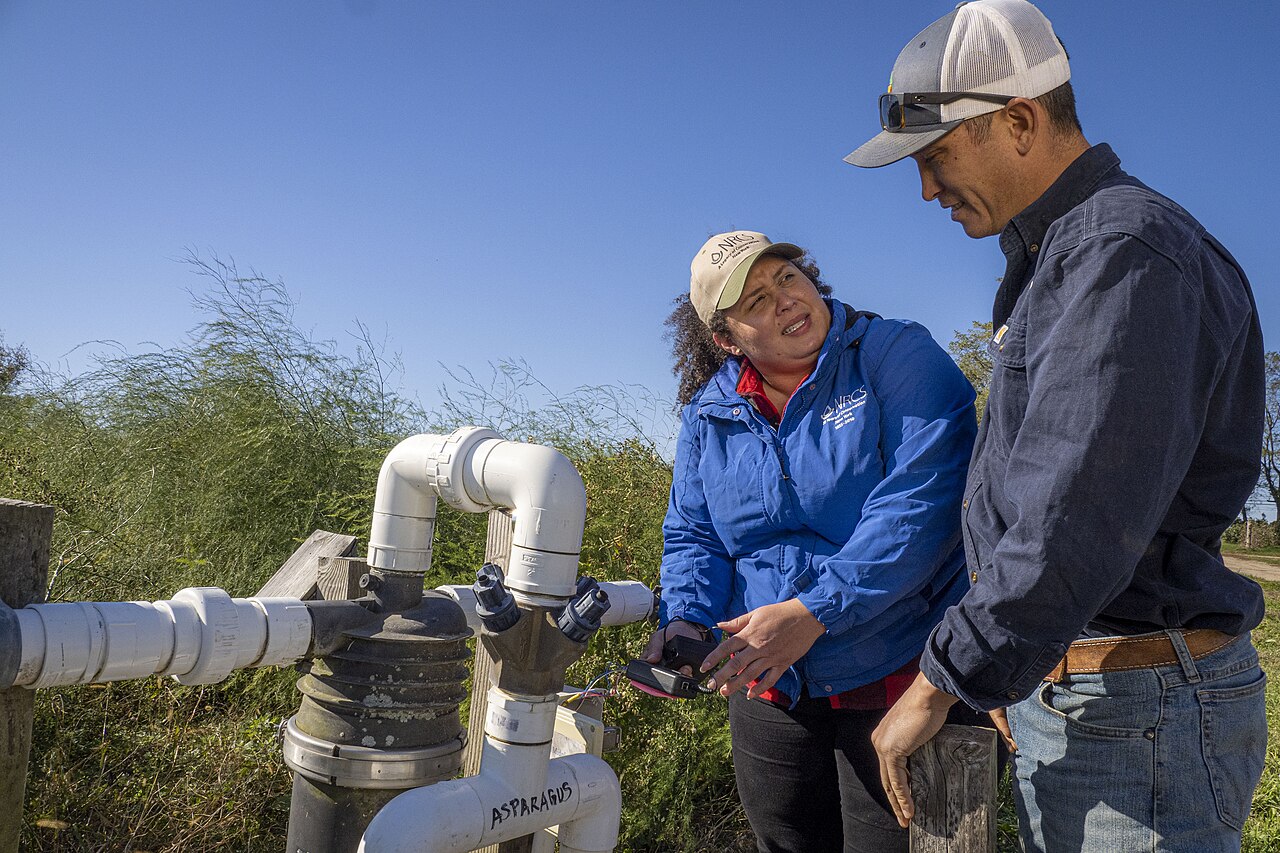
Photo: USDA / Wikimedia Commons (Public domain)
Source: Farms.com
Comments
(0)