
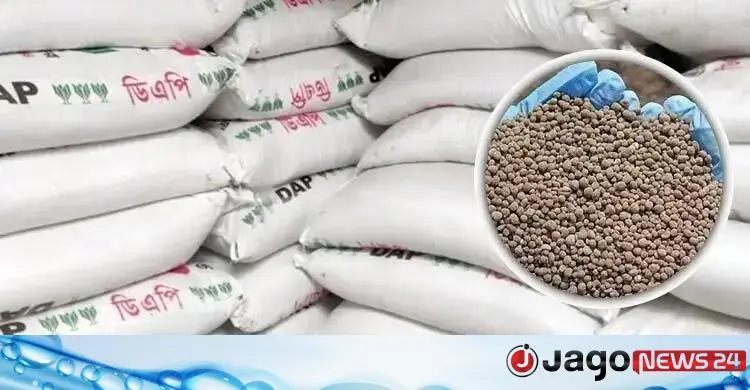
The Ministry of Agriculture has ordered implementation of the "Fertiliser Dealer Appointment and Retention Policy 2025 (Revised)" to ensure an uninterrupted and orderly supply of fertiliser to farmers. The Department of Fertiliser Management and Monitoring issued an office order to this effect on Sunday (9 August).
Under the new instructions, every upazila must have at least nine dealers to distribute urea and non-urea fertilisers. The number may be increased if needed, depending on the district's fertiliser demand and farm output.
The policy says the district committee will act on dealer appointments on the recommendation of the upazila agriculture officer and the district dealers' cooperative. No person may own more than one fertiliser dealership.
Applications must be checked and recommendations sent within a set time. New dealers must have their own warehouse and godown and a service centre for selling fertiliser.
Renewal of existing dealers' licences will take into account local demand, district quotas and compliance with the policy's conditions. The office order also says fertiliser makers and suppliers must deliver directly to dealers or to upazila level.
To protect farmers, the district committee will set fair prices for dealers. Regular monitoring has been ordered at upazila, district and divisional level, and any dealer who breaks the policy or its conditions will lose the dealership, the order says.
Applicants can submit applications within the set time, and details of the policy are available on the agriculture ministry's website. The order says the revised policy is being implemented to bring transparency and accountability to fertiliser management and to get fertiliser to farmers on time.
One dealer system replaces BCIC and BADC networks
With this policy, the separate dealer systems of the Bangladesh Chemical Industries Corporation (BCIC) and the Bangladesh Agricultural Development Corporation (BADC) will be abolished and a single integrated dealer system introduced.
The new policy gives priority to local residents in appointing dealers and fixes the number of dealers for union, municipality and city corporation areas. A dealer may have at most three retail outlets.
Sales representatives may also be appointed. Of each dealer's three outlets, one will be run by the dealer and the other two by sales representatives nominated by the dealer.
Local residents will also get priority as sales representatives. A representative must live in the union, municipality or city corporation concerned, with permanent residents of the ward given priority. Their appointment and work will be subject to approval by the upazila or district fertiliser and seed monitoring committee.
Who can be a dealer
Applicants must be financially capable, with a recent certificate of bank solvency of at least Tk 10 lakh. They must be at least 18 years old, hold a trade licence, and be physically and mentally fit and mobile. A dealer must own or rent a warehouse in the area with capacity of at least 50 tonnes.
The warehouse must be fit for storing fertiliser. Fertiliser may not be stored in the same warehouse as food shops, restaurants, cattle feed, fish feed or vegetable shops, and seed may not be stored in a fertiliser warehouse.
Employees of government, semi-government and autonomous bodies, public universities or MPO-listed institutions, and elected representatives, may not become fertiliser sales representatives. Nor may more than one member of the same family be a dealer or sales representative. For this purpose, family means father, mother, husband or wife, children, children's spouses, grandchildren, unmarried daughters and dependent brothers and sisters.
Anyone whose dealership was previously cancelled as a penalty may not reapply. People convicted of business irregularities, fraud or other offences are also ineligible, although someone convicted in a criminal case may apply two years after completing the sentence. Anyone accused of irregularities in the fertiliser trade may not be appointed or reappointed as a sales representative.
Deposits, fees and renewal
A selected dealer must pay a Tk 3 lakh security deposit before signing the agreement, by pay order or demand draft from a scheduled bank in favour of the district fertiliser and seed monitoring committee. A sales representative nominated by a dealer must pay a Tk 50,000 deposit. An application for a dealership must be accompanied by a Tk 2,000 application fee and Tk 10,000 in earnest money.
Dealerships must be renewed every two years, as must sales representatives' appointments. Renewal will consider the dealer's performance, fertiliser distribution, warehouse and other conditions. A dealership or representation not renewed on time will be treated as provisionally cancelled.
Monitoring committees
District and upazila monitoring committees will oversee distribution. The district committee will be chaired by the deputy commissioner and include the superintendent of police, upazila nirbahi officers, agriculture, livestock and fisheries officers and other government representatives, as well as representatives of the Bangladesh Fertiliser Association and farmers.
The upazila committee will be chaired by the upazila nirbahi officer. It will monitor dealers' distribution, farmers' demand, stocks, prices and supply. If a shortage is feared in any union or municipality, fertiliser can be moved between upazilas or unions.
The policy stresses action against irregularities and misuse. Complaints against a dealer will be investigated and placed before the district fertiliser and seed monitoring committee; if proven, the dealership may be cancelled and legal action taken. In city corporation areas, a proven complaint against a dealer's sales representative can lead to forfeiture of the deposit and cancellation of the ID card and appointment.
After local scrutiny, final decisions on dealer appointments will rest with a central management committee on fertiliser dealers, made up of representatives of the agriculture ministry, BCIC, BADC, the Department of Agricultural Extension (DAE) and other agencies. It will review applications recommended by the district fertiliser and seed monitoring committees and decide on appointments.
Source: Jagonews24. First published in Bengali on The Agro News.

Comments
(0)