
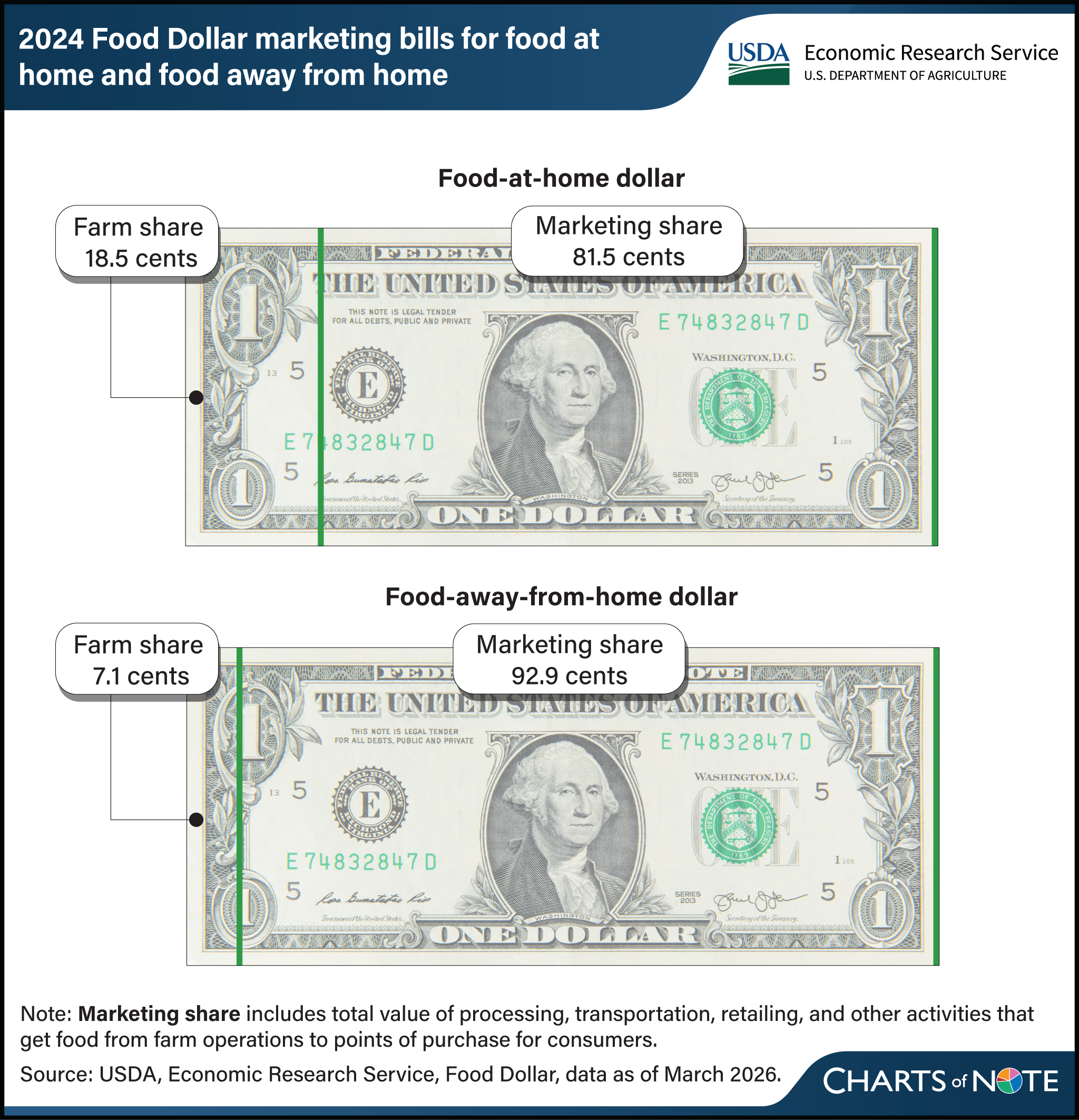
The route food takes from the farm to the plate decides how much of the consumer's dollar comes back to the farmer, and the difference between a grocery bag and a restaurant meal is stark, according to a Chart of Note from USDA's Economic Research Service (ERS).
In 2024, U.S. farm establishments received 18.5 cents of every dollar spent on food at home, such as groceries, and 7.1 cents of every dollar spent on food away from home, such as restaurant meals. ERS calls these amounts farm shares.
The rest of each food dollar is the marketing share: payments for processing, retailing and the other activities that carry food from the farm gate to the point of purchase. In 2024 the marketing share was 81.5 cents per food-at-home dollar and 92.9 cents per food-away-from-home dollar.
The marketing share is higher for food away from home because of the added costs of preparing and serving meals at outlets such as restaurants and schools, ERS explains.
ERS updated its Food Dollar series in 2026 with a new model that incorporates new data sources and an updated methodology. The agency cautions that results from the new model are not directly comparable with earlier releases. The data behind the chart are in the ERS Food Dollar data product and were discussed in a recorded webinar.
For farmers and agribusinesses the lesson is about where demand is heading: every shift in consumer spending from the supermarket to the restaurant, all else equal, lowers the share of the food dollar that reaches the farm. The chart was prepared by ERS economists James Chandler Zachary and Quinton Baker.
Source: USDA Economic Research Service


Comments
(0)