
Bangladesh's poultry sector must move beyond simply raising output and focus on farm profitability, food safety, climate resilience and internationally trusted standards, speakers said on Monday, 5 October, at an international technical seminar of the World's Poultry Science Association Bangladesh Branch (WPSA-BB) at a Dhaka hotel, themed "Resilient poultry production for global competitiveness".
WPSA-BB president Shamsul Arefin Khaled said the sector had solved the problem of quantity but not of fair prices. Many producers are losing money even as output grows; by his estimate, breeder farms lost about Tk 1,706 crore over the past 20 months, as profit moved from farms and hatcheries to middlemen in the supply chain. He called for matching chick supply to demand, giving the national poultry policy a legal footing and more investment in insurance, processing and cold chains.
Prof Dr Emdadul Haque Chowdhury of the pathology department at Bangladesh Agricultural University presented research combining consumer surveys and laboratory tests: contrary to popular belief, no growth hormone was found in any sample tested. He stressed residue surveillance, traceability, better hygiene in live-bird markets and transparent communication with the public.
Md Zahidul Islam, CEO of Bangla-UK Agro Products, said the lowest feed conversion ratio does not always give the most profitable result; observing drug withdrawal periods and marketing heavier birds raises both income and food safety. Mosiur Rahman, managing director of Paragon Group and president of the Bangladesh Poultry Industries Central Council, showed how better feed use, efficient energy management and lower mortality cut both costs and carbon emissions, and how biogas, organic fertiliser and solar power can turn farm waste into income.
On exports, Baby Rani Karmakar, joint secretary at the Ministry of Fisheries and Livestock, said Bangladesh can compete in the international halal market, but a halal certificate alone is not enough: internationally recognised certification, accredited laboratories and market-specific guidelines are needed. Prof Dr Md Mahmudul Hasan Sikder of BAU's pharmacology department said: "Importers don't accept claims; they accept proof." With bird flu still a risk, he advised starting with one product, one market and a controlled supply chain.
Department of Livestock Services director general Md Shahjaman Khan was chief guest at the opening, with Bangladesh Livestock Research Institute director general Dr Shakila Faruque as special guest. Speakers agreed on a joint effort by government, industry, academia and farmers to narrow the gap between what farmers receive and what consumers pay. The association's 14th international seminar is set for 16-17 March 2027, followed by its poultry show on 18-20 March 2027.
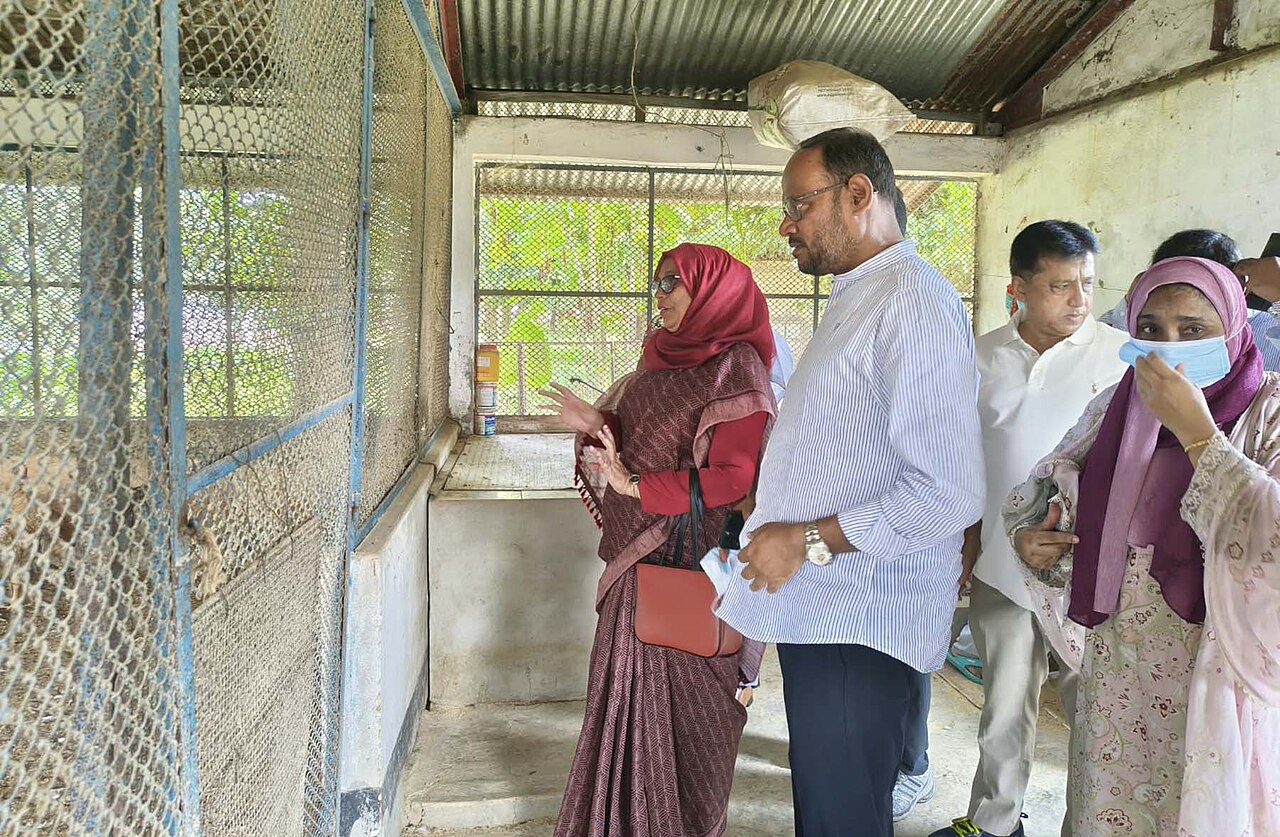
Photo: Press Information Department / Wikimedia Commons (public domain) (Central Poultry Farm, Mirpur)
Source: Krishi Sangbad
Comments
(0)