
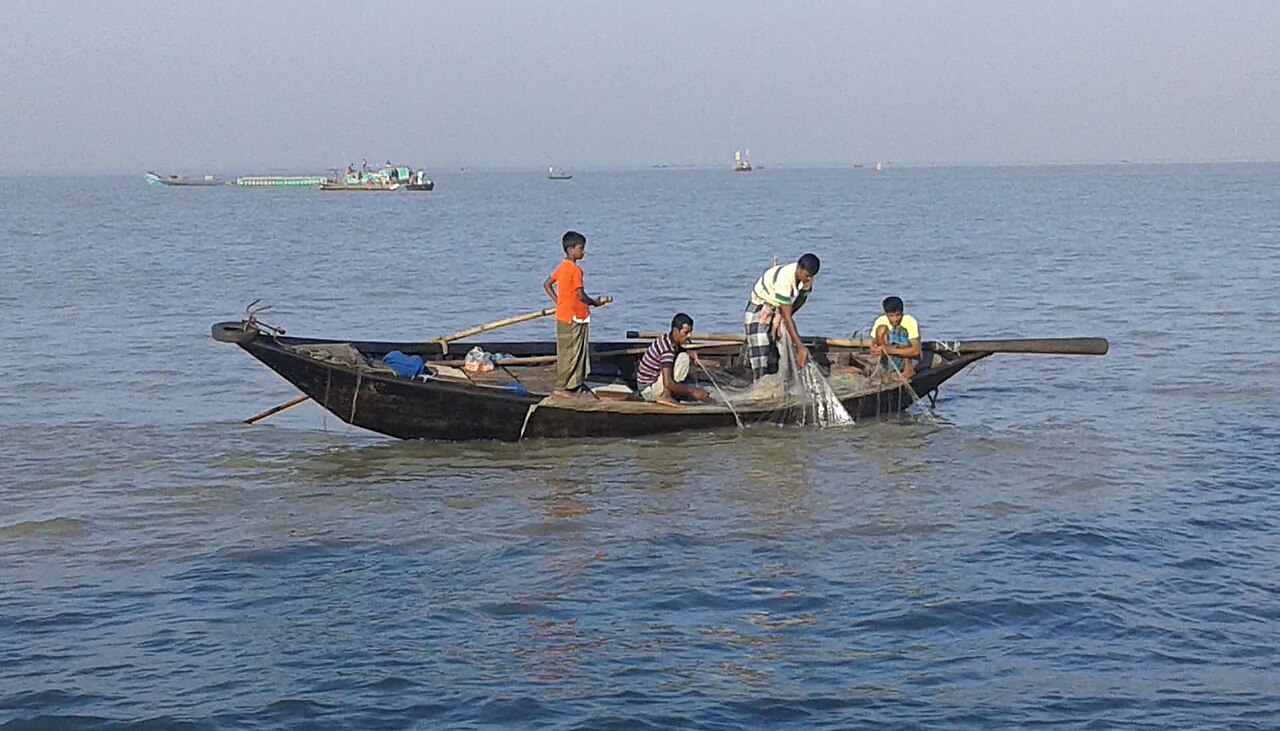
Bangladesh Maritime University (BMU) has launched a citizens' initiative to help enforce the government's 22-day nationwide ban on catching hilsa from 8 to 29 October. At a stakeholder meeting on "conserving breeding hilsa" at the university's Meghna Bhaban on Monday, it was decided to set up a coordination cell at BMU, with each participating organisation naming a focal person, according to a release published by Ajker Patrika.
Speakers said hilsa production has fallen for two years running: 571,000 tonnes in 2022-23, 529,000 in 2023-24 and 500,000 in 2024-25. They blamed overfishing, illegal fine-mesh nets, the killing of brood fish and jatka (juveniles), bottom trawling, river pollution, siltation and climate change.
Representatives of the National Fishermen's Association and CNRS said that during bans the Padma sanctuary areas, especially Jajira, Sureshwar and Char Bhairabi, sometimes turn into near-war zones, with enforcement teams attacked.
The chief guest, BMU vice-chancellor Rear Admiral M Niamat Elahi, called for joint action by government, researchers, fishing communities, law enforcers and NGOs. He voiced concern over hilsa recently arriving from Gujarat in India and stressed meeting demand by conserving the country's own stocks.
The meeting agreed to meet the director general of the Department of Fisheries with BMU, Navy and Coast Guard representatives on 8 and 9 October, and to run landing-site awareness drives, a community informant network, a rally at Barishal's hilsa landing sites and monitoring of food aid to fishers during the ban. A ministry-level "hilsa think tank" and joint research on hilsa numbers, spawning grounds and river pollution were proposed; the Krishi Gobeshona Foundation has expressed interest in funding such research.
The NGOs and the fishermen's association at the meeting pledged full cooperation with the ban. Representatives of the Krishi Gobeshona Foundation, Jahangirnagar and Sher-e-Bangla Agricultural universities, the Bangladesh Fisheries Research Institute, the SAARC Agriculture Centre, Coast Foundation and Shushilan attended.
Photo: AsikBinRahim / Wikimedia Commons (CC BY-SA 4.0)
Source: Ajker Patrika

Comments
(0)