

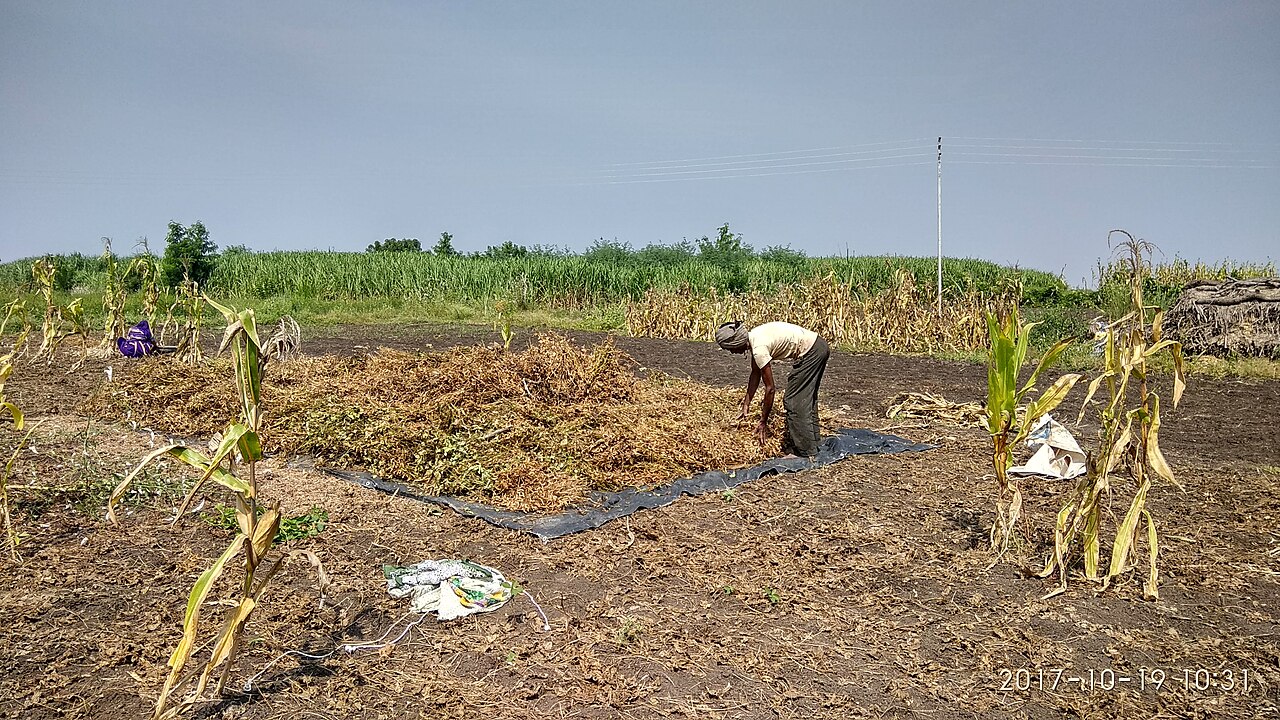
Mujibar Shekh, 55, is a day labourer who supports a family of five by working for others. Hoping to change his fortunes, he took a loan and grew paddy on one bigha of land. But sudden rain upset everything: just as it was time to cut the paddy and bring it home, his field went under water.
Now the labourer is at his wits' end over how to repay the Tk 30,000 loan he took from an NGO. Mujibar Shekh lives in Dhalnagar village in Kachua upazila, Bagerhat. He spoke to Jagonews on Wednesday afternoon.
"I have no land of my own," he said. "I took one bigha of someone else's land in mortgage for Tk 15,000 and grew paddy. On top of that, ploughing, machine irrigation, fertiliser and pesticide cost a lot. To meet those costs I took a Tk 30,000 loan from an NGO. I grew the paddy with great effort, but first, some days ago, a hailstorm knocked off about a quarter of the grain. Now in the rain, some paddy I had cut and left in the field to tie into sheaves, and some that wasn't cut yet, has all gone under water. If it stays like this, all the paddy will rot. It won't fetch a good price either."
Labour costs the price of two maunds
Had the rain not ruined the paddy, he said, that one bigha alone would have given his family rice for six months. "Now I can't even hire labourers to cut it. To bring one labourer you have to pay Tk 1,200 to Tk 1,300, feed him three times a day and even buy him bidis. Altogether one labourer costs Tk 1,600 to Tk 1,800 a day. To have one labourer work one day, you have to hand over the price of two maunds of paddy. And even then labourers can't be found. In this situation I won't even recover what I spent. Now I'm wondering how I'll repay the loan or what we'll eat."
According to the agriculture office, Boro paddy was grown on 68,171 hectares in the district this year. Paddy on 13,000 hectares has been harvested, and about 55,000 hectares are still in the field. The agriculture department said more rain could damage the paddy still in the fields.
Low prices and no warning
Yakub Ali Howlader, a farmer in Dhalnagar, said a hailstorm struck just as the grain was starting to fill, knocking off 5 to 7 maunds of paddy per bigha. Now, just as the ripe paddy was ready to cut, rain left the fields knee-deep in water. "We can't cut the ripe paddy and bring it home," he said.
He said he had taken 4 bighas of other people's land in mortgage this year and spent about Tk 1 lakh. Paddy prices are also low this year, at Tk 800 to Tk 850 a maund, Tk 250 to Tk 300 lower than in other years. Even if the rain eases, the damage means he will not recover his costs: at most he will get Tk 60,000 to Tk 70,000 back, a loss of around Tk 30,000 to Tk 40,000.
Another farmer, Binoy Sarkar, said he grows paddy on about two bighas every year and gets 80 to 100 maunds. But this time sudden rain submerged the cut paddy in the field. There is no telling when the water will dry and when he can bring the paddy home. If paddy stays in water like this, it will sprout within two days and the straw will rot too, and it cannot be sold. This year he may get 35 to 40 maunds at most, which will not cover his costs.
He said they had received no forecast from the agriculture office that rain or bad weather was coming; if they had, they would have cut the paddy early. "We work in the fields all day and have no time to watch the news on TV. If the agriculture office announced forecasts of rain or bad weather by loudspeaker, we farmers would find out."
Md Motahar Hossain, deputy director of the Department of Agricultural Extension (DAE) in Bagerhat, said the rain had made paddy lodge on some land, and some farmers have cut paddy in the field that they have not been able to bring home. Five to 10 per cent of that paddy could shed, he said. If continued rain causes greater damage, the department will assess farmers' losses.
Source: Jagonews24. First published in Bengali on The Agro News.

Comments
(0)