
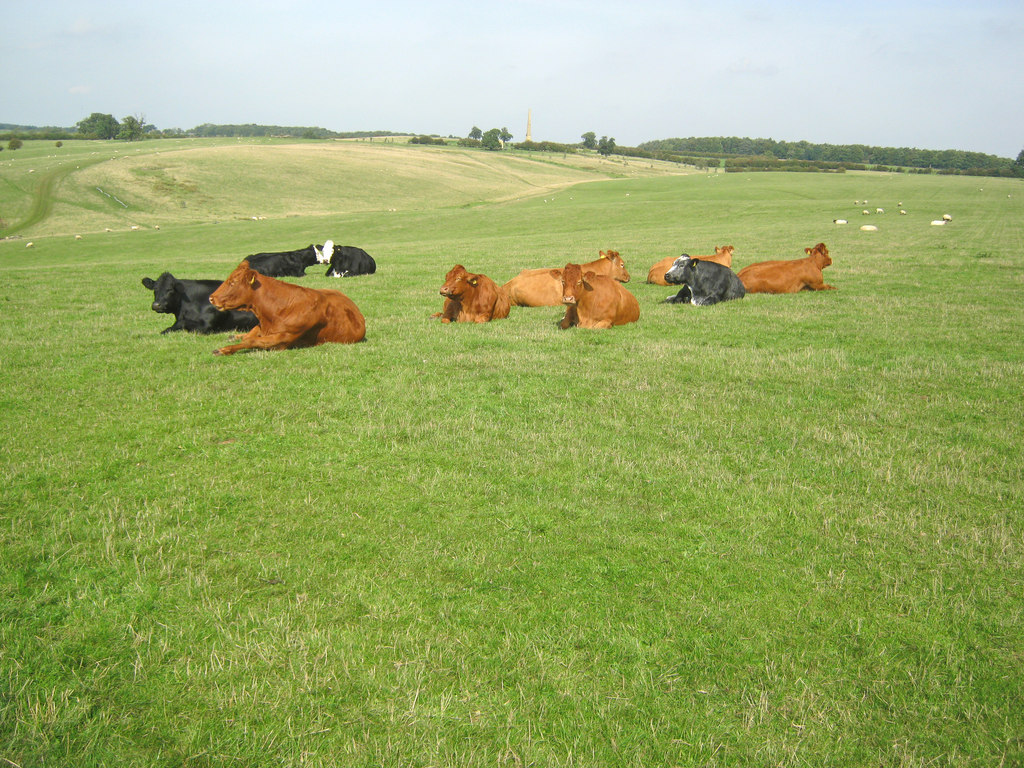
Australian livestock technology company Agscent has launched in the UK, demonstrating its methane-sensing and analytics system on a British farm for the first time as drought puts pressure on grass, feed supplies and productivity. The company showed its Agscent GHG + Optiweigh system at Tetchwick Farm near Aylesbury, Buckinghamshire.
An exceptionally dry summer has slowed grass growth across England and forced some livestock producers to start on winter feed early. Founder and managing director Bronwyn Darlington, herself an Australian livestock producer, said that when feed is scarce and expensive, knowing which animals convert it into weight most efficiently has a big effect on margins. "The drought spurred the look at how our technology could help the UK," she told AgNavigator.
The system combines Agscent's methane sensors with Optiweigh's in-paddock scales, so weight gain and methane readings from each animal can be analysed together. Agscent argues that methane can indicate how efficiently an animal converts feed into energy, helping farmers spot cattle that gain well for the methane they produce and those that perform poorly. For grazing beef the sensors pair with the scales; in dairy they can be fitted to robotic milking systems and feed troughs.
"Two animals can gain the same weight on very different amounts of feed," Darlington said. She said useful efficiency data can be gathered within about a month, and farmers could use it to decide which animals to keep, sell or breed from before paying for winter housing. Taking out the bottom 12 to 20% of a herd before it goes into the barn, she said, removes the feed-inefficient ones. Between 6% and 12% of an animal's gross energy intake is lost as methane.
At Tetchwick Farm, 23 cattle had access to the unit for eight days. They made 1,107 visits and produced 725 methane measurements, an average of 32 valid visits per animal. Combined with weights, the data picked out several animals that had lost weight that week; the system does not diagnose why, but it showed the farmer which ones to check.
Because UK herds are generally smaller than Australian ones, the company sees a cooperative model in which groups of farmers share a unit for a few months at a time to benchmark their animals. Agscent is also developing a Breath technology, using sensing licensed from NASA, to look at chemical signatures in breath for uses such as pregnancy and disease detection, though it is not part of the UK launch.
Photo: Trevor Rickard / Wikimedia Commons (CC BY-SA 2.0)
Source: AgNavigator


Comments
(0)