
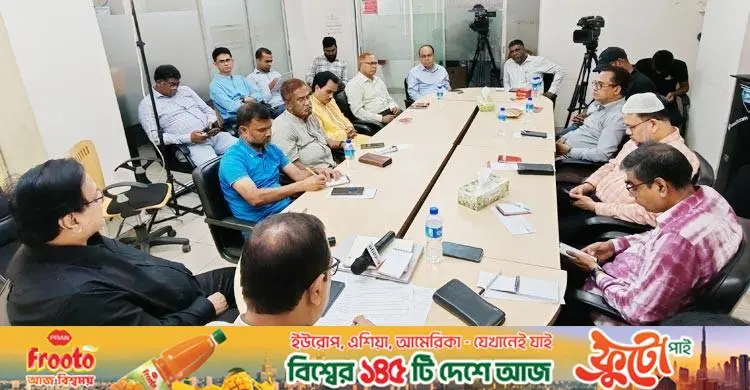
To take the country's agro processing sector to new heights in the coming decade, entrepreneurs, experts and government officials have stressed creating small and medium enterprises (SMEs), expanding cold chain infrastructure, easy-term financing and stronger public-private partnership (PPP).
Speakers made these points at a round table titled "Fruit Processing: Problems and Prospects" organised by Jago News at its office in Badda, Dhaka, on Saturday 27 June.
Ten SMEs per district
Chapainawabganj agri-entrepreneur Ismail Khan Shamim and Naogaon agri-entrepreneur Sohel Rana said that to change the face of the country's agriculture in the next 10 years, at least 10 skilled SMEs must be built in each of the 64 districts.
Besides financing, these entrepreneurs must be trained in branding, marketing and modern technology, they said. If entrepreneurs are selected on the basis of merit and potential, they will lead the agro processing industry in the days ahead.
Ismail Khan Shamim said about 500 tonnes of mangoes are now marketed every day from Chapainawabganj through e-commerce, marking the start of a big change in the country's agricultural marketing. Young entrepreneurs are leading this change, and increasing their number would bring major positive change to the agro-based economy.
Cold storage and ripening chambers
Speakers said the number of cold storages and ripening chambers for storing farm produce is still far below what is needed. If the special panels and other equipment used to build cold storage could be imported duty-free, entrepreneurs' investment costs would fall significantly and modern storage could expand quickly.
Experts believe the use of ripening chambers for scientific fruit ripening must be increased and public awareness built. This would clear up common misconceptions about fruit ripening and reduce the use of harmful methods.
Speakers also called for greater participation of agriculture in PPP projects. In their view, now is the right time to take up a big mega project to develop storage, processing and packaging infrastructure.
Finance out of reach
Entrepreneurs complained that although Bangladesh Bank and various development partners offer low-interest loans for agriculture and SMEs, genuine entrepreneurs are deprived of that finance because of tough conditions and long administrative processes. As a result, large allocated sums often cannot be disbursed.
They demanded that genuine entrepreneurs be identified through the SME Foundation and other relevant institutions and given finance on easy terms, so that new entrepreneurs are encouraged to invest in agro processing.
Speakers said that with coordinated action by the government, the private sector, financial institutions and young entrepreneurs, the country's agro processing industry could build a strong position not only at home but also in international markets within 10 years. This would cut crop waste, give farmers fair prices and significantly increase agro-based exports.
Also speaking were Dr Jahangir Alam Khan, former vice-chancellor of the University of Global Village, researcher and agricultural economist; Dr Md Golam Ferdous Chowdhury, chief scientific officer of the Post-Harvest Technology Division of the Bangladesh Agricultural Research Institute (BARI); Dr Md Mehedi Masud, former project director of the Year-round Fruit Production Project and fruit expert; Mohammad Arifur Rahman, director of the DAE's exportable mango production project; Enamul Haque, deputy director (food and agriculture) of BSTI; Ilias Mridha, managing director of PRAN Group; Md Abul Hashem, managing director of Hashem Foods Limited; Md Iktadul Haque, former general secretary of the Bangladesh Agro-Processors' Association (BAPA); S M Nazer Hossain, vice-president of CAB; and Md Mahatab Ali, executive director of Kaju and Coffee Agro.
Source: Jagonews24. First published in Bengali on The Agro News.

Comments
(0)