
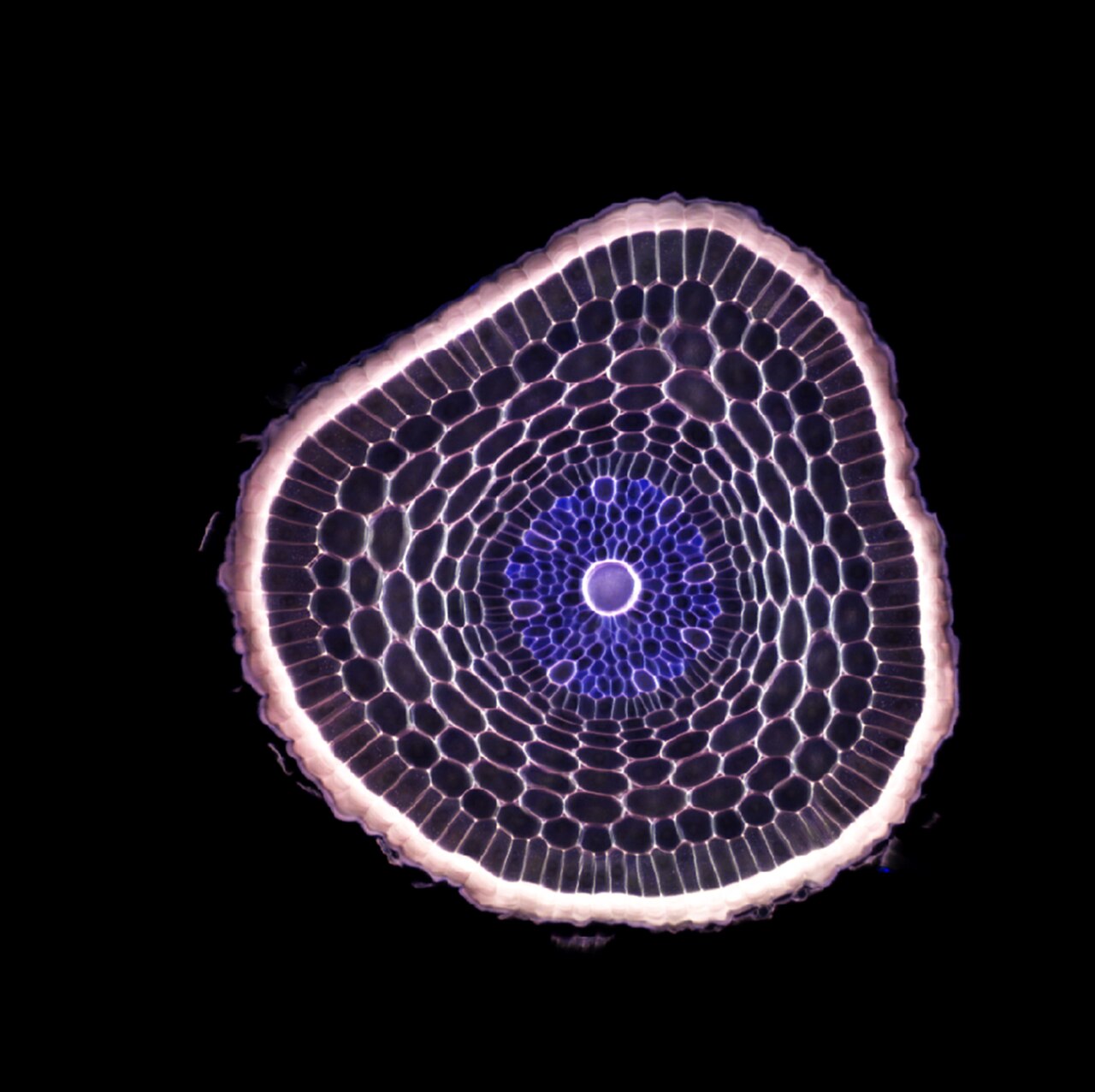
Plant roots do not select their bacterial partners by species but by the jobs those bacteria can do, according to a study from Aarhus University in Denmark and Utrecht University in the Netherlands. The authors say the finding offers a practical guide for designing microbial biofertilisers and biostimulants.
The study was published in Nature Microbiology on 17 September. Its senior authors are Professor Simona Radutoiu of Aarhus University and Associate Professor Ronnie de Jonge of Utrecht University; the first author is Gijs Selten of Utrecht, and Florian Lamouche of Aarhus is a co-author. Researchers from the University of Copenhagen, INRAE Angers in France and Friedrich Schiller University Jena in Germany also took part.
The bacteria that live on roots are known to help crops take up nutrients, cope with drought and resist disease. Less clear has been how a plant decides which of the many bacteria in soil get to settle on its roots. The team analysed nearly 1,000 bacterial genomes, built synthetic bacterial communities in the laboratory and placed them on three plants grown in soil: the model plant Arabidopsis thaliana, the cereal crop barley and the model legume Lotus japonicus. They then recorded which bacteria settled on each plant and which functions those bacteria carried.
Each plant ended up with a different mix of species, but the functions converged. Across all three, the researchers identified 266 bacterial functions, about 3 percent of the functional diversity in the starting pool, that were consistently enriched on the roots. No single strain carried the whole set; the functions were spread across several members of each community. Arabidopsis and barley took whatever bacteria were most available, while Lotus japonicus favoured fewer generalist strains that each carried a broad mix of functions.
For companies making biological fertilisers, this points to screening microbial mixtures for the functions they bring to a root rather than for a fixed list of species. Such products have often been developed by trial and error, and many work in one soil and fail in another. Global Agriculture notes that microbial products validated in temperate settings often underperform in the tropical and semi-arid soils common across India and other developing farm markets, where a function-based approach could help.
The results come from controlled laboratory experiments, not field trials, and the authors have not yet shown that function-based mixtures outperform conventional products on working farms. That is the next step the biologicals industry will be watching.
Photo: Mark Talbot, CSIRO / Wikimedia Commons (CC BY 3.0)
Source: Global Agriculture




Comments
(0)