
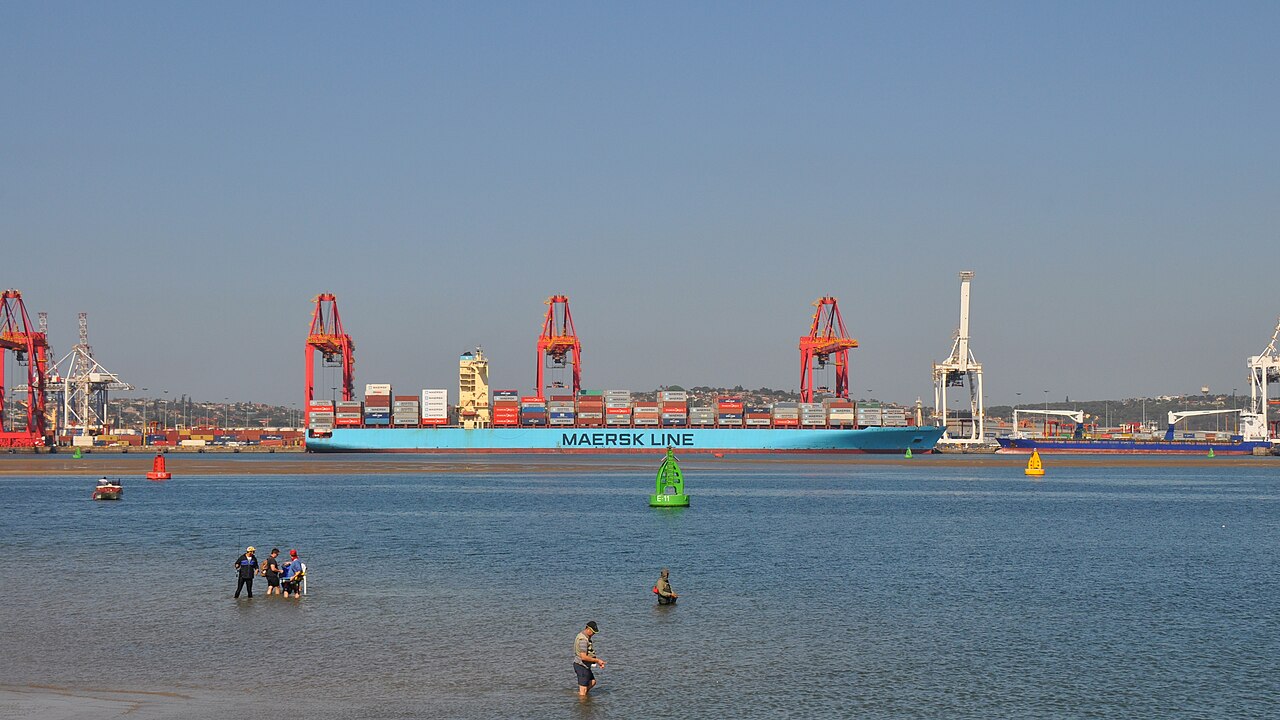
Transnet has announced urgent measures to ease congestion at the Durban Gateway Terminal, formerly Pier 2, after vessels faced delays of 14 to 20 days in mid-November. Farm groups say the backlog threatens a port that handles most of South Africa's imported wheat and fertiliser and a large share of its citrus and maize exports.
In a statement on 18 November, Transnet said it would divert vessels, add berthing capacity and move more import containers by rail, but it gave no timeline for clearing the backlog. Berth 102 has been opened to ships with their own cranes, some Durban-bound vessels are being identified for diversion to the Port of Ngqura in the Eastern Cape, and a sixth ship-to-shore crane at Durban Container Terminal Pier 1 was due to start work on 21 November. The company said it was prioritising essential cargo such as pharmaceuticals and car parts; its statement did not say whether refrigerated food qualified.
According to the Southern African Association of Freight Forwarders, the terminal's switch to the Navis N4 operating system in mid-August made congestion that was already building worse. Landside operations were suspended during the switch and trucking companies had to register again, and limited truck booking slots left cleared containers sitting in the yard.
"Durban is the main entry point for imported wheat and a major gateway for rice and fertiliser. It is also a key export port for maize and citrus," said Jolanda Andrag, chief operating officer of AgriSA. Durban received 1.92 million tons of wheat in the 2025/26 marketing season, 87.6% of the 2.19 million tons landed at South African harbours, and averaged more than 75% of the country's fertiliser imports from 2020 to 2024. Most of the 950,505 tons of rice imported between May 2024 and February 2025 also came through the port.
On exports, nearly 1.3 million citrus pallets were passed for export at Durban in 2025, 42.9% of the total across five loading ports, including 83.4% of grapefruit pallets and 49% of orange pallets. Durban shipped all seaborne whole-maize exports in 2025/26, 364,826 tons. The Citrus Growers' Association said in a 13 November update that the terminal backlog had disrupted shipping in the 2026 season: "When fruit misses its window, costs remain while its value falls."
Andrag also pointed to two longer-term projects at Maydon Wharf: a multipurpose terminal for agricultural dry bulk, for which a BAL SA and Africa Global Logistics consortium was named preferred bidder with R810 million in committed spending, and a fresh produce and breakbulk terminal, with Khold as preferred bidder and R250 million planned. The trade figures cover the whole port; Transnet did not say how much farm cargo is caught in the backlog.
The report was written by Hanlie du Plessis.
Photo: Pechristener / Wikimedia Commons (CC BY-SA 3.0)
Source: Farmers Weekly South Africa

Comments
(0)