
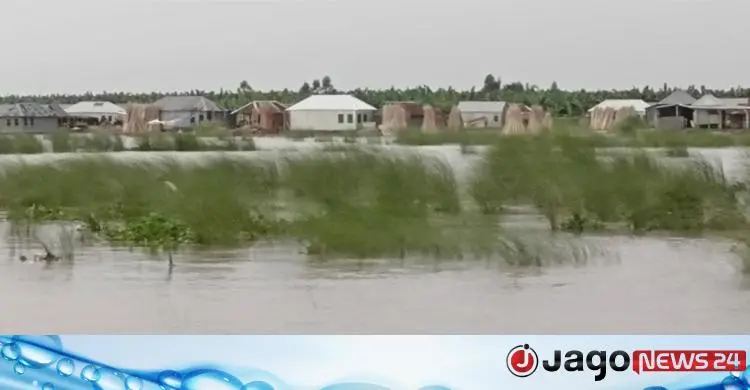
The Padma continues to rise at Daulatpur in Kushtia because of continuous rain and water flowing down from upstream in India. Low-lying areas of Ramkrishnapur and Chilmari unions have been flooded, leaving about 50,000 people marooned. Roads and cropland have gone under water.
Classes have stopped at many educational institutions after water entered them. With cooking places and paths submerged, people in the char areas are suffering badly. Venomous snakes have added to their plight, and flood-hit people are living in fear as snakes move around their homes and homesteads.
River above danger level
According to the Pabna Water Hydrology Division, the Padma has risen by an average of about 10 cm a day over the past week because of heavy rain and upstream water.
At 9am on Friday the water level at the Hardinge Bridge point was 14.2, against a danger level of 13.80, as the source reports.
Elias Hossain, executive engineer of the Pabna Water Hydrology Division, said the Padma was rising fast because of upstream water and continuous rain, and the rising trend was continuing.
Local sources said the sudden rise has broken down communication in the char areas. With roads under water, boats, dinghies (special boats made of tin) and rafts have become the main means of getting around. Many families' cooking places are submerged, and food and safe drinking water are running short. Farmers and livestock keepers are struggling to look after their animals.
Villages under water
Abdul Mannan, chairman of Chilmari Union Parishad, said low-lying parts of his union had been flooded by upstream water over the past two or three days. Water has entered homes in low-lying parts of 17 of its 19 villages, leaving about 30,000 people marooned. Classes have been suspended at schools. Since the water rose, venomous snakes have also increased, and many are afraid to leave their homes.
Siraj Mondal, chairman of Ramkrishnapur Union Parishad, said every village in his union is now surrounded by water. Normal movement has stopped because the roads are submerged. Even where water has not entered houses, it has reached the plinths. Besides the hardship caused by the water, people are distraught for fear of snakes.
The rising Padma has also submerged vast areas of cropland in the char areas of Philipnagar and Moricha unions.
Relief and demands
Upazila Nirbahi Officer (UNO) Anindya Guha and officials of the Project Implementation Office visited the flooded areas on the afternoon of Wednesday, 9 September, and distributed dry food as emergency relief to 70 affected families.
Upazila Project Implementation Officer Shubhagata Biswas said: "We have visited the flooded areas. Work to list flood-hit people and give them the help they need is continuing. They have been advised to go to shelters if the situation worsens. We are monitoring the overall situation regularly."
Flood victims are demanding quick supplies of enough dry food and safe drinking water, as well as antivenom and emergency medical care for snakebites. They fear the situation could become worse if the water rises further.
Source: Jagonews24. First published in Bengali on The Agro News.
Comments
(0)