
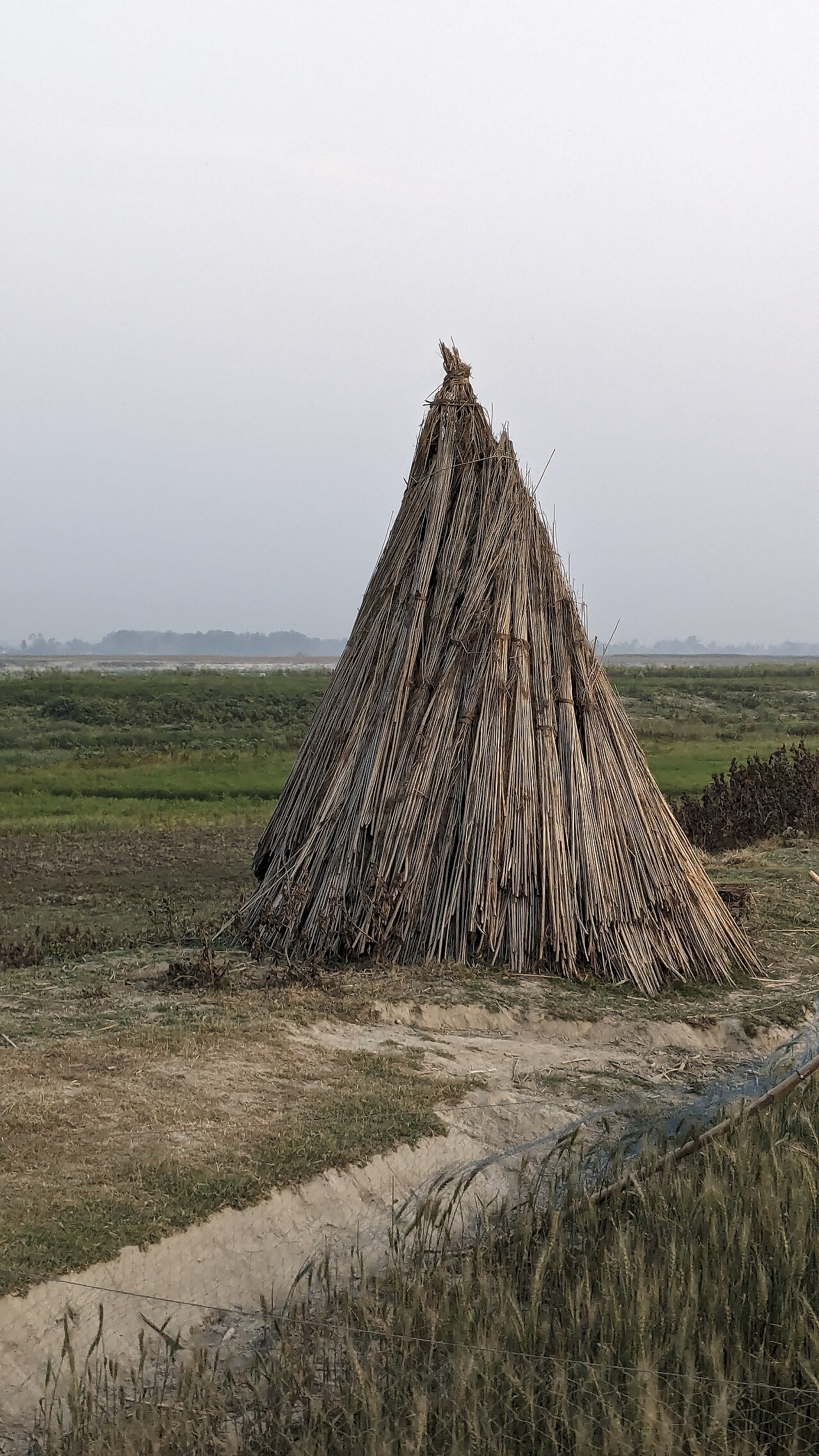
Jute sticks, long used as cooking fuel, fencing and supports for betel-leaf vines, have become an export. Burned in special kilns, they are turned into charcoal, or carbon, shipped to China and other countries. In a piece for Daily Bangladesh, journalist and farm-economy analyst S M Mukul sets out the industry's potential and its demands.
The industry began in Bangladesh in 2012, with exports to China in its first year, he writes. The process is simple: jute sticks are burned in a special kiln for 10 to 12 hours, then the kiln mouth is sealed so no oxygen gets in. After four days the charcoal is crushed, packed and exported.
According to the Department of Jute and the Ministry of Textiles and Jute, the country produces about 3 million tonnes of jute sticks a year. If half were properly used for charcoal, output would be about 250,000 tonnes a year, worth about Tk 2,500 crore in exports. The Department of Jute estimates this would create 20,000 direct and 2 million indirect jobs.
Export Promotion Bureau figures show jute-stick charcoal exports earned Tk 54 crore in 2015-16; the Bangladesh Charcoal Producers and Exporters Association puts current earnings at Tk 150 crore. Demand comes from China, Mexico, the United States, Australia, Canada, Japan, Brazil, Taiwan, Turkey, South Korea, Germany and other European countries, where it is also used in water purification plants. US market researcher Freedonia Group estimates global charcoal demand is growing by 8.1 per cent a year.
The piece puts the number of large and small charcoal factories at about 40, in Jamalpur, Narayanganj, Rajshahi, Pabna, Rajbari, Faridpur and Gazipur. Farmers say selling jute barely covers their costs, but the money from jute sticks is pure profit, and demand from charcoal mills has pushed stick prices up.
Industry figures want charcoal declared an emerging industry, environmental clearance and the 20 per cent cash incentive for jute goods guaranteed, a separate policy and access to bank loans. The piece adds that state jute corporation BJMC wants to produce jute-stick charcoal, and that a project to make viscose from jute fibre is awaiting approval by ECNEC.
Photo: Tanvir Rahat / Wikimedia Commons (CC BY-SA 4.0) (jute sticks piled in a field at Roumari, Kurigram)
Source: Daily Bangladesh

Comments
(0)