
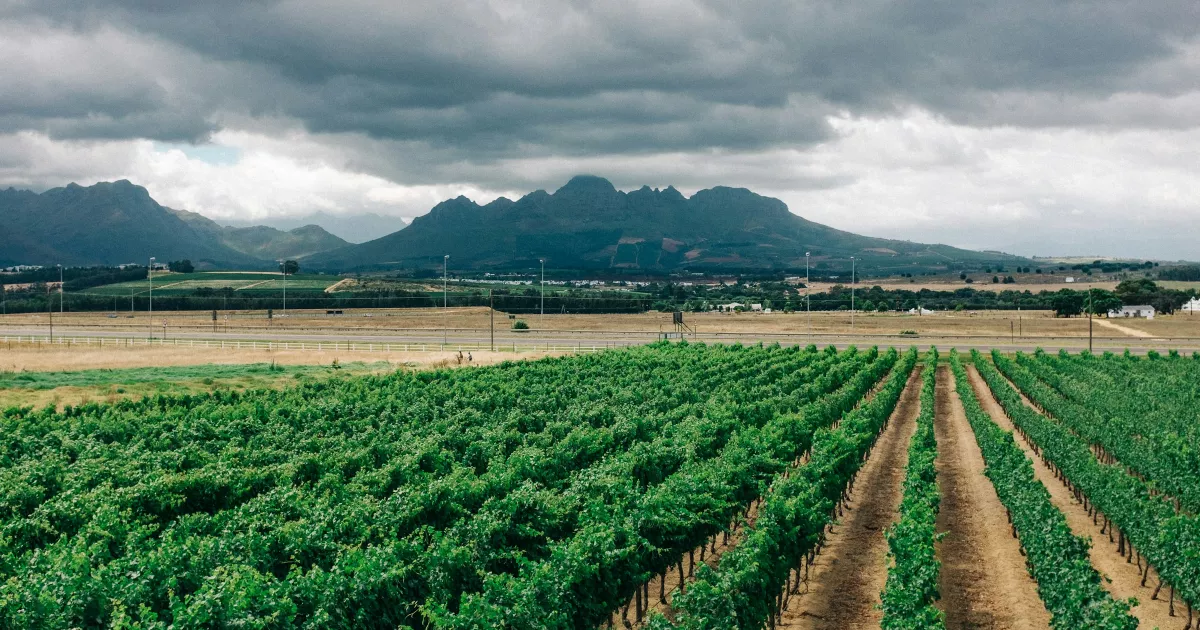
Solar-powered pumps are one of the few irrigation options open to farmers who live beyond the electricity grid, and they are promoted across Africa as both an adaptation to a drier climate and a way out of diesel. New research says the climate will make them more expensive to install.
Hua Xie and Claudia Ringler of the International Food Policy Research Institute (IFPRI), working with support from the CGIAR Climate Action programme, modelled groundwater-fed solar and diesel irrigation across Sub-Saharan Africa under 15 climate projections for average conditions between 2050 and 2070. They measured two things: the solar capacity a farm would need to meet its irrigation demand, and the highest installed cost per watt at which a solar system still beats diesel over its working life.
Across most of the region and under most of the scenarios, the capacity required rises — by nothing at all in some countries and by up to 30 per cent in others. Two effects push in the same direction: shifting rainfall changes how much water has to be pumped, while heat, sunlight and wind change how much electricity a panel actually produces. Earlier studies had mostly looked at generation alone.
The picture is not uniform. Parts of West and Central Africa see sharp increases under some projections, while Kenya and Mozambique see the requirement fall under others. Increases tend to be larger on the higher-emissions pathways. The researchers argue that this unevenness is the point: an investment decision has to weigh local rainfall, crop water need, aquifer conditions and the climate trajectory rather than a single regional figure.
A larger system costs more to buy, and the study also finds that climate change lowers the breakeven installed cost at which solar stays cheaper than diesel — usually by less than 10 per cent either way, though more in some places. Put together, farmers would need bigger solar systems that are also cheaper per watt for solar to hold its advantage.
That matters most for the subsidy and carbon-credit schemes now being built to help farmers over the initial cost, which is already the main obstacle to adoption. A modest fall in pump performance can have an outsized effect: credit schemes would have to price it in, pushing the cost to the farmer up and the number of farmers reached down.
The authors do not conclude that solar irrigation stops making sense. Global solar photovoltaic costs fell by about 80 per cent between 2010 and 2019, and if that continues, cheaper panels should more than cover the extra capacity. Their point is narrower and harder: the climate can no longer be treated as a fixed backdrop when a system is designed to run for decades. Only about four per cent of cropland in Sub-Saharan Africa is irrigated at all, so almost every solar pump installed there is still to come.
Source: CGIAR

Comments
(0)