
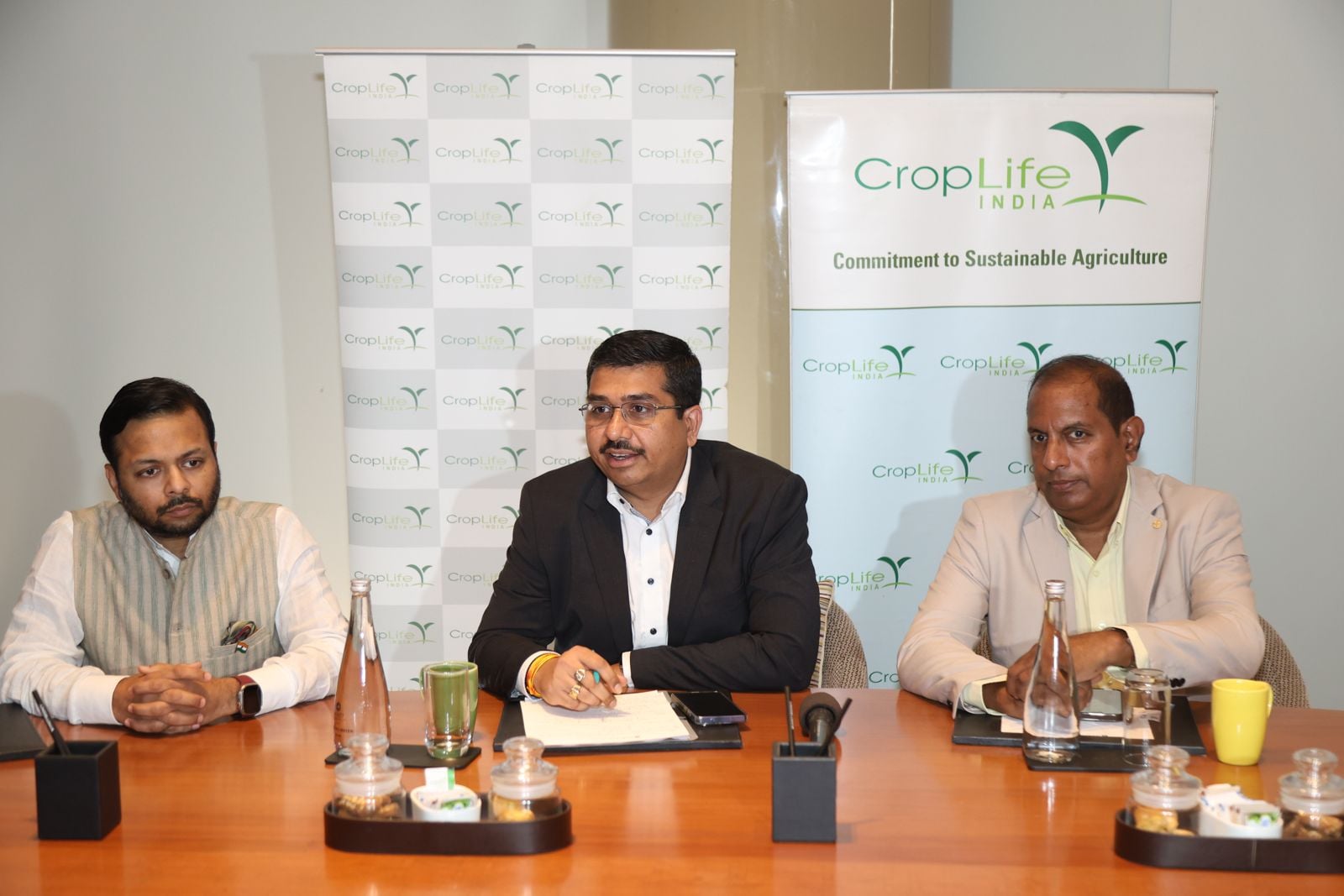
CropLife India, the association of 17 research-based crop protection companies, has urged the Indian government to act on what it calls a narrow pool of crop protection options: farmers in India have access to about 380 active ingredients, against roughly 1,200 available to growers globally. Restricting existing products before better alternatives can enter the market, it warned, could act as a double whammy for farmers.
The body proposes two steps. First, any restriction on an existing molecule should rest strictly on established scientific literature, including safety, health and efficacy data in the Indian context, and should weigh the effect on the farmer. Second, India should introduce Regulatory Data Protection (RDP) for five years, shielding the safety, health and efficacy studies a company must generate to register a new product.
Without such protection, CropLife India said, companies hold back newer technology for fear that their data will be copied unfairly, and farmers lose access to it. China, Indonesia and Malaysia give up to six years of protection; the United States, the European Union, Canada, Thailand, Brazil and Colombia up to ten; Australia, Taiwan and the Philippines up to eight.
"Factors such as El Niño and climate change are making pest pressures even more dynamic and troublesome for farmers," said Rahul Dhanuka, managing director of Dhanuka Agritech Ltd, arguing that RDP would streamline registration, bring in better technology and allow evidence-based phasing out of older molecules. Mohan Babu Boppana, vice chairman of CropLife India and COO of Bayer CropScience Ltd, said newer and green molecules are more selective, need much lower doses, and are more economical for the farmer and safer for the environment.
Indian farmers lose about 10–35 per cent of their crops to pests and diseases each year, worth around INR 2 lakh crore, the association said. Giridhar Ranuva, business director of BASF Agricultural Solutions India, said a time-bound RDP framework would help farmers cut those losses and strengthen incomes in line with the Viksit Bharat 2047 goal.
The industry also pointed to tightening maximum residue limits in high-value export markets such as the EU, where access to newer chemistry would help exporters comply, and asked for regulation of pesticide sales on e-commerce platforms, with licensing obligations and digital traceability to keep unauthorised products off those channels. Its members, it said, account for about 70 per cent of the Indian market and 95 per cent of the molecules introduced in the country.
Reported by KJ Staff for Krishi Jagran.
Source: Krishi Jagran

Comments
(0)