
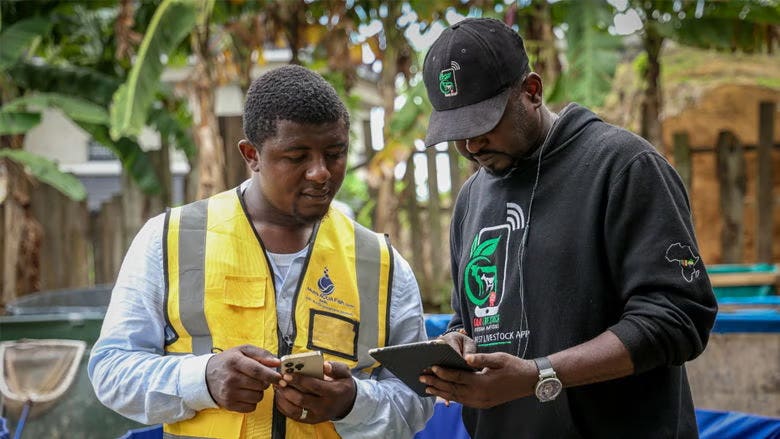
In Cameroon, where agriculture employs nearly 60 percent of the population, farmers have long worked with limited access to markets, information and modern tools. A World Bank-supported programme is now trying to close that gap with digital infrastructure and a generation of local startups.
The Acceleration of the Digital Transformation of Cameroon Project, known as PATNUC, aims to widen digital inclusion while increasing the use of digital agricultural services. It invests in connectivity, digital literacy and data systems — the structural barriers that keep farmers cut off from buyers and advice.
The support reaches farms directly. Through an e-voucher system, 35,000 smallholders can obtain improved inputs such as seed and fertilizer, while digital tools give them readings on soil health and field conditions. The intended result is higher productivity and less guesswork.
At the centre of the programme sits the Agritech Innovation Challenge, a national platform that finds and backs startups building digital solutions for agriculture — from market access and productivity to climate resilience. Selected companies receive acceleration support, mentoring and technical and financial help.
The design detail that matters is the pairing: each startup is matched with farmer groups, so that products are tested in real conditions and adapted to local realities rather than built in an office and pushed outward.
"We assist farmers with marketing — they don't only register their products on our website; we also help promote them so they can reach more buyers," said Bang Pamela Ncho, Director General of Efarm.cm, one of the companies on the platform.
By connecting farmers to buyers, the platforms are widening market opportunities and cutting post-harvest losses — the produce that used to rot while a seller looked for a market. The effect is already visible along value chains, including poultry, where digital marketing has changed both sales and the scale producers can plan for.
Source: World Bank

Comments
(0)