
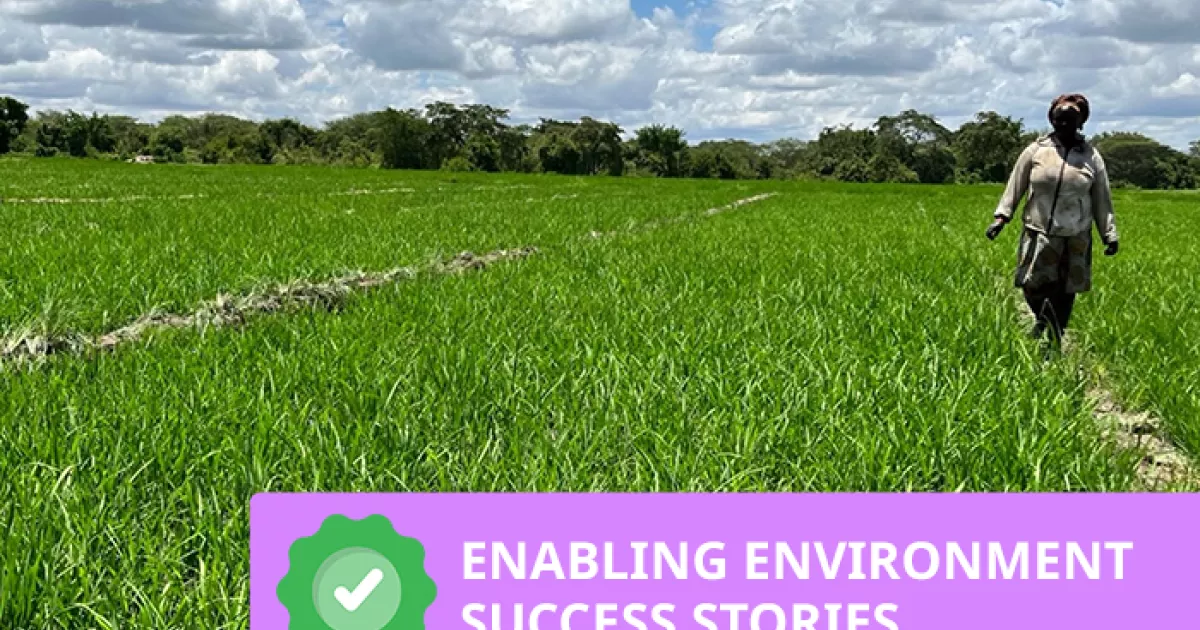
Fewer than one in three smallholder farmers in Tanzania plants improved seed. That single figure explains a great deal about why the country's harvests fall so hard when the rains do, and it is the number the new Tanzania Seed Sector Development Strategy is built around.
The strategy was developed by the Government of Tanzania with the CGIAR Initiative on Ukama Ustawi and USAID's ASPIRES programme. It is a coordinating document rather than a project: its purpose is to settle who does what in a seed system that has been fragmented between agencies, thin on private investment and slow to move a variety from a research station to a village shop.
The design process was led by the Ministry of Agriculture alongside CGIAR centres, using political economy mapping, institutional analysis and market system mapping to find where the system actually jams. More than 150 stakeholders took part — public agencies, private seed companies and farmer organisations. The strategy names the Ministry of Agriculture as the lead coordinating body and strengthens the Tanzania Agricultural Research Institute, the Agricultural Seed Agency and the Tanzania Official Seed Certification Institute so that variety release, quality assurance and certification move faster.
On the investment side it builds in a public-private partnership approach meant to draw money into seed production, distribution infrastructure and last-mile delivery. The targets for 2030 are specific: double the area under improved seed from three million to six million hectares, and take the agro-dealer network from 3,000 outlets to 12,000. Design-phase funding came from the New Zealand Ministry of Foreign Affairs and Trade, and the strategy aligns around USD 300 million of potential investment.
Quadrupling the agro-dealer network is the part that will decide whether the rest works. A certified seed the farmer cannot buy within reach of home is a certified seed that stays in the warehouse — which is why the outlet count sits alongside the hectare target rather than beneath it.
Tanzania now moves from designing the strategy to delivering it: tightening regulation, raising foundation seed supply and aligning policy with its neighbours in the region.
Bangladesh's own seed system faces a recognisable version of the same question. BADC, BRRI and the private companies each supply part of the market, and the share of farmers planting certified seed rather than grain saved from last season is the number that moves yields.
Source: CGIAR

Comments
(0)