
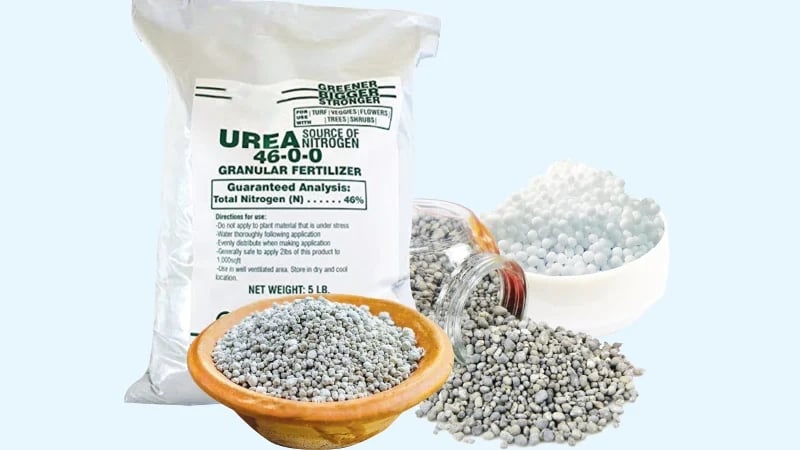
The government says the godowns hold enough fertiliser to meet demand for months, and that imports have been arranged on top of that. Yet many farmers cannot buy fertiliser when they need it. In some places they queue for hours and go home empty-handed; in others they pay more than the government-fixed price; in still others a dealer says the godown is empty, and the same fertiliser is later alleged to have been sold elsewhere at a higher price.
Over the past month farmers across the country have protested, formed human chains, surrounded upazila administration offices and blocked roads and highways. A review of media reports between 10 August and 9 September counts at least 15 separate protests over fertiliser, the largest number in Kurigram and Lalmonirhat in the north. In several places farmers broke down the doors and fencing of dealers' godowns and took fertiliser away.
Ministry of Agriculture figures put total fertiliser stock at 1,222,000 tonnes as of 6 September — 427,000 tonnes of urea, 332,000 of DAP, 117,000 of MOP and 352,000 of TSP. Demand for the four fertilisers from October to February is put at 4.029 million tonnes against a possible supply of 5.371 million tonnes, a planned surplus of about 1.342 million tonnes.
So where is the shortage. Dealer control over distribution has long drawn complaints. Under the old arrangement a single principal dealer distributed fertiliser in each union; ministry sources allege that in some areas dealerships taken in the names of several members of one family allowed a handful of people to control the trade. The present government has written a new policy allowing more than one dealer and several retailers in a union.
That is where the new conflict lies. A section of the old dealers is said to fear losing its monopoly under the new arrangement. The ministry says delays in implementing the policy, and non-cooperation from some of the old dealers, meant allocated fertiliser was not fully lifted in several districts. Show-cause notices have gone to agriculture officers in 15 districts; four district agriculture officers have been withdrawn and four more given stand-release orders.
A fertiliser dealer in the Kurigram region, speaking on condition of anonymity, said an influential quarter is exerting pressure on distribution: once fertiliser arrives at the godown a set number of sacks must be handed over, and it is later sold at a higher price. Kurigram deputy commissioner Annapurna Debnath said more fertiliser has been supplied than last year, but a few dishonest individuals are making the situation worse.
Agricultural economist Professor Mohammad Saidur Rahman argues that fertiliser sitting in a godown and fertiliser reaching a farmer are two different things. If a farmer cannot get fertiliser from the dealer's godown and is forced to buy it on the open market at a higher price, he said, the national stock figure alone cannot excuse the shortage.
The government has stepped up enforcement. Between 28 August and 7 September, 204 mobile courts were held across the country, imposing fines of Tk3,468,824 and recovering about 1,700 looted sacks of fertiliser; four people were jailed and five dealerships cancelled. A monitoring officer has been posted in each of the 64 districts and a four-member supervisory committee formed. Agriculture secretary Md Selim Khan told Samakal there is no fertiliser shortage in the country and that the recent incidents involve an attempt to manufacture unrest.
Source: Samakal (report by Zahidur Rahman)
Comments
(0)