
Beef remains the backbone of Namibia's agricultural economy, but its future growth may come from table grapes, biomass, value-added processing and regional trade, according to Dr Salomo Mbai, director of the Agricultural Trade Policy Institute (ATPI) at the Namibia University of Science and Technology, interviewed by Farmers Weekly ahead of the Windhoek Industrial and Agricultural Show, which runs from 29 September to 3 October 2026.
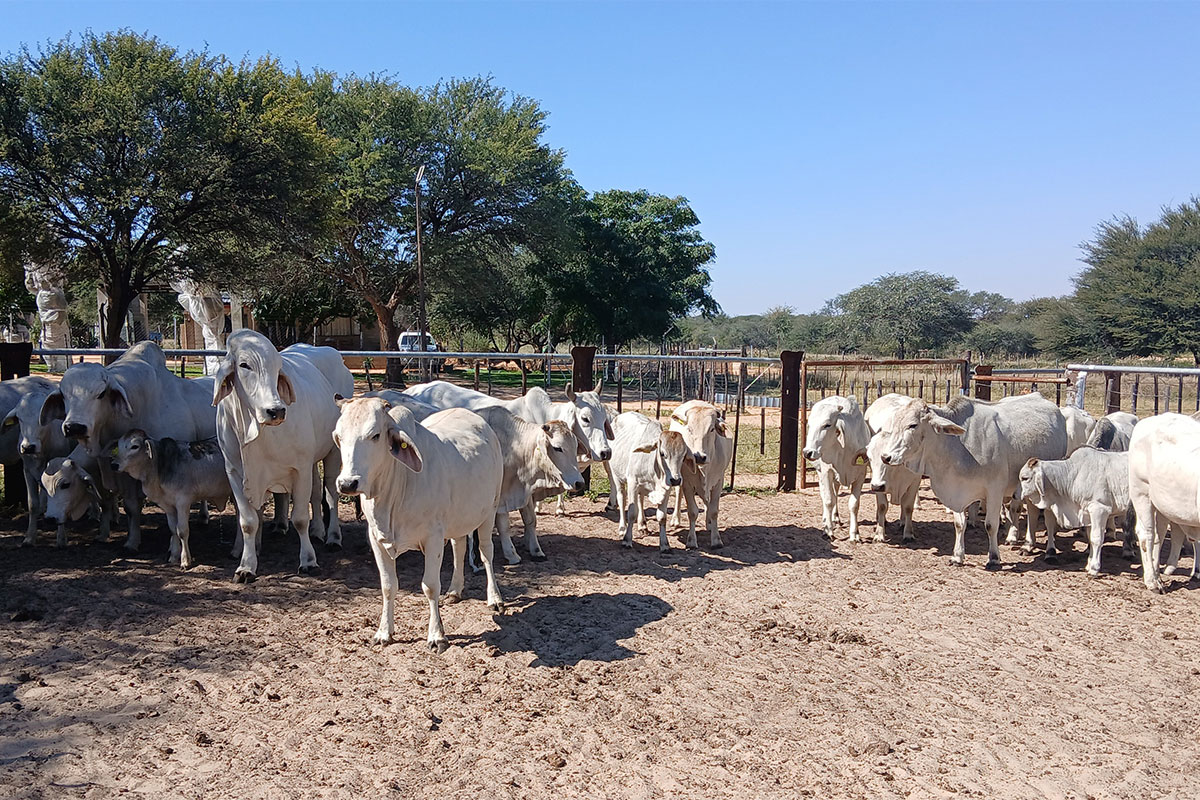
Livestock accounted for 52.7% of Namibia's agricultural economy between 2013 and 2025, Mbai said, with crops at 35.9% and forestry, logging and wood products at 11.4%. He estimates the national herd at about 2.5 million cattle, 1.5 million sheep and 1.3 million goats, some 5.3 million animals excluding wildlife, which is why Namibia is a rare net exporter of cattle and livestock products in Africa. Its foot-and-mouth-disease-free status south of the veterinary cordon fence gives it a unique position in beef exports, an advantage he says needs constant vigilance against FMD and contagious bovine pleuropneumonia, along with sanitary compliance, digitisation, careful use of scarce water and investment in people.
ATPI, set up to give Namibian policymakers evidence and to work with value-chain actors, has partnered with South Africa's Bureau for Food and Agricultural Policy on outlook modelling for cattle, beef, lamb, mutton, white maize, potatoes and table grapes. Future work, Mbai said, could take in charcoal, wood products, poultry, karakul pelts, blueberries and dates. Drought, disease outbreaks and high input costs driven by geopolitics, from fertiliser and fuel to electricity, constrain export growth, but he sees fruit in the north and south, potatoes for local production and processing, and biomass as the most promising opportunities.
Charcoal is the standout example of a problem turned into an industry. Bush encroachment affects 30 to 40 million hectares of Namibian grazing land, and a charcoal sector that has grown steadily since 2013 reached an export value of more than N$1.6 billion (about R1.6 billion) by 2025. Charcoal manufacturing, Mbai said, also restores pasture for the livestock sector, and a wider range of biomass products could follow.
On trade, he urged policymakers to look past the tomato, poultry and vegetable disputes that periodically flare in Southern Africa and to build regional value chains through SACU, SADC and the African Continental Free Trade Area, moving from raw commodities to vertically value-added products. South Africa supplies about 80% of Namibia's agricultural imports; Mbai said trade relations could be improved by reconciling market-share promotion with SACU rules and cross-border value chains, and that South Africa could learn from Namibia's compulsory, centralised livestock traceability system, NamLITS, by adopting a state-backed digital registry for cattle movements to track disease faster.
Namibia's comparative advantages, he said, lie in livestock and table grapes, the latter thanks to biosecurity compliance and a climatic window that lands early-harvest grapes in lucrative EU markets. Looking to 2040 and 2050, he expects agriculture to remain central to jobs, exports and livelihoods despite climate, disease and cost pressures, and believes the country can become a leading exporter of high-value products in livestock, table grapes, dates and biomass if it invests in real-time data, policy coherence, modern legislation, technology and research.
Reported by Clayton Swart for Farmers Weekly South Africa.
Source: Farmers Weekly South Africa


Comments
(0)