
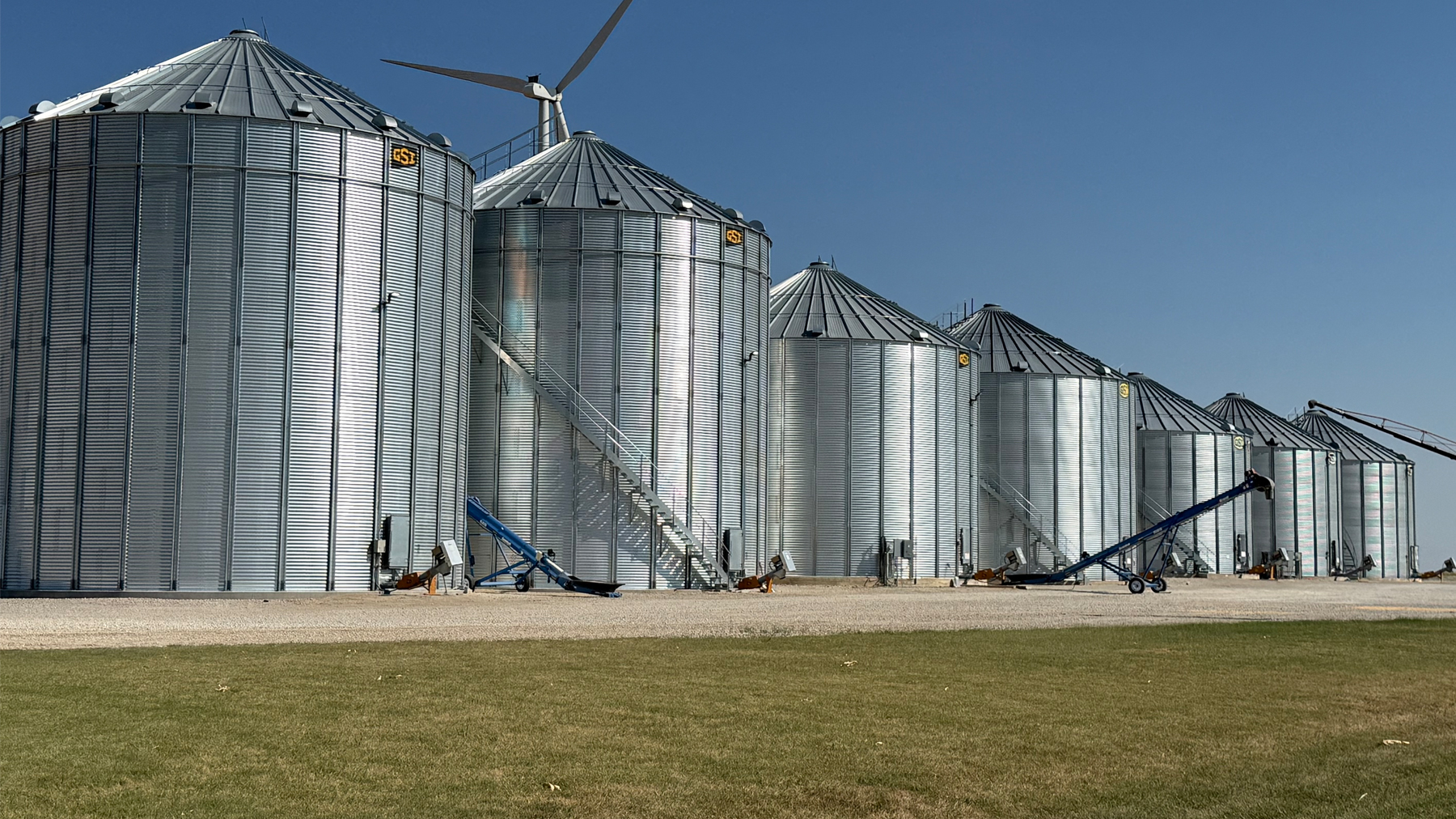
Jesse John, who raises wheat, corn and soybeans near Thayer in Kansas with his brother Joseph and father Robert, says the family's grain storage plan started small: one bin at a time, mainly so trucks could go straight from the field to the farm instead of waiting in line at the elevator. Today the family has eight GSI bins, including two 75,000-bushel bins added last year and another arriving this year, for about 450,000 bushels of capacity, with plans to add rings to existing bins later.
The decision that paid off most, John told Farm Progress, was where to put them. Rather than squeeze modern equipment through traffic patterns laid out by earlier generations, the family built the bin site less than a quarter of a mile from the farmstead, on its own ground beside a good road, with room for a row of bins. One regret: they started with single-phase electricity, thinking they would only ever build 35,000-bushel bins, and now wish they had gone to three-phase from the start.
The storage shows its value at harvest, when the Johns can cut as fast as weather and machinery allow, and afterwards, when the family can shop for a better price instead of paying storage fees. "With really just how volatile the market is," John said, "not having to pay storage and to be able to move that grain when it needs to be moved is a big selling point."
Kansas State University made the case for on-farm storage almost 20 years ago in its study of the economics of storing grain for the ethanol industry, and the article notes new local demand from large dairies in western and central Kansas and from specialty crops that need segregated storage.
Iowa State University Extension lists three alternatives to building: condominium storage at a commercial elevator, where the farmer buys or leases a fixed volume and the elevator manages quality, but may be locked into selling through that facility; renting commercial space only in big-yield years; and renting an existing bin on leased farmland, which keeps grain close to the field but depends on the lease being renewed.
K-State's advice is to add up construction, depreciation, interest, taxes and insurance over the life of the facility and work out a per-bushel cost for each bin size, then add the variable costs of aeration, drying, monitoring, insecticide, repairs, shrink and transport. With today's interest rates, it says, the cost of holding grain instead of selling it to pay down debt is a factor many farmers overlook.
Source: Farm Progress


Comments
(0)