
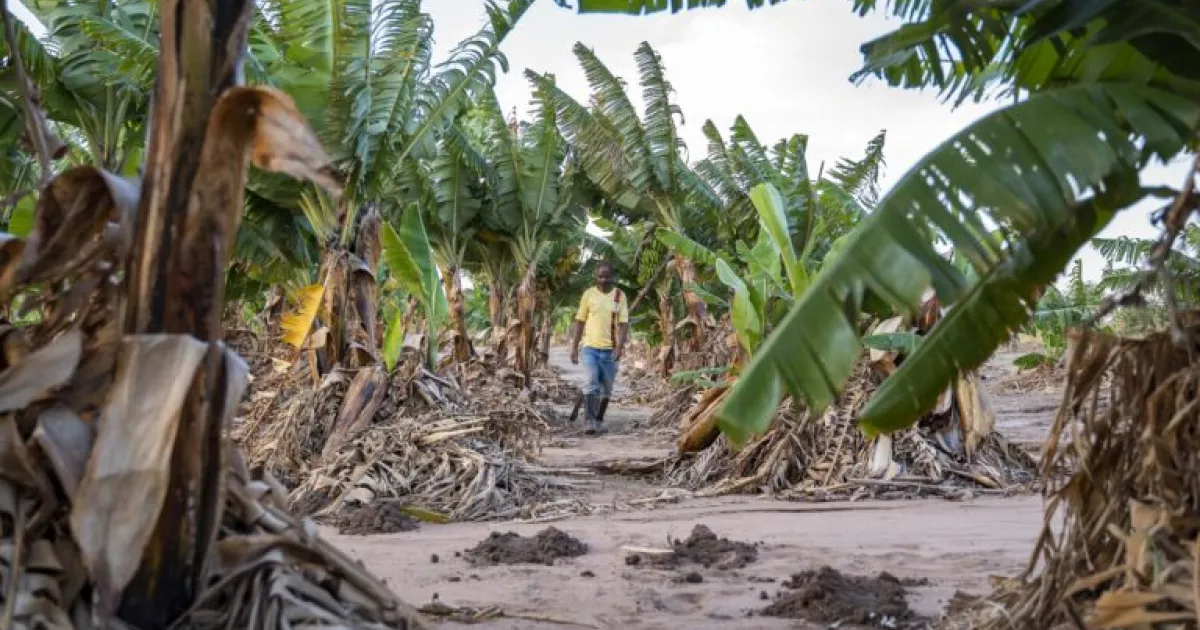
Two shocks are converging on Malawi's 2027 farming year, and modelling by the International Food Policy Research Institute (IFPRI) suggests the combination could be severe. In the average of the scenarios examined, nearly 500,000 more people fall into poverty and about 4.6 million more become undernourished.
The first shock is El Niño, the periodic warming of the eastern tropical Pacific that reorders atmospheric circulation and, with it, seasonal rainfall in much of the world. It is strengthening quickly. The United States National Oceanic and Atmospheric Administration's Climate Prediction Center puts the chance of a very strong El Niño in 2026-27 above 90 per cent, and gives a nearly 70 per cent chance that it will peak stronger than any El Niño since 1950.
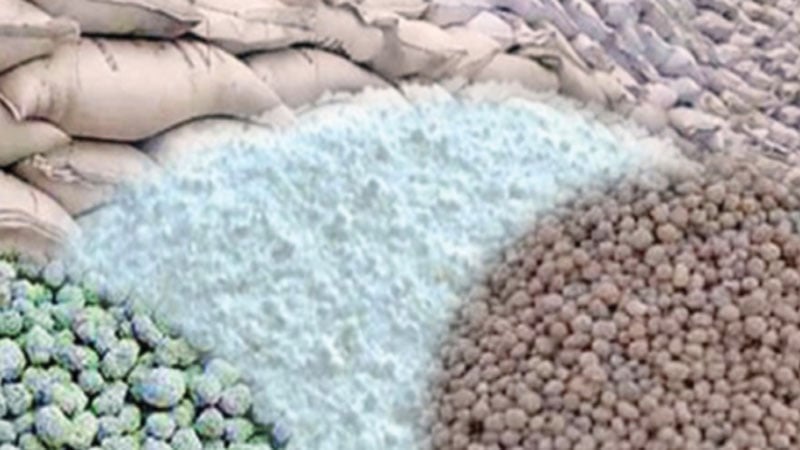
The second is the price of what farmers buy. The war involving Iran and the disruption of shipping through the Strait of Hormuz have pushed up the cost of fuel and of fertiliser. For a country where most farmers grow maize on small plots and buy fertiliser at the start of the season, a price rise arriving in the same year as a poor rainfall forecast compounds rather than adds.
The projected effects run through the economy as well as the field: weaker growth, lower agricultural production and higher food prices. The authors, Chris Hillbruner, Karl Pauw and Weston Anderson, are explicit that the outcomes are uncertain — a modelling exercise sets out a range, not a forecast of what will happen.
The value of running the numbers before the season is that the responses that work are the slow ones. Getting fertiliser into the country, positioning food stocks, deciding what a safety-net programme will cost and arranging the money all take months. A government that waits for the harvest failure to confirm itself has lost most of the year in which it could have acted.
The work is the first in a series from IFPRI covering Ethiopia, Kenya, Malawi and India, and the global food system as a whole, feeding into a policy seminar in early October.
Bangladesh sits on the other side of the same two markets. Its fertiliser is imported and its urea price is set against the same freight and gas costs that the Hormuz disruption has moved, which is why an El Niño forecast for southern Africa is not only southern Africa's news.
Source: CGIAR

Comments
(0)