
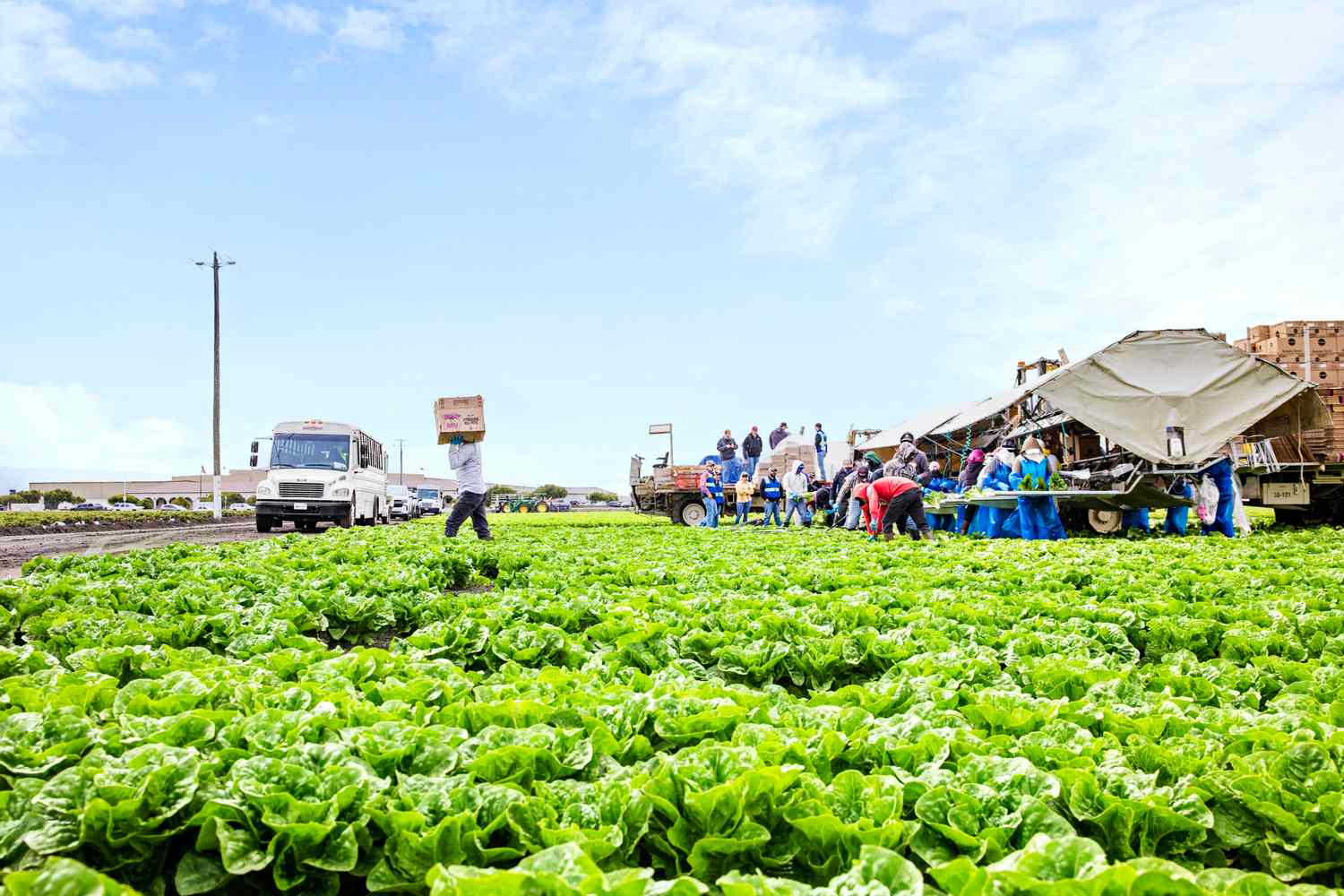
California's specialty-crop farmers face the same margin pressure and global competition as Midwestern grain growers, but they face it from inside the most heavily regulated state in the country. That was the lesson an Iowa-based Successful Farming editor drew from a two-day tour of the Salinas Valley and Bakersfield hosted by the Western Growers Association, visiting lettuce, vegetable and table-grape farms and an ag-tech incubator.
The cost of compliance is the headline figure. A Cal Poly-San Luis Obispo case study of one commercial head-lettuce grower in the Salinas Valley, first run in 2006 and updated with 2017 data and again in 2024, found regulatory compliance costs up 1,366% over nearly 20 years, to more than $1,600 an acre. Water rules alone added 60% between 2017 and 2024, to $29.72 an acre. Figures from the WGA, the California Farm Bureau and the Agricultural Council of California put farm production costs up nearly 30% over the past decade against revenue growth of 9.1%.
"There's regulations on all factors of farming these days," said Andrew McHaney, vice president of the northern district at D'Arrigo California, which grows about a dozen specialty crops on more than 40,000 acres. Many protect people's safety, he said, but growers cannot pass the cost on to customers. In Monterey County, the Sustainable Groundwater Management Act of 2014 has left farmers and townspeople arguing over how to fund a $1 billion project against seawater intrusion that would cost a further $165 million a year to run.
Labour came up in every conversation. California's minimum wage of $16.90 an hour is the fifth-highest in the United States, and the state used more than 35,000 H-2A visa workers in fiscal 2025, each carrying food, housing and transport costs for the employer. The phased-in overtime threshold of 40 hours, completed in 2025, has cut workers' hours rather than raised their pay: Kevin Andrew, chief executive of table-grape grower Vista Vineyards, said crews that once worked 48 to 55 hours at straight pay are now held under 40, and University of California-Berkeley research found a large, statistically significant shift from 56-60-hour weeks to 46-50-hour weeks.
Automation is the growers' answer where it exists. At Reservoir Farms, a Salinas Valley incubator with 20 member companies and 40 acres of test fields, High Degree is developing a steam fumigator to replace chemical pesticides and hand weeding for strawberry growers, and Beagle Tech has sold about a dozen AI-powered harvesters for lettuce, celery, napa cabbage and bok choy in the United States and Australia. Walt Duflock, the WGA's senior vice president of innovation, said 3-5% of non-harvest field work is automated and heading for 15-20%, but less than 1% of harvest hours - the hardest and most expensive task - are automated today.
Consolidation and imports complete the picture. The 2022 Census of Agriculture shows California has lost nearly 25,000 farms and about 4.6 million farm acres since 1997, and Duflock estimates that by 2052 the state will have lost more than half its farms. Peru's table-grape exports grew 10% a year over the past decade while U.S. exports fell 4% a year, according to a September 2025 Rabobank report, and Mexico's horticultural exports rose from under $5 billion in 2001 to more than $15 billion in 2023, about 90% of them bound for the United States. "I think we're a bit of the cautionary tale," Duflock said.
Reported by Cassidy Walter for Successful Farming.
Source: Successful Farming

Comments
(0)