
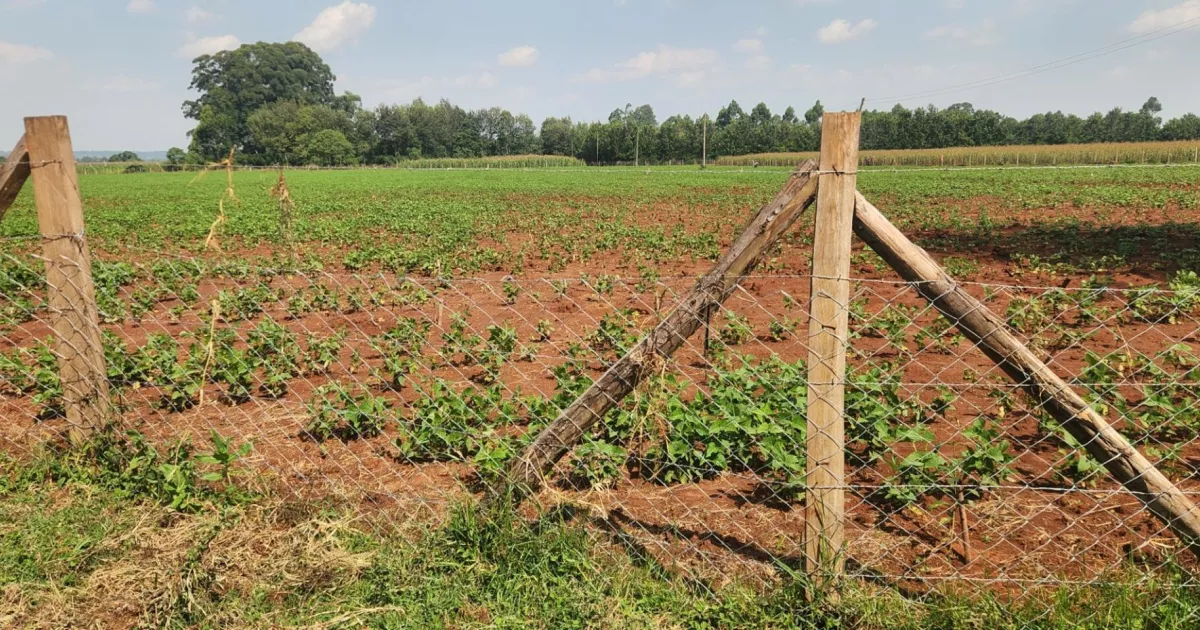
When Bubayi Seed Company shut down, more than 300 contracted bean out-growers in western Kenya lost their main buyer overnight. A young farmer in Trans Nzoia who had built his best seasons around Bubayi's contracts is without that market. An aggregator in Kitale who used to move 250 tonnes a year of grain rejected from seed certification is now sourcing from as far away as Uganda. And a public seed producer with the capacity to fill the gap is sitting on unsold stock while its germination rates quietly fall.
None of it made headlines, but the closure exposed something easy to miss when agricultural progress is counted in varieties developed and released: a variety is only useful if the system around it can move it from a breeding programme to a farmer's field.
Clare Mukankusi, a bean breeder at the Alliance of Bioversity International and CIAT, travelled across Bungoma and Trans Nzoia counties with the KALRO Kakamega bean breeding team to follow the chain from farmer groups and aggregators to the public seed producer and the breeding programme.
Bubayi had built one of the region's most extensive bean seed networks — more than 300 out-growers, with training, field supervision and, above all, a guaranteed market on a predictable payment schedule. Its closure removed the structure those farmers had organised their production around. One young farmer in Trans Nzoia had used the stability to expand into coffee; he is now reconsidering where beans fit at all.
At the Agricultural Development Corporation in Kitale, the public seed producer, the problem takes a different shape. The technical capacity to produce bean seed is there; a reliable market for it is not. KK Red Bean 16, known as Malkia, sold out after its 2022 release. But about a third of a 30-tonne batch produced in 2024 sat unsold long enough for germination to fall to around 50 per cent, and an unpaid KES 10 million invoice from a major buyer left the institution short of the working capital for the next cycle.
The region is not short of organisation. Bumula Farmers Hub in Bungoma brings thousands of farmers together under one umbrella with committees for finance, aggregation and marketing, and has supplied institutional buyers including the World Food Programme. But its bean production stays largely informal, with farmers planting grain bought in local markets rather than certified seed — lower yields and more disease.
Some of the most useful market intelligence came not from a survey but from Nancy, the Kitale aggregator who bought roughly 250 tonnes of KK8 grain over Bubayi's final years. Red mottled beans sell best, she says, then red, then yellow; older stored grain can even fetch a premium, because consumers say it cooks faster. Details of that kind decide whether a variety is adopted, bought and multiplied at all.
At KALRO Kakamega the pipeline is full: 49 advanced bean lines under evaluation for multiple disease resistance under the Kirkhouse Trust project, four fast-cooking iron- and zinc-biofortified lines ready for national performance trials, and about two tonnes of KK Rosecoco 33 seed produced for the short rains. "Agricultural transformation happens when innovation reaches the farmer and value reaches the market," said Shamir Misango, a research scientist at KALRO. The next phase of CGIAR's Scaling for Impact programme is aimed at the less visible half — working capital, distribution, aggregation and demand forecasting.
Source: CGIAR
Comments
(0)